Showing posts with label videos. Show all posts

Sunday, September 29, 2019

Here Comes the Groom (1951)

Directed by Frank Capra, Here Comes the Groom is a 1951 musical romantic comedy starring Bing Crosby, Jane Wyman, and Franchot Tone. It is a fun romp about two men competing over a woman with some great Bing tunes thrown in for good measure. Be forewarned that you'll be singing and dancing around your house to "In the Cool, Cool, Cool of the Evening" for days after you watch it.

Franchot in Here Comes the Groom, 1951. Scan from my collection.

The Film

Peter Garvey (Bing Crosby) is a news reporter stationed in a Parisian orphanage. He is fond of all the children there and takes pride in placing them in perfect homes, but itching for a new traveling assignment. In a neat little special effects scene, his abandoned fiancée Emmadel Jones (Jane Wyman) comes to him in the form of a hologram atop a spinning record. Emmadel lets him know that she is sick of waiting for him after three long years. She is ready for marriage and motherhood and realizes that Pete will never give up his traveling assignments for her.

Not wanting to lose Emmadel, Pete writes to her immediately, decides to adopt orphans Bobby and Suzi and fly back to America. Documentation issues delay the trip and Emmadel gives up on Pete altogether. (Louis Armstrong, Dorothy Lamour, Phil Harris, and Cass Daley make cameo appearances during the flight's musical number.)

Pete arrives in his hometown, but must marry and find permanent residence immediately in order to maintain guardianship of the children. He assumes he will sweep Emmadel right off her feet, but she reveals that she is engaged to be married to the wealthy Wilbur Stanley (Franchot Tone).

We learn that Pete and Emmadel grew up with similar modest backgrounds and have always known how to enjoy life without money and status. Pete plays up that angle as he tries to convince Emmadel that marriage to a wealthy man is all wrong for her. Pete assumes Wilbur Stanley is an elderly, unattractive man who has nothing to offer but a life of comfort. This vision of Wilbur (whom we've not seen yet in the film) is supported by Emmadel's father's comment that Wilbur is "not even a man. He's a tradition. He's a mummy."

Franchot in Here Comes the Groom, 1951. Scan from my collection.
During the "In the Cool, Cool, Cool of the Evening" scene, Pete and Emmadel dance around the Stanley building and are clearly a good match for each other. Knowing he has to get permanent residence to keep Bobby and Suzi, Pete changes a housing file (owned by Wilbur's company) from rented to vacant.

When Pete and the true renter fight over the house, Wilbur Stanley arrives on the scene. This bad publicity could potentially ruin his reputation, but a younger, more handsome, more generous Wilbur than Pete expected takes it all in stride. Wilbur agrees to let Pete and the children stay in his gatehouse. I uploaded my favorite scene from the movie to Youtube. Franchot and Bing's characters face off in the car and agree to let the best man win. If you cannot see the embedded video below, click here.


Once he settles in the gatehouse, Pete Garvey does everything he can to prevent Wilbur's wedding to Emmadel.

Franchot is delightful as the charming Wilbur Stanley and turns in a solid performance. His delivery of the final line is fabulous. Alexis Smith plays Wilbur's distant cousin Winifred Stanley (and does so perfectly!) and there are some hilarious scenes between her and Bing and her and Jane. If you like  romantic musical comedies, Here Comes the Groom is a must-see. It has a strong director and cast as well as an enjoyable story and pleasant songs.

The Backstory


Here Comes the Groom had its big premiere in Elko, Nevada with festivities being held July 29-31, 1951. The cast traveled to Elko (a place with close ties for Bing. Read more here) to introduce the film and entertain citizens. Franchot was not part of the festivities as he had business obligations in New York.

By the time the film had its New York premiere on September 20th, Franchot was recuperating from plastic surgery to fix the shattered cheekbone, fractured upper jaw, and broken nose he had sustained in the September 13th fight with Tom Neal, lover of his fiancée Barbara Payton. This high-profile incident would lead to a reckless year of marriage, separation, and divorce with Payton, lawsuits, and bad publicity (details here.)

Sadly, audiences wouldn't see Franchot in a film again for six years, when he adapted the stage play Uncle Vanya for the screen in 1957. He wasn't to be seen in another major motion picture until 1962 when he starred as the president in Otto Preminger's Advise and Consent. Of course, Franchot continued to work diligently and prosperously in theater and television productions while working to regain his privacy during this time.

You can watch the Franchot-less footage of the Elko visit (from the Bing Crosby Archives and originally posted by www.bingcrosby.com on Youtube) here:

Monday, October 31, 2016

All Hallow's Eve (1952)

Happy Halloween! I have a treat for you today, no tricks!

Franchot starred in an episode of Suspense that aired on October 28, 1952. Filmed live for television, Suspense was a popular mystery-thriller anthology that ran from 1949 to 1954. Each thirty-minute episode dealt with threatening characters and/or situations.

In the episode All Hallow's Eve, Franchot plays Markheim, a seeming sickly middle-aged man in need of money to marry. This episode is set in London in the 1880s and street urchins follow Markheim around hoping for treats. Markheim enters a Victorian pawnshop where he often trades objects for money. When the proprietor insinuates that Markheim is selling him stolen goods, Markheim makes a life-changing decision. What Markheim doesn't know is that there's a devilish creature that's been watching him since birth and this creature has witnessed the entire event.

Fortunately, All Hallow's Eve is available in full-length format on Youtube! If you can't see the embedded video below, click here.


I rewatched All Hallow's Eve first thing this morning to kick off my Halloween and it really is a creepy little tale. I'm sure it was a fun role for Franchot to play, because he's able to be this over-the-top character with big eyes, a looming stature, and gaping fear. Enjoy your day!

Saturday, August 6, 2016

On Record: This is the UN

Franchot had a distinctive voice which grew more resonant and authoritative with age. Fortunately, Franchot's voice was captured in many radio programs and used to great effect as narration on records. When I began collecting Franchot-related items, I knew that I wanted to obtain all of the old records featuring Franchot. Currently in my collection I have The Jazz Age of F. Scott Fitzgerald: Readings by Franchot Tone, the full 1963 cast recording of Strange Interlude, and This is the UN: Its Actual Voices. Franchot also appears on the "If Men Played Cards the Way Women Do" skit with Ray Milland, Fred MacMurray and Lynne Overman on the soundtrack album for Star Spangled Rhythm. (If you are aware of another album featuring Franchot's voice, please comment on this post. I may be missing some!)

My copy is a bit worn, but the record plays fine.


This is the UN: Its Actual Voices was a 1950 audio documentary produced by Tribune Productions and written by Saul Carson and Eleanor Gardiner. The documentary was released on 33 1/3 rpm nonbreakable, long playing microgroove under the supervision of the United Nations Department of Public Information. A compilation of 40,000 official recordings, the record highlights historic speeches of world leaders "placed in perspective against the U.N.'s aims and achievements by the sensitive and clear narrative of Franchot Tone." The LP is divided into 10 parts:

1. San Francisco; the Charter
2. Proclaiming Principles
3. Facing Atomic Energy
4. Independence for Indonesia
5. Parade of the Nations
6. Toward Economic and Social Progress
7. Toward Economic and Social Progress (continued)
8. Trusteeship Council
9. Universal Declaration of Human Rights
10. Permanent Headquarters; the Korean Situation

I took a video of Franchot's first track of the album as it played on my record player this morning. If you can't see the embedded video below, you can watch it on Youtube.


Wednesday, July 27, 2016

The Award (1955)

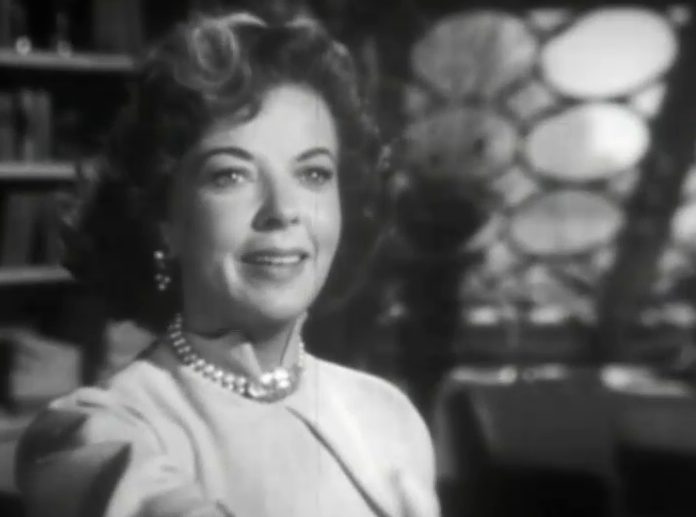
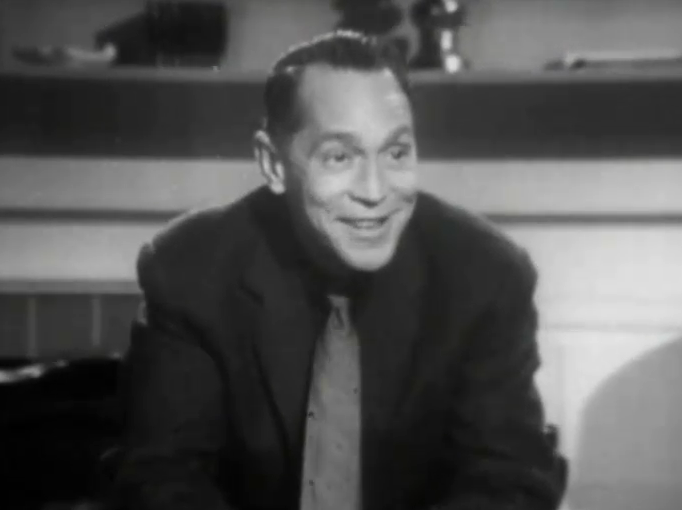
The Award, a Four Star Playhouse production, aired on CBS on June 30, 1955. Written by Leslie Stevens and directed by Roy Kellino, the episode stars Franchot Tone and innovative actress-director Ida Lupino.

Unlike much of Franchot's work that I highlight here, finding a copy of The Award is easy! Because this episode has fallen into the public domain, you can watch it instantly online. The full episode is available to watch on Jimbo Berkey's public domain site here.


I know you'll want to watch it for yourself, so I'll just include a brief summary here. Hollywood star Valerie Banks (Lupino) has just experienced a major flop in a Broadway show and is being ridiculed in newspapers across the country. Full of ego, Valerie cannot understand why audiences do not like her in the play Autumn Joy. She seeks out acting coach Ben Cheney (Tone) for an easy fix to her problem.  Because she is accustomed to being indulged by peers and fans, Valerie is dissatisfied with the solution Ben proposes.


During the episode, Franchot's character imparts the following advice to Valerie:

Well, that does it. You fight like a tiger and then fold when you’re beaten. Are you gonna let that stop you? Sure it’s broken. Is that the end of it? People get broken but they keep on going if they’re any good. You get that and nothing can stop you. Even when you’re all broken up. Pick up the pieces and start over.
These are my favorite lines in the teleplay. Franchot's delivery of these lines is spot on, but more than that, it reminds me of the strength Franchot himself displayed in the 1950's. Normally regarded as an easygoing, kind, and sensitive gentleman, Franchot was mired in scandal in the early 50's. Divorce proceedings and custody hearings with wife Jean Wallace became fodder for gossip columnists. The notoriously private Franchot became the butt of jokes when he was brutally beaten by his fiancé's lover and married her (the lovely, but troubled actress Barbara Payton) a few weeks later. This negative publicity plus pressure placed on him during the blacklist (both of which I'll write about in the near future) certainly affected his career. It is not my intent to paint Franchot as a saint. He certainly was human and made some poor decisions. However, I do find it admirable that Franchot didn't cave to the HUAC and managed to survive the bad publicity by throwing himself into non-stop theater and television performances. I believe his dedication to his work and the incredible performances he continued to give during this period restored his public persona. In the words of his character Ben Cheney, Franchot didn't fold when he was (literally) beaten. He didn't stop. He got broken and kept on going...because he was that good.


Saturday, February 27, 2016

Happy Birthday, Franchot!


Franchot was born on this day in 1905. It's hard to believe that he would be 111 years old. Even though I was born years after his death, I always think of Franchot as someone who hasn't been gone that long. I suppose it is because he comes across as so lively and in-the-moment in his work. He also had timeless looks, manners, and dress that will never go out of style.

Franchot remains relevant to me and, I think, should remain relevant to current and future generations of classic film fans. The performances he left behind are still as poignant, relatable, and stirring as they were when they were originally released. In Gentlemen are Born, he is an intelligent college graduate who struggles to find a home, work, and love in a recessed economy. In They Gave Him a Gun, he has great difficulty re-entering civilian life after a traumatic tour of duty in the war. In The Bride Wore Red, he's a modest postman sincerely in love with a woman who dreams of wealth. In Exclusive Story, he attempts to uncover corruption as an attorney. In Twelve Angry Men, he's a juror who grapples with determining another man's fate. All of these plots could easily be found in films today and people of the 21st century are still experiencing these same obstacles in their lives.

Happy Birthday, Franchot! Thank you for cheering me up with your antics in Fast and Furious and Three Loves Has Nancy, for absolutely breaking my heart with your vulnerability in Suzy, Dangerous, and Three Comrades, and frightening me in Phantom Lady and The Man on the Eiffel Tower. You are fascinating to watch, inspiring in your craft, and great fun to research.

Here's the tribute montage I made in January. I thought it was fitting to share it again today in celebration of Franchot's life and career. (If the embedded video does not play, here's the link: https://youtu.be/cnSbTLJ5i5w)


Monday, February 22, 2016

Nobody Runs Forever (1968)

In honor of the anniversary of Franchot's birth on February 27th, I'm posting daily this week instead of my usual twice-a-week posts. Today, I want to highlight Franchot's final film, Nobody Runs Forever.

Nobody Runs Forever (also known as The High Commissioner) is a late Sixties political thriller starring Christopher Plummer and Rod Taylor (an example of perfect casting, in my opinion).  Rod Taylor is Scobie Malone, a police sergeant asked to take into custody the High Commissioner of Australia, James Quentin (Christopher Plummer), who is being investigated for the murder of his first wife. Quentin requests that Malone keep the matter private and give him until after an important peace summit. Malone agrees to give the commissioner a few days, but keeps a close eye on him. During that time, Malone grows close to Quentin as he protects him against multiple assassination attempts, uncovers secrets from Quentin's current wife, and identifies a threatening spy ring. Franchot is American Ambassador Townsend, an ailing political mentor of Quentin's.

Franchot's role is very brief (under a minute). For that reason, I chose to share his actual scene instead of my usual screen caps. Knowing it is his last scene in a major motion picture and that Franchot himself was battling lung cancer as he played this gravely ill character in a hospital makes this clip bittersweet for me. (If the embedded clip doesn't play here, use the direct Youtube link.)


Although he plays this scene from a hospital bed, Franchot performs with the fortitude that I so enjoy in the charactors of his final decade. He's no feeble old man in that room. He's alive and biting and wise and in control.

Nobody Runs Forever is a stylish spy film, full of political intrigue, great dialogue, and gorgeous mod fashion on both the men and the women. Christopher Plummer and Rod Taylor, two of my favorite actors of that decade, are both fantastic in their roles and Franchot ends his career on a high note in a sophisticated tale of espionage.

Under the title The High Commissioner, this film is available on DVD.

Sunday, January 3, 2016

Tribute Video!

I finally finished my Franchot Tone: A Life in Film tribute video and I'm so happy with the way it turned out! It captures Franchot in many moods through over 30 years of film and television footage.

It is now on Youtube at this link: https://youtu.be/cnSbTLJ5i5w or you can just watch it here.