Showing posts with label jean wallace. Show all posts

Wednesday, June 22, 2016

Helen Ferguson on Franchot Tone

Helen Ferguson as an actress in the 1920's (left) and a
publicist at an event in the early 1960's (right).
Helen Ferguson was an actress-turned-publicist who represented many of classic Hollywood's biggest stars—Barbara Stanwyck, Loretta Young, Henry Fonda, Jeanette MacDonald, and so on. In the 1940's, Helen became Franchot's public relations counselor. In 1948, Helen shared her thoughts on Franchot with Screenland magazine:
He has a sense of humor as gay and sprightly as a leprechaun's—but that's his secret. On the surface, even he has accepted the Tone legend. Sophisticated, erudite, aloof—all the admirable but chilling synonyms for Tone which have become his tag in Hollywood. But casual? Indifferent, my eye! The man is shy. Honest to goodness shy. Things matter greatly to Franchot but, like the leprechaun's charming approach to reality, his disguise of such caring is complete.
A master at the art of underplaying—his life is slanted on that side, too. To find out how different you chuck your own inhibitions and rush right against the barrier of his reticence. And then there's fun. Like the night of the premiere at Westwood. Thinking it was a benefit preview, having practically invited myself to dinner at the Tones', my social conscience was slightly eased when I invited them to go to the "preview" with me afterward, and bought tickets. Jean accepted eagerly and Franchot was told. We started off, and wound up in a premiere crowd—lights, shimmering gowns, radio broadcast—the works. Franchot wanted to turn back. Jean and I kept our enthusiasm at a pitch, ignoring Franchot's murmer, "I'll just leave you girls and pick you up later"—and other not so murmured negative sentiments. Next thing, we were in the crowd, eager faces were grinning, calling Franchot's name, applauding as they recognized him. Someone opened the car door, asked him to the mike, ignored his "Oh, you don't want me"—light bulbs flashed—Franchot was at the mike, his crooked grin showing, saying gracious, humorous things, with a twinkle in his eyes. As photogs and fans yelled, "Hello, Franchot!" he tossed it off. "They're just glad to see anybody," he said.
That's the night I got to know the guy. Set my policy. Just surprise him into the spotlight—where folks want him, and which, on him, looks good. Surprise him all you want, but don't take it for granted that you know how to "handle" Tone. He's full of surprises himself. Remember the leprechaun grin—and remember that leprechauns aren't like people, bound by the material importances. Remember they are bound by their own delightful sense of values, and Franchot is bound by his. Shy, sensitive, considerate, but elusive—and a hunk of granite when "no" is what he really means. You won't go wrong if you listen to the tone of Tone's voice.
The Screenland article in which Helen's comments appeared also included comments from Franchot's wife Jean, costar Janet Blair, and Jean's young sister Karol. I shared Jean Wallace's take on Franchot back in January. To read Jean's part of the article, please see Part 1 and Part 2.

Source: "Franchot's Femmes: Four Women in His Life Tell All, About the Suave and Elegant Mr. Tone." Screenland. July 1948. Vol 52, No.9.Page 42-43, 64-65.

Tuesday, February 9, 2016

Franchot's Leading Ladies

Throughout his career, Franchot starred with some of the most talented and beautiful actresses in Hollywood (and even married a few!). Today, I thought it would be fun to highlight and share some stats on the ladies who shared the screen with Franchot.

Joan costarred with Franchot in 7 films
Joan Crawford (b. 1905 d. 1977)
Between 1933 and 1937, Joan Crawford and Franchot made 7 films together. Franchot and Joan were married from 1935 to 1939. Although their divorce was somewhat bitter, the two rekindled a close friendship that would last until Franchot's death in 1968.
Notable Films: Our Dancing Daughters,  Dancing Lady, Grand Hotel, The Women, Humoresque, Mildred Pierce, Whatever Happened to Baby Jane?
Films with Franchot: Today We Live, Dancing Lady, Sadie McKee, No More Ladies, The Gorgeous Hussy, Love on the Run, The Bride Wore Red
My personal favorite FT-JC film: The Bride Wore Red

Jean costarred with Franchot in 4 films
Jean Harlow (b. 1911 d. 1937)
Jean Harlow and Franchot Tone costarred together in 4 films between 1933 and 1936. The platinum blonde and amazing comedienne tragically died of uremic poisoning in 1937.
Notable Films: Hell's Angels, Platinum Blonde, Bombshell, Red Dust, Dinner at Eight, The Public Enemy, Libeled Lady
Films with Franchot: Bombshell, The Girl from Missouri, Reckless, Suzy
My personal favorite FT-JH film: The Girl from Missouri

Deanna and Franchot costarred in 3 films.
Deanna Durbin (b. 1921 d. 2013)
Noted for her skills as a lyric soprano who could deliver both hit ballads and complicated arias, Deanna Durbin was paired with Franchot in three romantic comedies in the 1940s. Deanna retired from the screen while still in her late 20s in 1949.
Notable Films: One Hundred Men and a Girl, Three Smart Girls, Mad About Music, It's a Date, It Started with Eve
Films with Franchot: Nice Girl?, His Butler's Sister, Because of Him
My personal favorite FT-DD film: His Butler's Sister
Gladys played Franchot's love interest in 3 films.
Gladys George (b. 1904 d. 1954)
An Oscar-nominated actress yet often overlooked today, Gladys George costarred with Franchot in 3 films between 1934 and 1938. Before pursuing a career in Hollywood, Gladys performed across the country with her parents' stage act.
Notable Films:Valiant is the Word for Carrie, Madame X, The Best Years of Our Lives, The Maltese Falcon, Marie Antoinette
Films with Franchot: They Gave Him a Gun, Love is a Headache, Straight is the Way
My personal favorite FT-GG film: They Gave Him a Gun

Loretta and Franchot made two films together.
Loretta Young (b. 1913 d. 2000)
20-year-old Loretta Young was already a film veteran when she costarred with Franchot in the 1933 film Midnight Mary. The two would costar again in 1936, were spotted out on the town in the late 1930s, and starred in several radio productions in the 1940s.
Notable Films: Laugh Clown Laugh, Midnight Mary, Taxi!, The Call of the Wild, The Farmer's Daughter, The Bishop's Wife
Films with Franchot: Midnight Mary, The Unguarded Hour
My personal favorite FT-LY film: Midnight Mary

Karen Morley was Franchot's leading lady twice in the 1930s.
Karen Morley (b. 1909 d. 2003)
Another classic film actress whose contributions are often neglected, Karen Morley acted with Franchot in two films in the early 30s and was married to director Charles Vidor. In the the late 1940s, she refused to answer questions for the House Un-American Activities Committee and was blacklisted.
Notable Films:Mata Hari, Scarface, Dinner at Eight, The Littlest Rebel, Arsene Lupin, Pride and Prejudice
Films with Franchot: Gabriel Over the White House, Straight is the Way
My personal favorite FT-KM film: Straight is the Way

Maureen O'Sullivan was a 2-time costar of Franchot's.
Maureen O'Sullivan (b. 1911 d. 1998)
Awarded the George Eastman Award for her film contributions, Maureen O'Sullivan was Jane to Johnny Weismuller's Tarzan, but made time to play Franchot's leading lady in 1933 and 1937. With writer-director John Farrow, Maureen had seven children, including actress Mia Farrow.
Notable Films: Tarzan the Ape Man, The Thin Man, Anna Karenina, A Day at the Races, Maisie Was a Lady, Pride and Prejudice
Films with Franchot: Stage Mother, Between Two Women
My personal favorite FT-MO film: Between Two Women

Joan Bennett played Franchot's other half in 2 early 1940s films.
Joan Bennett (b. 1910 d. 1990)
Best remembered as a mid-to-late 1940s femme fatale, Joan Bennett performed on stage before seeking work in films. Sister of Constance Bennett, Joan appeared as a blonde in her 1930s films, before switching to the dark hair and sultry look that became her trademark in film noirs.
Notable Films: Bulldog Drummond, Little Women, The House Across the Bay, The Man I Married, Man Hunt, The Woman in the Window, Father of the Bride
Films with Franchot: The Wife Takes a Flyer, She Knew All the Answers
My personal favorite FT-JB film: Unfortunately, I've not seen either of their films! I'll update this after I have watched them.

Jean Wallace married and costarred with Franchot in the 1940s.
Jean Wallace (b. 1923 d. 1990)
Married to him for the majority of the 1940s, Jean Wallace starred in two films with Franchot, but found greater success in her films with third husband Cornel Wilde. Before she entered films, Jean worked as an Earl Carroll showgirl. Jean and Franchot had two sons during their union.
Notable Films: Jigsaw, The Man on the Eiffel Tower, The Good Humor Man, The Big Combo, Lancelot and Guinevere
Films with Franchot: Jigsaw, The Man on the Eiffel Tower
My personal favorite FT-JW film: Jigsaw

Actresses who were one-film costars of Franchot include:
Miriam Hopkins | Constance Bennett | Madeleine Carroll
Margaret Lindsay | Bette Davis | Madge Evans |Grace Moore
Katharine Hepburn | Virginia Bruce | Myrna Loy |Margaret Sullavan
Franciska Gaal | Janet Gaynor | Ann Sothern | Carol Bruce
Peggy Moran | Anne Baxter | Marsha Hunt | Mary Martin
Ella Raines | Veronica Lake | Merle Oberon | Susanna Foster
Ann Richards | Shirley Temple | Lucille Ball | Janet Blair
Betsy Drake | Laraine Day | Jane Wyman | Dolores Dorn
Una Merkel (Una costarred in two films, but only one as a leading lady.)

Tuesday, January 19, 2016

Jean on Franchot, Part 2


"I love his laugh and his smile.
Because I was very young and Franchot's what people call a man of the world, the hazards of our marriage were delightedly estimated by those who fill the lack in their own lives with an acute interest in the lives of others. We've confounded the prophets so far. Sometimes I think we've even confounded ourselves.
There are times when Franchot's every virtue seems a fault. When I wish his independence would crack, when his over-generosity would stop and go into reverse. I don't mind the exciting few times his control has burst wide open and his quiet evaporated in an outraged roar. There are times when I wish his tie would be crooked, his suit wrinkled. And then I think of the way his eyes crinkle at the corners when we're laughing together—or glow when he likes a new gown. I see the charming casualness of his perfect manners, feel the dependability of his tact, diplomacy and forbearance. So what if he does like a symphony better than having a crowd for dinner? Prefers a sneak preview to a premiere? What if he does prefer going to the races to going dancing? And bets the horses with more enthusiasm than know-how? My thrifty soul capitulates before his guileless smile when he hands me the uncashed tickets, saying merely, "I forgot to tell the horses I was on 'em."
You can't resent a man just because he looks like a "Man of Distinction" at the breakfast table when you've seen him, with infinite patience, console his son when his favorite toy was broken, or discipline his first-born with firmness, when a toss-off would have been easier by far.
As Franchot's wife I've come to respect a lot of things which, when I was a youngster, seemed unimportant. It was inevitable, I suppose, that I first resisted his attraction for me—disliked him, even, because of it. Perhaps in a vague way I realized the enchantment his even-tempered, almost casual way would throw about me. It's no longer enchantment—it's real. I guess through all of this I've been trying to say what is fully said in a simple sentence. Franchot is civilized. That's his burden—and his glory. It's my pride and my cross."

Jean Wallace Tone


Source: "Franchot's Femmes: Four Women in His Life Tell All, About the Suave and Elegant Mr. Tone." Screenland. July 1948. Vol 52, No.9.Page 42-43, 64-65.

Monday, January 18, 2016

Jean on Franchot, Part 1


"After six-and-a-half years of marriage, Franchot Tone is the most exciting, handsome, lovable, exasperating, beguiling and challenging man in my world. His poise is a Gibraltar of strength—now that we've each done a little reforming. He's taught me to be more controlled—I've helped him discover the release an occasional outburst can be. He actually allowed himself to be angry when a business associate double-crossed him recently, and I was mighty proud of him! Never making a fuss, never aggressive about privileges he's earned—that I can cheer him for. But I've been burned to a crisp when he's allowed people to take advantage of his generosity and kindness. And I don't burn silently. Not Mrs. Tone!
His knowledge of subjects as unrelated as the ballet and the pruning of fig trees, acting and a recipe for frijoles, politics and the intricate mechanism of television, blown glass and the history of rare gems, religion and psychiatrics—no longer amazes me. Proving you can get used to anything.
Franchot's rather particularly unpredictable, I'd say. Just when you think he's a mind he makes some ridiculous off-beam investment—like the winery. We have heaven knows how many cases of wine in storage, all we have to show for quite a tidy investment he made one smart day. He won't drink a drop of the stuff. "It cost about a thousand dollars a case," says he. "And no drink is worth it."
His independence is colossal. Even when he has a cold in the head he remains aloof from any evidence of needing help or attention. He can always tie his dress tie expertly without getting the househould into an uproar. He never goes barging around blaming elusive dress shirt studs or collar buttons on my carelessness, or the kids' explorations into his dresser drawers. Of course, he doesn't have to plant any blame—he always knows just where they are!"
 Jean Wallace Tone

Source: "Franchot's Femmes: Four Women in His Life Tell All, About the Suave and Elegant Mr. Tone." Screenland. July 1948. Vol 52, No.9.Page 42-43, 64-65.

Saturday, January 9, 2016

Wednesday, November 18, 2015

Hill School fight leaves Jean defeated

 
The photograph above makes my heart ache for Jean Wallace. She looks so devastated moments after a court supported Franchot's urging that his son attend The Hill School, which had been a Tone tradition. It probably didn't help matters that her husband Cornel Wilde looks so chummy with ex Franchot for the photograph. According to reports of the day, Jean had a difficult and emotional time during her divorce and custody battles with Franchot. I'm sure this extra battle (which would place son Pascal away from her in Pottstown, Pennsylvania for a good part of the year) was painful for her. Below is an article that described the court's decision.


Sunday, October 18, 2015

Franchot marries Jean

Franchot married Jean Wallace on this day in 1941. They were married in Yuma, Arizona in the justice of the peace's chambers and traveled to Palm Springs after the ceremony. Jean was granted a divorce from Franchot in August 1948, but newspapers reported that she still had hopes of a reconciliation. Following their divorce, Franchot and Jean were featured in the film noirs Jigsaw and The Man on the Eiffel Tower.
Franchot and Jean in Jigsaw.

Monday, September 28, 2015

Franchot Tone's Advice to His Bride


In a 1942 article in Hollywood magazine, Franchot gave advice to his wife, Jean Wallace, whom he called "eager, alert, intelligent, and suggestible." Here are husbandly words of wisdom from "Old Doc Tone":
Mathematically I'm old enough to be Jean's father. But by good fortune it turned out that someone else was, making it legal for me to marry her. Being an old graybeard has its advantages, not the least of which is that youngsters listen respectfully to old folks' advice.
If Jean is wise (who wants wisdom in an eighteen-year-old?), she will heed the warning of Old Doc Tone and adopt the standard Hollywood attitude about her career. If I were wise I'd do the same myself, but you can't teach an old hound new tricks, so I suppose I'm beyond redemption.
Jean is going into pictures with her eyes open. Despite her actuarial youth, she has been around long enough to understand some of the values of show business, as what Earl Carroll girl doesn't? She's no baby, regardless of the clever remarks the columnists made when we were married. 
Being an American, I recognize that a mere husband has only a still, small voice in household affairs. But with what authority I can muster I am going to advise Mrs. Tone about getting a fixed habitat and making it the center of her existence. In Hollywood it's fashionable to have a new address every year. This is the bunk. My family, which is as solid as Plymouth Rock, has lived in the same house for fifty years and altered it only when such new-fangled devices as air-conditioning popped up to make family life more comfortable.
I am going to suggest that as soon as we move out of the house we rented from Hedy Lamarr, my bride find some staid and substantial manor house that we can live in comfortably forever. My idea now is to settle down in a genuinely permanent abode that will be known to the grandsons of today's college boys as "The Tone place," a landmark around the countryside and a symbol of solidity and stability. 
Franchot ends with a final bit of advice to Jean:
Stay sweet as you are. 
Source: Underhill, Duncan. "Franchot Tone's Advice to His Bride." Hollywood. Jan-Dec 1942. 30, 37.


Wednesday, August 5, 2015

The Man on the Eiffel Tower (1949)


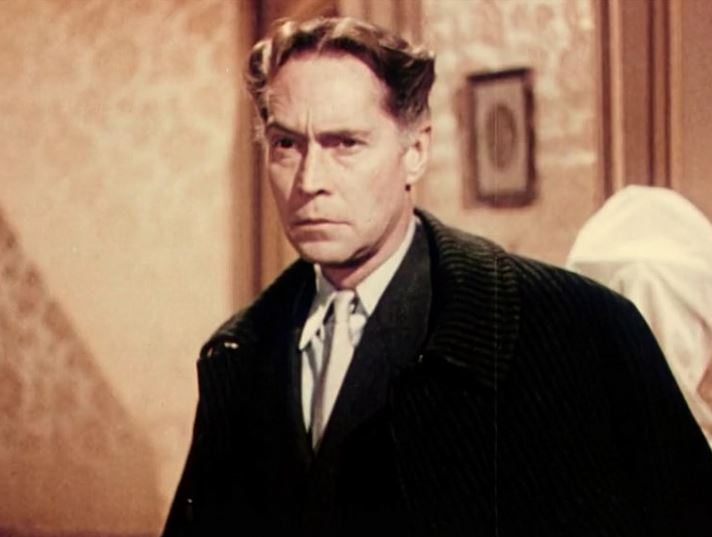
The Man on the Eiffel Tower stands out among Franchot's filmography for many reasons. First, it is a film that Franchot cited as one of his favorites. Second, it is the only film of his in color. Third, it features his second wife and mother of his children, Jean Wallace (yet they were either separated or divorced at the time of filming). Fourth, it was filmed with his pals Burgess Meredith and Charles Laughton. And fifth, it gave Franchot the opportunity to play a disheveled, quietly plotting killer.
Jean Wallace
Truthfully, I did not appreciate this movie the first time I watched it. I had come off a string of Franchot's 40s light romantic comedies and the plot of Eiffel Tower was a bit more complicated to follow. Also, I first watched a spotty quality copy with bad audio on Youtube, so I struggled to make out all the dialogue and was distracted by the rough cut. Later, I found a better version on Moving Image Archive and watched the film over in its entirety. (Just a note, because this film now falls under public domain, there really is no pristine copy. I've included links to the ones available online at the end of this post). On my second viewing, I enjoyed the The Man on the Eiffel Tower for the unique thriller that it is. My advice to you is don't write it off just because it hasn't been restored and it's not your typical glossy Hollywood mystery. The film has a clever plot, great cast, and amazing color views of Paris in the late 1940s.


In the movie, Bill Kirby (Robert Hutton) and his girlfriend Edna (played by Jean Wallace) confess to Bill's wife that they have been having an affair. In a cafe, Bill talks about his wealthy aunt and how her death could benefit his and Edna's future.

Johann Radek (Franchot Tone) is a sly, kooky character dining across the cafe. Radek passes a note to Mr. Kirby, offering to murder the wealthy aunt.
Meanwhile, the film's director Burgess Meredith stars as Joseph Heurtin, a quiet, hard-working man whose wife does nothing but belittle him. Heurtin decides to break in to and steal from Kirby's aunt's house, and unwittingly walks into a murder scene. When Heurtin loses his thick glasses (very similar to Meredith's Twilight Zone "Time Enough at Last" spectacles), the murderer Radek helps him home.

Because his glasses are left at the scene, Heurtin is first implicated in the murder. Heurtin helps the police identify Radek, but Radek is so sneaky and clever that he is able to taunt the police. Charles Laughton is brilliant as the lead inspector working to bait and catch Radek.
             
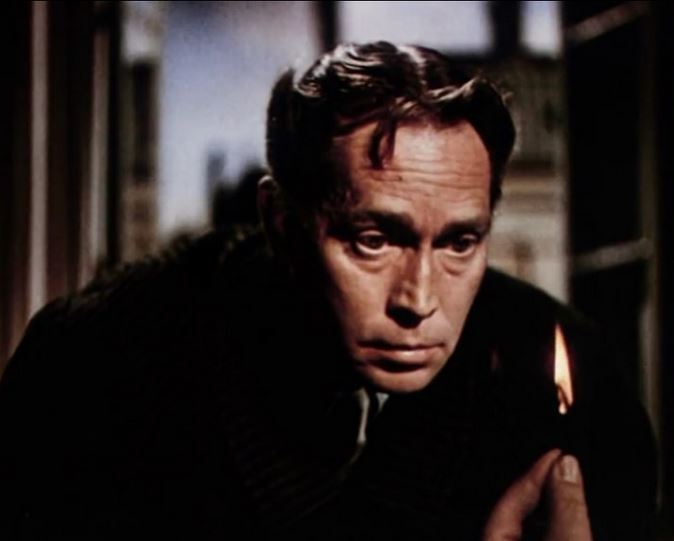
Franchot was 44 years old when The Man on the Eiffel Tower was filmed and the film, in my eyes, is his transition from romantic lead to interesting character actor. Although Franchot had played a killer once before in 1944's Phantom Lady, Eiffel Tower is where we first see Franchot's face (a bit more lined with wrinkles and wisdom) taking on the characteristics that he would display in his television work. His hair and clothes are somewhat disheveled and his eyes are full of mischief.
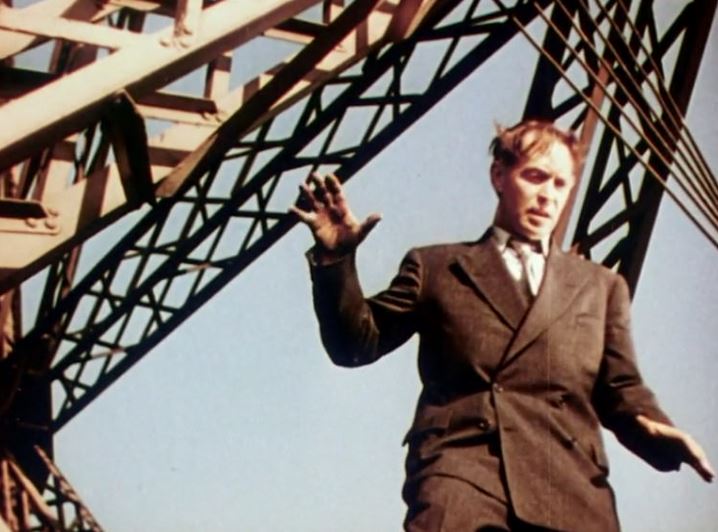
One of my favorite scenes is the exciting Eiffel Tower climb at the end of the film. Radek attempts to resist arrest by climbing the Tower, but Heurtin and the Inspector are close behind. The cityscape is visually stunning and the scene itself will have you on the edge of your seat!


You can watch The Man on the Eiffel Tower on Youtube or at the Moving Image Archive. There is also a DVD available on Amazon.

Friday, June 5, 2015

Actress Jean Wallace


Franchot married the lovely blonde actress Jean Wallace in October 1941. Born Jean Walasek in Chicago, Jean was barely eighteen years old and beginning to get her feet wet in Hollywood when she married Franchot. During their marriage, Jean and Franchot produced two sons and, according to newspaper reports at the time, appeared to have an idyllic homelife in the early days. At the end of and for a short time after their marriage, Jean seemed to struggle with her career, depression, and suicide attempts. Although they were at odds and there were infidelity accusations on both sides, Jean and Franchot costarred in Jigsaw and The Man on the Eiffel Tower in 1949. They would divorce and a heated custody battle over their two children would follow in 1950.

She was married to actor and director Cornel Wilde from 1951 to 1980. Cornel featured his wife in many films and her career gained some momentum again in the 1950s. She died on Valentine's Day in 1990.

Read her IMDb profile, the Glamour Girls of the Silver Screen site's timeline of her life, her NYT obituary, Find A Grave information, and view pictures of her on Google Images.

You can watch Franchot and Jean's films Jigsaw and The Man on the Eiffel Tower online at the Internet Archive.

Photo Source: Wiki Commons