Showing posts with label romance. Show all posts

Wednesday, April 1, 2020

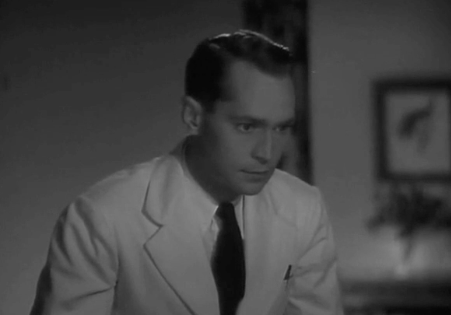
Between Two Women (1937)


Directed by George B. Seitz and starring Franchot Tone, Maureen O'Sullivan and Virginia Bruce, the medical drama Between Two Women premiered to American audiences on July 9, 1937.

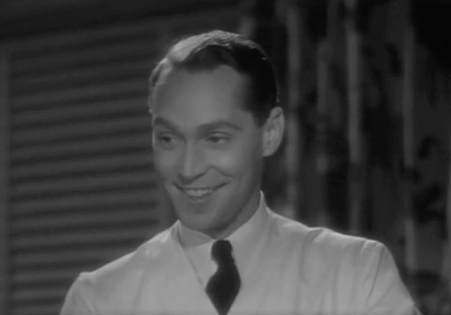
Between Two Women is one of my favorite Franchot movies and I keep hoping it is going to be released on DVD by Warner Archive. It deserves a quality DVD release. It is a great romantic drama, well acted by all of its cast, and Franchot particularly shines in this role.

The film received positive reviews from the fan magazines at the time. Hollywood Magazine said that it was "smoothly directed...a convincing story of the loves, desires and heartaches of those who minister to humanity...[Tone, Bruce, O'Sullivan] have never appeared to better advantage than in this powerful drama." Photoplay called it, "unusually exciting and realistic...Franchot Tone brings all his ability to the role...Splendid." Silver Screen devoted an entire article to the film and its story.
While I will not spoil the final events of the film, the film summary that follows will include some plot spoilers.

Silver Screen Magazine. August 1937.

Allan Meighan (Franchot Tone) is a studious, conscientious intern in a large hospital. He's referred to by one patient as the "strong, silent man who saved my life." Claire Donahue (Maureen O'Sullivan) is a nursing intern who is promoted to head surgical nurse. Allan and Claire are good friends and enjoy working together.


Allan has a few more weeks until he will begin residency. He's applied to his current hospital but hasn't received word yet. After intern Tony Woolcott refuses to go to an accident scene, Allan goes instead. When he has to amputate an arm to save the life of a man trapped in rubble, Allan is named resident at the hospital.

Claire's husband Tom is an alcoholic who can't keep his job and hits his wife. He often stops by the hospital to ask for money from Claire. Claire makes excuses, "He only drinks because he's discouraged because he feels licked."


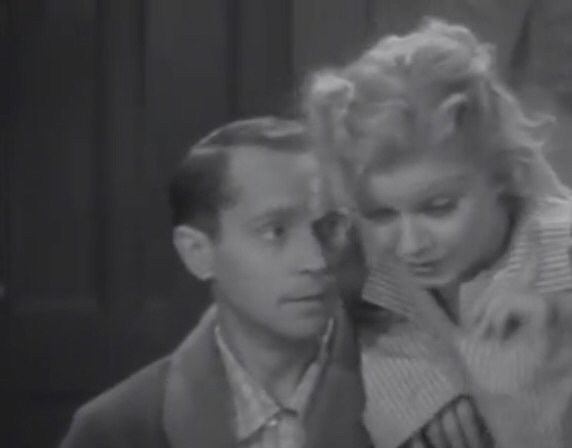
Socialite Patricia "Pat" Sloan (Virginia Bruce) crashes her car due to passing out from a ruptured appendix. Allan performs surgery and requests Claire "the best nurse he knows" for night duty. Patricia makes eyes at Allan as soon as she wakes from the anesthesia and notices how uncomfortable Claire becomes by it.

Tony Woolcott (Leonard Penn), a wealthy intern who recklessly drinks on the job and has no care for humanity, has eyes for Pat, but Pat desires to be the bride of Dr. Meighan. Allan warns her that he doesn't make enough money to get married. She makes an agreement that he buy necessities and she'll add a few luxuries with her own money.

Allan falls in love with Pat but fears that he won't make her happy.When Claire walks into the hospital room, Pat announces that they are engaged. Claire is shocked. She cries alone as she walks the hospital hallways.


There are already cracks showing in the marriage immediately after the honeymoon when Pat is less than thrilled about living in a modest home. They clearly are attracted to each other but Allan's first duty is to the hospital and Pat does not want his attention divided. Allan is called away from each social engagement they attend because he's needed in surgery. With each call, Pat grows more resentful.

When Allan starts to ignore his duty to the hospital to please Pat, he begins missing out on big professional opportunities and growth for himself as a surgeon. Allan questions Claire about why she stays with a drunk and Claire responds, "You see, I've adjusted my life to Tom. You still haven't adjusted yours to Patricia."


I'm going to stop here with the summary because the last half of the film has several huge moments that change the direction of Allan's plans and stir different feelings in his heart. It's a moving, unassuming film that hooks me every time I watch it. It comes on television every so often, but I'm hoping Warner Archive realizes what a gem this movie is and releases it soon.


Sources:
Silver Screen Magazine. August 1937.
Photoplay. September 1937.
Hollywood. September 1937.
Modern Screen. March 1938.

Wednesday, January 15, 2020

Suzy (1936)

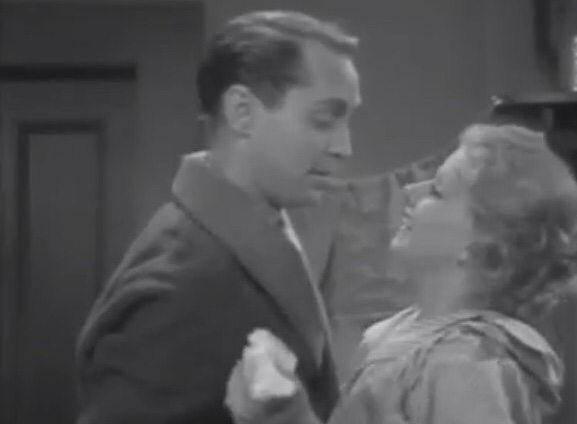
Suzy (Jean Harlow) is a chorus girl who convinces her pal Maisie (Inez Courtney) that she can easily seduce a wealthy man into a relationship and that love can naturally follow. On a foggy day in London, Suzy falls in front of a car driven by a chauffeur and with Terry Moore (not the actress, ha! Franchot's character) in the backseat. Suzy assumes the car belongs to Terry and that he is wealthy.


When he invites her to the derby, Suzy confesses to the maid that she will absolutely marry Terry. Terry pulls up in a decidedly cheaper automobile than the Rolls Royce, and Suzy realizes Terry is not the millionaire she assumed he was. Although not wealthy, Terry is hard to resist. He's an intelligent triple threat: inventor, engineer, and pilot. He's sweet to Suzy and completely falling in love with her. Suzy agrees to marry Terry, but their marriage is short-lived; showing off his work in the lab, Terry and Suzy accidentally cross the path of a German spy (Benita Hume).


Terry is shot, his shooter flees, and Suzy is accused of murder by the landlady. Devastated by the death of her new husband and threatened with a murder charge, Suzy escapes to Paris where her friend Maisie is now living and starts fresh.

As World War I begins, Suzy works as a singer in a bar, meeting wealthy pilot Andre (Cary Grant). Andre charms and marries Suzy, but he is not a faithful husband when he returns to the front. Suzy finds herself spending most of her time with Andre's father Baron Charville (Lewis Stone) and desperately missing Andre.

Next up is a necessary plot spoiler for this post, but I promise it is not a spoiler of the film's ending.

When Andre is wounded and hospitalized, Suzy visits him and there in the hospital room is...
Terry!

Terry was terribly wounded by the earlier shooting, but he survived unbeknownst to Suzy who fled the scene so abruptly. Suzy is shocked to see her husband standing in front of her. Terry, understandably, feels abandoned and betrayed by Suzy, but neither of them share their past with Andre. Terry has been inventing new fighter planes for Andre to pilot and is close to him. Meanwhile, a mysterious woman appears in Andre's life.


Suzy must decide whether she will stay with the wealthy man whom she loves but cannot trust or turn to her former husband Terry for whom she still feels deeply...unless an irrevocable event makes this decision for her.

This is my second favorite of Jean and Franchot's pairings (the first is The Girl from Missouri) and sadly it was their last chance to work together before Jean's untimely death the following year. The acting they do in Terry's apartment come across as effortless and casual; you completely believe that these two are becoming close friends and falling for one another. Jean is adorable in her borrowed pajamas from Terry's closet and her hair up and messy.

My only criticism is that Franchot drops his character's Irish accent occasionally throughout the film, but I find that pretty typical with most American movie stars taking on accents in 1930's films. Cary Grant is the playboy pilot (it's kind of a surprise that Franchot didn't end up with that role since he was so often typecast as the wealthy playboy) who is loved by both Suzy and Terry. Lewis Stone is fabulous as always as the father figure.


Suzy is available on DVD, but often out of print or only available via Warner Archive's Jean Harlow box set.

Saturday, March 17, 2018

She Knew All the Answers (1941)

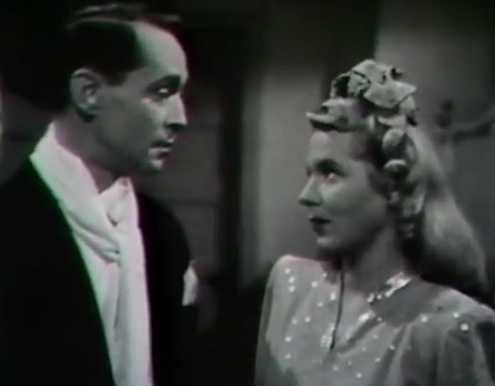
She Knew All the Answers is a lighthearted romantic comedy starring Franchot Tone and Joan Bennett. Released in 1941, the film is directed by Richard Wallace, who would team up with Tone and Bennett again a year later for the war comedy The Wife Takes a Flyer. Neither film has been released commercially on DVD and I'm not sure if that will ever be something slated for the future at all, but I would love to see a Bennett/Tone double feature DVD one day. In addition to these two early 40's films, Franchot and Joan would go on to costar in a 1957 episode of Playhouse 90 entitled The Thundering Wave.

In She Knew All the Answers, we are first introduced to playboy Randy Bradford (John Hubbard) and chorus girl Gloria Winters (Joan Bennett), both eager to elope. There's just one problem standing in their way and that problem's name is Mark Willows. Willows (Franchot Tone) was Randy's father's partner in a lucrative financial firm on Wall Street, and was appointed Randy's guardian when his father died. As guardian, Mark gets approval over the woman Randy marries and if he doesn't approve, Randy loses his millions. Mark is a mild-mannered, conventional man who doesn't approve of Gloria's chorus girl status and nixes their plans.


Gloria knows that Randy will never make it as a working class man and she's not willing to be a working class wife, so she hatches a plan. She will get a job—under the name of a roommate—as the switchboard operator at Willows' office long enough for him to sign a letter of recommendation for her, then she will use that signed letter to marry Randy without consequence. Expecting an older, unattractive guardian, Gloria is surprised to find that Mark Willows is a young, attractive man—albeit, a reserved, bespectacled one. Although focused on stocks and investments, Mark is clearly befuddled by his blossoming attraction to Catherine Long (Gloria's assumed name.)


Beginning to feel confident with the switchboard and around her coworkers, Gloria—unaware of Wall Street lingo—accidentally spreads false news about the firm causing Mark to lose a large amount of investments. Mark fires her, then, after her suggestion for a solution is successful, visits her apartment to ask her to return to the firm. This is the scene where many men would've caught on to Gloria's tricks, but Mark is gullible. Randy is hiding in the kitchen while the real Catherine Long, Gloria's roommate played by the infallible Eve Arden, feigns a disability to substantiate Gloria's lies.


Randy sees that his guardian is falling for Gloria and has a prank call placed to the restaurant where Mark and Gloria are dining one evening. Mark decides to get revenge and talks Randy into staying in the office all night in order to "save the business." Gloria's eyes light up when she realizes that the typically straight-laced Mark, whom she's convinced to ditch the glasses, is up to mischief. As Randy waits by the phone all night, Mark and Gloria go to Coney Island and act like total goofballs. This is my favorite part of the film! They pose for silly pictures, ride the Tunnel of Love, eat cotton candy, and both Franchot and Joan are really adorable in these scenes. They fall for each other, but then Mark learns the truth about Gloria and her scheme. In the final scenes, an unusual dream sequence for all three main characters follows leading to a wedding in which those dream alter egos call the shots.


The film was lukewarm with critics. Bosley Crowther warned audiences that it was an "inconsequential little comedy," which was actually much kinder than he'd be a year later when he deemed The Wife Takes a Flyer a "painfully labored comedy." She Knew All the Answers would be neither Franchot nor Joan's most successful comedy, but they, as evidenced in their incredibly expressive faces throughout, embrace the lightness of the picture. It's a joy to watch from start to finish and the two stars are very well-matched in their comedic timing. I hate to call it a "cute movie," but it just is. I watched it again this week when I was ill with a virus, and—even though the quality of my old copy leaves much to be desired—it proved to be the fantastic spoonful of sugar I required.


Franchot and Joan shared not only these films, but also the same birthday. As I wrote about a few weeks ago, Franchot and Joan celebrated their birthdays together two years in a row—with surprise cakes for each other on the set of this film in '41 and by cohosting a massive party for servicemen with Feb. 27 birthdays a year later in '42.

Finally, a pal who has been a kind supporter of my Franchot efforts (and antics) happens to be an out-of-this-world knowledgeable and passionate expert on all things Joan Bennett (as well as some other fantastic film ladies) and recently devoted a website to Joan B. at http://www.joanbennettfan.com. Check it out!


Sources:
Crowther, Bosley. "The Screen in Review." The New York Times. June 20, 1941.
Crowther, Bosley. "The Screen." The New York Times. .June 19, 1942.

Friday, February 16, 2018

That Night With You (1945)

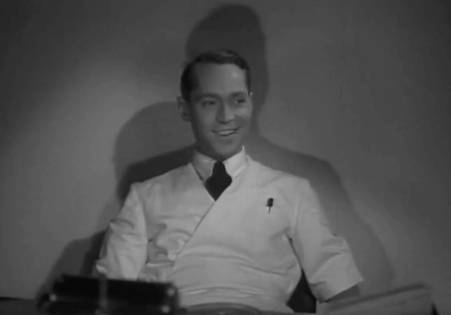
That Night with You is a 1945 romantic comedy with some dream fantasy thrown in for good measure. The film stars Franchot Tone, Susanna Foster, Louise Allbritton, David Bruce, and Jacqueline de Wit. It also includes an odd, too-brief part played by Buster Keaton.

I've not watched That Night With You nearly as much as other Franchot films. To be honest, the first time I saw it I thought it was not a strong performance of Franchot's and didn't really go for all the dream sequences. I recently rewatched it and realize I've missed the mark in a lot of ways. Franchot's performance is a bit hammy (the first time I watched it I felt he overplayed it), but it's actually quite in line with the character he plays. As Paul Renoit, he winks and smirks and flirts his way through the picture. But Paul's a self-described cad who promises women stage parts in exchange for romantic interludes, cares only about himself, and thinks he's God's gift to women. The way Franchot plays it absolutely makes sense and is, frankly, a pretty adorable performance. He's lovely to look at and more goofy than debonair throughout the film.  I found myself giggling at him by the end of each scene.


Penny (Susanna Foster) dreams (literally) of becoming a singing sensation for Paul Renoit. When she sleeps, she finds herself on expansive musical stages headlining a Renoit production. Penny is certain these dreams will become reality and doesn't hesitate to forge her own path to Paul's stage door. Penny's boyfriend Johnny (David Bruce) owns the diner where Penny works (and where Buster Keaton serves customers from behind the counter) and thinks Penny's dreams are just wishful thinking and aims to make Penny a housewife and mother.


Sneaking into the theater, Penny witnesses star Clarissa quit the show on opening night—just as her dream had foretold. We learn that Clarissa gave up a big Hollywood contract in order to be Mrs. Paul Renoit, but Paul has been stringing her along. A well-meaning wardrobe mistress advises Penny to stay as far away from Paul as possible. He's a serial womanizer. He even abandoned a wife, annulling the marriage as a very young man. Penny realizes she's young enough to convince Paul that a daughter was born following the brief marriage and that she is said daughter.


Paul's wise-cracking, Eve Arden-type secretary Prudence (Louise Allbritton, a comedic revelation to me) is on to Penny's scheme at once. Paul is, too, but decides to play along. But when his friends begin to joke that Penny really does favor Paul quite a bit in bone structure, Paul begins to worry that he is a father after all. And when his long-forgotten first wife Blossom (Jacqueline de Wit) reappears and vouches for Penny's story, every character becomes confused until the truth finally reveals itself. The film is hard-to-find, but is an engaging, cute story showing Franchot's knack for romantic comedy.


Criticisms:
-Although Franchot is the lead, there are a lot of musical numbers that he's not involved in, so he's not given as much screentime as he could've handled.
-Susanna Foster is lovely and an amazing singer, but I couldn't help but wish Deanna Durbin (her studio-imposed rival at Universal, apparently) was in the role instead. I'm crazy about Durbin-Tone pairings and would've liked to see them in this film together.
-I wish this film had been shot in Technicolor. It would've lent a more magical quality to the dream sequences.

Bosley Crowther (never much of a fan of Franchot's) reviewed the film for the New York Times dated November 9, 1945 and called it a "mild musical" and "romantic nonsense of an innocent and thoroughly foolish sort." He said, "Mr. Tone's coyness as a foster father is not precisely on the scintillating side."  I, however, think the innocence and foolishness of the romance is what makes this movie so delightful.