Showing posts with label musical. Show all posts

Sunday, September 29, 2019

Here Comes the Groom (1951)

Directed by Frank Capra, Here Comes the Groom is a 1951 musical romantic comedy starring Bing Crosby, Jane Wyman, and Franchot Tone. It is a fun romp about two men competing over a woman with some great Bing tunes thrown in for good measure. Be forewarned that you'll be singing and dancing around your house to "In the Cool, Cool, Cool of the Evening" for days after you watch it.

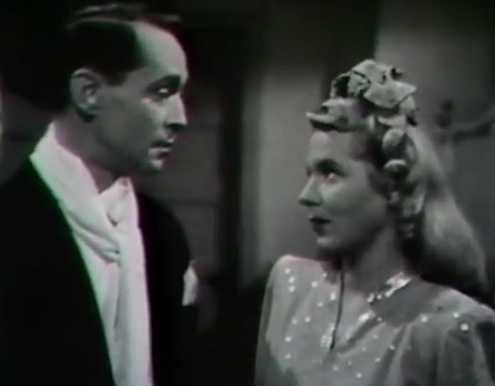
Franchot in Here Comes the Groom, 1951. Scan from my collection.

The Film

Peter Garvey (Bing Crosby) is a news reporter stationed in a Parisian orphanage. He is fond of all the children there and takes pride in placing them in perfect homes, but itching for a new traveling assignment. In a neat little special effects scene, his abandoned fiancée Emmadel Jones (Jane Wyman) comes to him in the form of a hologram atop a spinning record. Emmadel lets him know that she is sick of waiting for him after three long years. She is ready for marriage and motherhood and realizes that Pete will never give up his traveling assignments for her.

Not wanting to lose Emmadel, Pete writes to her immediately, decides to adopt orphans Bobby and Suzi and fly back to America. Documentation issues delay the trip and Emmadel gives up on Pete altogether. (Louis Armstrong, Dorothy Lamour, Phil Harris, and Cass Daley make cameo appearances during the flight's musical number.)

Pete arrives in his hometown, but must marry and find permanent residence immediately in order to maintain guardianship of the children. He assumes he will sweep Emmadel right off her feet, but she reveals that she is engaged to be married to the wealthy Wilbur Stanley (Franchot Tone).

We learn that Pete and Emmadel grew up with similar modest backgrounds and have always known how to enjoy life without money and status. Pete plays up that angle as he tries to convince Emmadel that marriage to a wealthy man is all wrong for her. Pete assumes Wilbur Stanley is an elderly, unattractive man who has nothing to offer but a life of comfort. This vision of Wilbur (whom we've not seen yet in the film) is supported by Emmadel's father's comment that Wilbur is "not even a man. He's a tradition. He's a mummy."

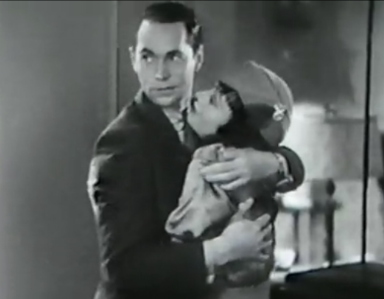
Franchot in Here Comes the Groom, 1951. Scan from my collection.
During the "In the Cool, Cool, Cool of the Evening" scene, Pete and Emmadel dance around the Stanley building and are clearly a good match for each other. Knowing he has to get permanent residence to keep Bobby and Suzi, Pete changes a housing file (owned by Wilbur's company) from rented to vacant.

When Pete and the true renter fight over the house, Wilbur Stanley arrives on the scene. This bad publicity could potentially ruin his reputation, but a younger, more handsome, more generous Wilbur than Pete expected takes it all in stride. Wilbur agrees to let Pete and the children stay in his gatehouse. I uploaded my favorite scene from the movie to Youtube. Franchot and Bing's characters face off in the car and agree to let the best man win. If you cannot see the embedded video below, click here.


Once he settles in the gatehouse, Pete Garvey does everything he can to prevent Wilbur's wedding to Emmadel.

Franchot is delightful as the charming Wilbur Stanley and turns in a solid performance. His delivery of the final line is fabulous. Alexis Smith plays Wilbur's distant cousin Winifred Stanley (and does so perfectly!) and there are some hilarious scenes between her and Bing and her and Jane. If you like  romantic musical comedies, Here Comes the Groom is a must-see. It has a strong director and cast as well as an enjoyable story and pleasant songs.

The Backstory


Here Comes the Groom had its big premiere in Elko, Nevada with festivities being held July 29-31, 1951. The cast traveled to Elko (a place with close ties for Bing. Read more here) to introduce the film and entertain citizens. Franchot was not part of the festivities as he had business obligations in New York.

By the time the film had its New York premiere on September 20th, Franchot was recuperating from plastic surgery to fix the shattered cheekbone, fractured upper jaw, and broken nose he had sustained in the September 13th fight with Tom Neal, lover of his fiancée Barbara Payton. This high-profile incident would lead to a reckless year of marriage, separation, and divorce with Payton, lawsuits, and bad publicity (details here.)

Sadly, audiences wouldn't see Franchot in a film again for six years, when he adapted the stage play Uncle Vanya for the screen in 1957. He wasn't to be seen in another major motion picture until 1962 when he starred as the president in Otto Preminger's Advise and Consent. Of course, Franchot continued to work diligently and prosperously in theater and television productions while working to regain his privacy during this time.

You can watch the Franchot-less footage of the Elko visit (from the Bing Crosby Archives and originally posted by www.bingcrosby.com on Youtube) here:

Friday, February 16, 2018

That Night With You (1945)

That Night with You is a 1945 romantic comedy with some dream fantasy thrown in for good measure. The film stars Franchot Tone, Susanna Foster, Louise Allbritton, David Bruce, and Jacqueline de Wit. It also includes an odd, too-brief part played by Buster Keaton.

I've not watched That Night With You nearly as much as other Franchot films. To be honest, the first time I saw it I thought it was not a strong performance of Franchot's and didn't really go for all the dream sequences. I recently rewatched it and realize I've missed the mark in a lot of ways. Franchot's performance is a bit hammy (the first time I watched it I felt he overplayed it), but it's actually quite in line with the character he plays. As Paul Renoit, he winks and smirks and flirts his way through the picture. But Paul's a self-described cad who promises women stage parts in exchange for romantic interludes, cares only about himself, and thinks he's God's gift to women. The way Franchot plays it absolutely makes sense and is, frankly, a pretty adorable performance. He's lovely to look at and more goofy than debonair throughout the film.  I found myself giggling at him by the end of each scene.


Penny (Susanna Foster) dreams (literally) of becoming a singing sensation for Paul Renoit. When she sleeps, she finds herself on expansive musical stages headlining a Renoit production. Penny is certain these dreams will become reality and doesn't hesitate to forge her own path to Paul's stage door. Penny's boyfriend Johnny (David Bruce) owns the diner where Penny works (and where Buster Keaton serves customers from behind the counter) and thinks Penny's dreams are just wishful thinking and aims to make Penny a housewife and mother.


Sneaking into the theater, Penny witnesses star Clarissa quit the show on opening night—just as her dream had foretold. We learn that Clarissa gave up a big Hollywood contract in order to be Mrs. Paul Renoit, but Paul has been stringing her along. A well-meaning wardrobe mistress advises Penny to stay as far away from Paul as possible. He's a serial womanizer. He even abandoned a wife, annulling the marriage as a very young man. Penny realizes she's young enough to convince Paul that a daughter was born following the brief marriage and that she is said daughter.


Paul's wise-cracking, Eve Arden-type secretary Prudence (Louise Allbritton, a comedic revelation to me) is on to Penny's scheme at once. Paul is, too, but decides to play along. But when his friends begin to joke that Penny really does favor Paul quite a bit in bone structure, Paul begins to worry that he is a father after all. And when his long-forgotten first wife Blossom (Jacqueline de Wit) reappears and vouches for Penny's story, every character becomes confused until the truth finally reveals itself. The film is hard-to-find, but is an engaging, cute story showing Franchot's knack for romantic comedy.


Criticisms:
-Although Franchot is the lead, there are a lot of musical numbers that he's not involved in, so he's not given as much screentime as he could've handled.
-Susanna Foster is lovely and an amazing singer, but I couldn't help but wish Deanna Durbin (her studio-imposed rival at Universal, apparently) was in the role instead. I'm crazy about Durbin-Tone pairings and would've liked to see them in this film together.
-I wish this film had been shot in Technicolor. It would've lent a more magical quality to the dream sequences.

Bosley Crowther (never much of a fan of Franchot's) reviewed the film for the New York Times dated November 9, 1945 and called it a "mild musical" and "romantic nonsense of an innocent and thoroughly foolish sort." He said, "Mr. Tone's coyness as a foster father is not precisely on the scintillating side."  I, however, think the innocence and foolishness of the romance is what makes this movie so delightful.

Friday, June 3, 2016

The King Steps Out (1936)

Franchot Tone and Grace Moore. Source: www.ha.com
When I read that The Flapper Dame would be hosting a Royalty on Film blogathon, I knew that The King Steps Out would make a perfect post. The King Steps Out is a 1936 musical comedy directed by Josef von Sternberg, the man responsible for introducing Marlene Dietrich to American audiences and enhancing the Dietrich legend with his lighting techniques. The King Steps Out, a hard-to-find and rarely-referenced film today, stars Franchot Tone, fresh from his Oscar-nominated performance in Mutiny on the Bounty, and popular operatic soprano star of the 1934 hit One Night of Love, Grace Moore.

The film is set in Austria where Princess Elizabeth a.k.a. Sisi (Grace Moore) is scampering outside instead of attending her mandatory music lessons. An atypical princess, Sisi is an impetuous adventurer who makes light of every situation. While her sisters are being dutiful, Sisi receives word that the emperor's mother (and her own aunt) has sent for Sisi's sister Helena to marry Emperor Francis. Helena (Frieda Inescort) has no interest in marrying the emperor, because she happens to be in love with Captain Palfi. With a sister devastated by her forced nuptials and a mother  (Elisabeth Risdon) intent on them, Sisi knows she must intercede.

Without her mother's knowledge, Sisi poses as a deliverer of Helena's royal dress and scores a pass onto the palace grounds. Sisi's father, Duke Maximillian Joseph, is flawlessly played by Walter Connelly. As the hilarious Max, Connelly is too lazy and devoted to his beer to contest his ambitious wife's demands. Although he is supposed to be helping Sisi break up the wedding, Max spends most of his time in The Golden Ox drinking. Sisi is arrested for picking roses when an amused Emperor Francis Joseph (Franchot Tone) witnesses the crime. The emperor likes Sisi as soon as he realizes she is not affected in the slightest by his position of power. It is clear that Emperor Francis is a sheltered, good-natured man who is bored by the daily obligations that are dominated by his mother. Sisi ribs him about his mother's control before breaking out in song. 

Now, there are three things you should be prepared for when you watch The King Steps Out.
  1. Even though it was totally normal for the time period and for royal marriages, the fact that Sisi and the emperor are cousins may cool your response to their romance. Francis does not know Sisi's identity until after he's attracted to her, because they have not seen each other since they were children. Still, I couldn't help remembering that their domineering mothers were sisters whenever the couple's attraction was evident in scenes.
  2. Grace Moore breaks into song constantly. Sometimes it fits into the scene, sometimes it is completely out of left field. Many times it is very pleasant, but a few times it was so distracting from the story that it frustrated me. Despite the unnecessary songs, Grace Moore is so bubbly and expressive that you can't help but like her.
  3. Franchot Tone does not break into song (even though he was taking operatic singing lessons at the time). However, Franchot does sport a different look here: a full head of curly hair and gorgeous royal clothing that bring out his boyish good looks. He makes an extremely handsome emperor and delivers a remarkable performance in the part.


When he sneaks out in soldier's clothing to see Sisi,  Francis becomes aware of all the arbitrary social rules citizens have to abide by and sees his name associated with his mother's enforced laws. Sisi and a disguised Francis have a night out at the village fair held in the emperor's honor. As they spend more time together, the emperor forgets all about his arranged marriage to Helena. Francis is completely smitten with Sisi and tells her so, and aims to break free of his mother and become a respected leader in his own right. It's a sweet, lively romance and Grace Moore and Franchot make a good team in their scenes together. 

It wasn't until researching the movie for the blogathon that I discovered that the characters in this fictional story were based on real Austrian royalty.  Emperor Franz Joseph (also known as Francis) was born in 1830 and died in 1916 and was noted for his glowing and youthful looks.

The actual Franz & Elizabeth. Source: www.wikipedia.org
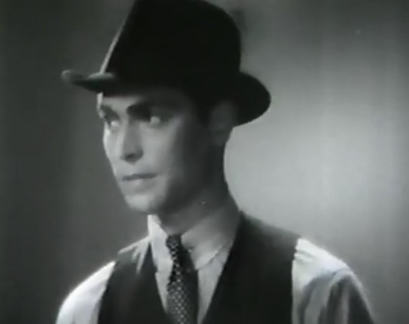
Franz married Elizabeth (also known as Sisi) after he fell deeply in love with her and she ended up having a great deal of influence on his decisions. According to Britannica Online, the emperor was "respected but not really popular" at first, but in his later years, "became a universally revered man." Franz was known for being a "gentleman of irresistible charm in personal contact" and "devoted to his wife."

Sadly, the true story of Franz and Elizabeth turned out quite tragic. The couple's only son Rudolf committed suicide in 1889 and Elizabeth was assassinated by an Italian anarchist in 1898.


The film is occasionally shown on television, but its showings are few and far between. Unfortunately, it is not available on DVD at this time. It's regrettable that The King Steps Out is not showcased in a Josef von Sternberg DVD set, because it is a fine film with his notable touches and would receive a wider audience if paired with The Blue Angel.

Frank S. Nugent, reviewing for The New York Times, said the story was tenuous but:
its humor is pleasant and its score includes a charming group of Fritz Kreisler's more melodious compositions...[Grace Moore]breaks into song with or without provocation all during the picture as she rescues her sister from an unwanted marriage with the Emperor Francis Joseph...none other than our old friend Franchot Tone, with his hair in curls and spotless white uniforms to wear, then you may not be altogether astonished to hear that Miss Moore eventually takes her sister's place...Perhaps the nicest thing about the picture is Miss Moore's obvious anxiety to key her voice and her performance to the featherweight quality of the operetta. She overdoes it occasionally...She yet may become an accomplished comedienne. Mr. Tone, Victor Jory and the others contribute pleasantly, if less importantly, to the romance.


I hope you will sit down and watch The King Steps Out if you get the chance sometime! To check out more instances of royalty captured on film, visit the roster of blogs over at The Flapper Dame's site.

Sources:

  • "Elizabeth". Encyclopædia Britannica. Encyclopædia Britannica Online. Encyclopædia Britannica Inc., 2016. Web. 03 Jun. 2016
  • "Franz Joseph". Encyclopædia Britannica. Encyclopædia Britannica Online. Encyclopædia Britannica Inc., 2016. Web. 03 Jun. 2016
  • Nugent, Frank S. "Grace Moore's First Operetta, 'The King Steps Out,' Opens at the Music Hall -- 'Florida Special' at the Rialto." The New York Times. 29 May 1936.

Friday, February 5, 2016

Publicity Photo Déjà vu

I was browsing Deanna Durbin photos online when my eye was drawn to a small thumbnail. Just based on the pose and not looking at the faces at all, I thought it was a close-up version of a Because of Him publicity photo I'd seen before. Then, I realized, "Wait, that man has a mustache!" and "Deanna wasn't a blonde in that film!" The publicity photo I was seeing was actually for Lady on a Train, a 1945 film starring Deanna Durbin and David Bruce. It looks so much like the Because of Him publicity photo Deanna would pose for just one year later.
 
In both photos, Deanna is wearing a short-sleeve black dress with a sheerness at the top. Below her to the left in both photographs is her male costar in a nice suit looking "captured" by Deanna. Deanna has a fistful of his hair in her hands ("his" being David Bruce in 1945 and Franchot in 1946). I know that many costumes, poses, and filmed footage were recycled and reused in Hollywood, but I was still surprised that they would take such a similar publicity photo within one year of the first one.
Deanna and David Bruce in a Lady on a Train publicity photo, 1945
Source: www.doctormacro.com


The pose reused with Deanna and Franchot in a Because of Him publicity photo, 1946
Source: www.tcm.com
  
Lady on a Train is a 1945 crime-based comedy starring Deanna, David, and Ralph Bellamy. Deanna's character witnesses a murder from her train window and seeks the help of a mystery author.

Because of Him is a 1946 romantic comedy starring Deanna, Franchot, and Charles Laughton. In this film, Deanna's character is a waitress who schemes her way into an acting role opposite her thespian idol.

Monday, September 21, 2015

Moulin Rouge (1934)


First of all, I must share that I was so pleasantly surprised by the size of Franchot’s role in Moulin Rouge! Because of my mental connection to the modern Nicole Kidman film, I assumed this movie might be a full-out musical and that assumption indicated to me that Franchot would play a wealthy, handsome suitor waiting to woo the leading lady from the sidelines in very brief scenes. I should really stop making suppositions about what a movie will be like and just watch it! After seeing it, I can tell you that Moulin Rouge is a delightful romantic comedy (with some musical numbers) and Franchot has a large starring role opposite Constance Bennett (in dual roles).

Douglas Hall (Franchot Tone) is a musical theater composer who refuses to put his wife Helen (Constance Bennett) in a show. Helen, a former singer in a musical sister act, has a background in theater. Doug has certain notions about how a housewife should behave. Doug is so convinced that a wife should be at home and not on the stage that he makes sure no other producers in town hire Helen either. It must be said that although it may sound like Franchot’s character is controlling and unsympathetic, his character actually comes across as quite caring and loving in the film. Douglas Hall’s relationship to his wife early in the film reminds me of the dynamic between Ricky and Lucy Ricardo on I Love Lucy. Unlike Lucy, Helen decides to leave Doug after one too many interferences.

When she realizes that Raquel, the other half of her former sister act, has won the starring role in Doug's production, Helen concocts a plan. Helen and Raquel are not biologically sisters, but were able to play sisters because of their extreme likeness. Helen will secretly take Raquel's place during rehearsals and prove her talent once and for all.

Here's where you have to suspend reality a bit. In a Parent Trap-type switch, Helen dyes her hair blonde and changes her clothes and voila! Everyone mistakes her for the exotic Raquel. Including her husband. (Personal note: I really hope my husband would still recognize me if I dyed my hair blonde and adopted an affected accent. I'm pretty sure he would.) The newly separated Doug is instantly attracted to Raquel as is his pal and colleague Victor (Tullio Carminati).

The rest of the film revolves around Helen's performance as Raquel. As Raquel, she falls in love again with her estranged husband, but is also hurt that Doug can so quickly be attracted to someone new. Like Franchot, Constance Bennett is an actress who is often overlooked and underrated, in my opinion. Even though the premise is a little far-fetched, Constance is truly great as both Helen and Raquel. The love scenes between Franchot and Constance are quite romantic and the film ends happily and sweetly.
I've documented on this blog that Franchot, in his later years, was largely disparaging of his roles in romantic comedies. Franchot was a fine dramatic actor and certainly deserved more substantial film roles, but I feel that he discredited his romantic comedies a bit too much. Franchot certainly had a flair for comedy and his romantic scenes are some of the most passionate of the 30s and early 40s. I could watch Between Two Women, His Butler's Sister, Three Loves Has Nancy, and this particular film over and over. Sure, they are light and breezy romances, but the stories are endearing and the players are so adept that they make it all look effortless.

In my opinion, Franchot masterfully tackled all genres of film. He was, unfortunately, typecast early on, marked as "Mr. Joan Crawford", and struggled to gain award-worthy parts of which he was more than capable. But his talent still shines through in all of his films. Sure, there were some less-than-stellar films thrown his way (especially in the 1940s), but I can name a handful of stinkers that each of his contemporaries starred in during that time as well. It was pretty typical of the studio system of that era. For every picture you truly wanted to make, the studio bosses and their iron-clad contracts strong-armed you into making two or more pictures of which you wanted no part.
If you enjoy romantic comedies that involve humorous mix-ups, passionate moments, and musical numbers (think Busby Berkeley), then you will enjoy watching Franchot Tone and Constance Bennett in Moulin Rouge.