Showing posts with label precode. Show all posts

Friday, October 7, 2016

Gabriel Over the White House (1933): Franchot and Politics

For this week's entry into my Franchot and Politics series, I'm looking at one of Franchot Tone's earliest films, Gabriel Over the White House. Directed by Gregory La Cava and produced by Walter Wanger, the political pre-code stars Walter Huston, Franchot Tone, and Karen Morley.

Gabriel Over the White House begins on President Judd Hammond's first night in the White House. After being congratulated by other members of his party, Hammond (Walter Huston) is approached by his young nephew Jimmy (Dickie Moore) who is excited that his uncle will "cure" the depression and make America rich again. President Hammond worries about fulfilling the many promises he made to get elected to which a fellow official remarks, "By the time they realize you didn't keep them, your term will be over!"

Franchot Tone is Secretary Hartley Beekman or Beek as the president (who in turn insists on being called Major) calls him. Along with his official secretary, Hammond also takes on a personal secretary Pendola Molloy (Karen Morley). It is unclear what Hammond and Molloy's connection is, but they seem to have had a past.

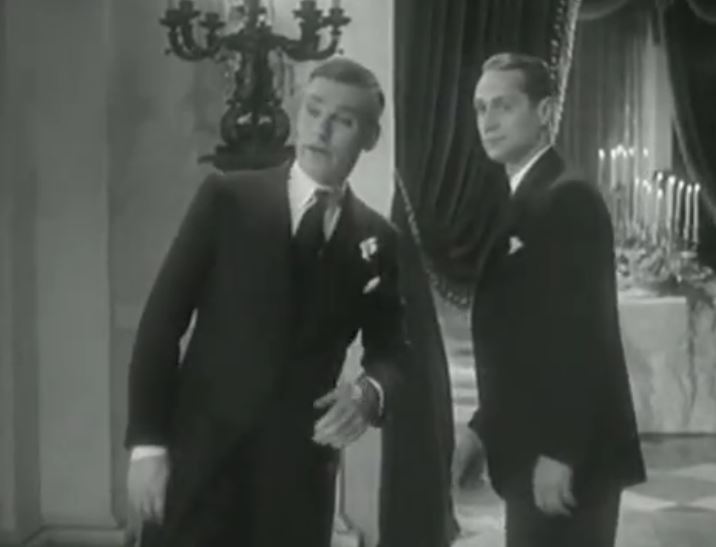


From the start, it is obvious that President Hammond does not plan to make any waves in his new position. When asked about the rampant unemployment and racketeering in America, Hammond dismisses these issues as "local problems" and makes general promises of future prosperity to the public. When Pendola "Penny" tells her boss that he can do great things with the pen he is using, Hammond calls her an idealist and explains, "See, Penny, the party has a plan. I'm just a member of that party."

There's this really great scene where President Hammond is playing with his nephew in the White House. They're searching around and having such fun and are completely oblivious to the booming voice of John Bronson, the leader of the Army of the Unemployed, on the radio who is publicly pleading with the president to take action. This scene really hits home just how purposeless Judd intends to be as a leader. Shortly after, the carefree president is speeding in his car, trying to push it to 110 miles per hour, when he crashes it and loses consciousness.


Here's where the film takes a strange turn. While he's unconscious, divine intervention occurs. Penny is later convinced this divine intervention is angel Gabriel sent as a messenger from God to President Hammond. Suddenly, Judd Hammond is a changed man. He talks with purpose and actively seeks out meetings with the unemployed and racketeers. He wants to feed, clothe, and shelter the poor. He wants to punish the racketeers. This is all wonderful progress, for sure.

However, when Congress, the Senate, and the Cabinet all question him, the President requests the resignation of all the men who put him in power. Hammond then declares a state of emergency giving him full dictatorship. Hammond declares that he wants to be a dictator for the greater good, but I think most of us can agree that a man, without any checks and balances of any kind, who has sole power over a nation can be a very frightening prospect. In this film, Hammond is able to kill gangsters execution-style because he believes in an eye-for-an-eye. He bombs a ship to show how peace is needed in the world. Hammond certainly has the right ideals, but he gives himself such a position that  denies citizens their right to a democracy. In the end, we see that an ailing President Hammond, a hero in the eyes of the public, has initiated the Washington Covenant, a signed treaty across nations, to ensure peace and prosperity for all.

As the film progresses, Franchot's character Beekman develops feelings for Penny and continues to idolize Hammond. When he appoints himself as dictator, Hammond changes Beekman's position of secretary to the President to secretary of war. It's not a large role for Franchot, but it has substance to it and he plays it well.


It's definitely an interesting treatment of politics in film. Because of its turn from democracy to dictatorship, this pre-code film is controversial to today's audience. Watching it, I grew uncomfortable when Hammond declared himself a dictator and obtained full control. Thankfully, he used his power for eventual good, but I was not in agreement with his ways of getting to that final peace agreement. I was astounded when Hammond ordered the execution of the racketeering gang and Beekman oversaw these orders. The scene played like one gang's retaliation on another gang, not a just and fair President's actions. Although I and many other current viewers have some reservations about the film's direction, audiences in 1933 loved the film's message. Desperate for a solution to the depression, hopeful about President Roosevelt, and eager for active change, Gabriel Over the White House was praised by viewers as an "inspiration" and "what the whole world is praying for."

Photoplay Magazine readers wrote letters praising the film.
Marshall Mills of Massachusetts wrote:
Walter Huston always comes through. It doesn't matter which kind of part he is asked to play, a hero or a villain, he is equally successful with either. In "Gabriel Over the White House" we enjoy him as a hero and a villain in the same picture. Nobody could be more the genial politician than the President Hammond we despised before the auto accident, and nobody more the patriotic statesman than the same character after his transformation. If there's a better actor in the business than Walter Huston, who is he?
J.L. Norris of Washington, D.C. shared:
The people of this nation are truly indebted to Walter Huston. Metro-Goldwyn-Mayer, and the author for their work in putting "Gabriel Over the White House" before the public. It is the greatest and most dynamic hit of good propaganda ever put forth by any agency, including radio and newspapers. Incidentally, after seeing "Gabriel Over the White House" I had occasion to walk past the Executive Mansion on my way home. And somehow it did seem quite plausible that the Angel of Revelation has made his presence known to the head of our country.
Alabama native E.B. Harrison, like many others, praised the actual President Roosevelt in his review:
After seeing "Gabriel Over the White House" I can truly say that it is the best picture I have seen in years. It not only shows the greatness of the actors and the director, but it gives the people of the United States a very good idea of the greatness of the man we have in our White House today.
The New York Times reviewed:
Mr. Huston gives a vigorous and emphatic portrayal of Hammond. He reveals the man's weaknesses in the beginning and his vision and strength in the latter phases. He delivers the various speeches with vehemence...Franchot Tone is not especially impressive as Beekman and Karen Morley is only acceptable as Beekman's assistant...Gregory La Cava, the director, has handled the incidents in the Senate and in the open air with the desired imagination and forcefulness. The attack on the gangsters is set forth in a somewhat unbelievable and melodramatic manner, but the general effect of the meeting of the representative nations in the penultimate episode is depicted quite cleverly.
In a more modern description of the film for its 1998 film series, the Library of Congress summarized:
The good news: he reduces unemployment, lifts the country out of the Depression, battles gangsters and Congress, and brings about world peace. The bad news: he's Mussolini. Gabriel Over the White House is a delight precisely because of its confused ideology. Depending on your perspective, it's a strident defense of democracy and the wisdom of the common man, a good argument for benevolent dictatorship, a prescient anticipation of the New Deal, a call for theocratic governance, and on and on.
Gabriel Over the White House is available on DVD. Stay tuned for next Friday's continuation of the Franchot and Politics series!

Sources:
  • Photoplay Magazine. June 1933; July 1933.
  • Hall, Mordaunt. "Walter Huston as a President of the United States Who Proclaims Himself a Dictator." The New York Times. April 1, 1933.
  • Library of Congress. http://www.loc.gov/exhibits/religion/films.html

Thursday, August 18, 2016

The Stranger's Return 1933

Today's post has been written especially for In the Good Old Days of Classic Hollywood's Second Annual Barrymore Trilogy Blogathon.


The Stranger's Return is a film that is overwhelmingly hard to track down, because MGM did not renew the rights to Phil Stong's original story. Back in 2014, Warner Brothers did clear the rights to show it at TCM's Film Festival and TCM aired it on their television station at that time. I was fortunate to catch the television showing of it that year and hoped that increased showings and a Warner Archive DVD release were in the works. Sadly, I've not seen or read anything else about the movie since then.

It's always disappointing when a film is lost to the public due to rights issues, but it is devastating when said film is as exceptional as this one. Directed by King Vidor, The Stranger's Return is a masterful pre-code with commanding performances by its leads Lionel Barrymore, Miriam Hopkins, and Franchot Tone. Top-notch secondary actors Stuart Erwin, Beulah Bondi, Grant Mitchell, and Irene Hervey round out the cast.

Divorcee Louise Storr (Miriam Hopkins) arrives on the Storr family farm in need of fresh air and a new life. The farm is maintained by the crotchety Grandpa Storr (Lionel Barrymore), who has a manipulative and gossipy bunch of family members living with him. Stuart Erwin plays Simon, a drunken, but big-hearted farmhand. Grandpa Storr warms to his granddaughter Louise immediately. Louise is fearless and quickly identifies with the land as equally as her grandfather does. With Lionel turning in an outstanding performance as the curmudgeonly patriarch, Grandpa Storr lovingly softens when he interacts with Louise.

Masked in rivalry, Grandpa Storr also maintains a soft spot for neighboring farmer Guy Crane (Franchot Tone). An educated man, Guy is torn between his love of the family farm and his ties to tradition and the forceful pull of great adventure in other lands of which he's read. Guy and Louise recognize this common duality in their characters and are attracted to one another. Bound by integrity, Guy and Louise must decide whether or not to abandon the stable goodness of their families (Guy is a husband and father) and the land in order to pursue the passion they feel.

Barrymore's performance is incredible throughout the film, but viewers will really be impressed when his character pulls a great ruse on everyone that reasserts his control. It's a fantastic scene that is perfectly tailored to Barrymore's strengths as an actor. The Stranger's Return features superior performances by all its actors. Guy Crane is a stand-out performance of Franchot's. It's one of those films I'd recommend to those who know Franchot only as the wealthy love interest to Joan and Jean. Just as Grandpa Storr is perfectly tailored to Barrymore's strengths, the sensitive, complicated Guy Crane is an ideal character for Franchot to inhabit. Likewise, Miriam Hopkins is flawless as the torn, but courageous Louise Storr. It's a shame that this film has been tossed aside due to licensing rights. It deserves to be recognized as the exemplary pre-code film it is. I sense that a DVD release is in the future. I just hope it's not as far off in the future as I fear.


The New York Times reviewed:
Mr. Barrymore, in a part that was made in heaven for him, plays with lusty vigor and humor, and his performance is entirely delightful. Miriam Hopkins, as his granddaughter, has never been more effective. Franchot Tone is intelligent, honest and sensitive as the educated farmer from next door.
If you'd like to read more about The Stranger's Return, check out the great write-ups at TCM, Leonard Maltin's site, and at pre-code.com—although I obviously wasn't too crazy about Pre-Code Danny's "Franchot Tone is no Clark Gable" quip. (He's not supposed to be Clark Gable. There already is a Clark Gable. Clark and Franchot have two completely different acting styles and that's OK. Hollywood is big enough for a Clark Gable and a Franchot Tone!...end of rant.)

To read all about the wonderful Barrymore family, check out all the entries over at In the Good Old Days of Classic Hollywood.

Sources:
All images are from movie magazines digitized at Media History Digital Library

Thursday, November 19, 2015

Stage Mother (1933)

The focus of the 1933 film Stage Mother is exactly what the title suggests: a former performer pushes her only daughter into show business and controls every aspect of her daughter's life. Think of it as an early non-musical Gypsy. Alice Brady and Maureen O'Sullivan star as the mother Kitty and daughter Shirley, respectively, while Franchot Tone is Shirley's love interest, Warren Foster.

Franchot does not enter the film until a good 45 minutes have passed (Only I would post 20-something screen captures of a 15-20 minute performance). His role is small, but pivotal. Before his entrance, we see vaudeville performer Kitty lose her husband, a fellow entertainer, in a tragic accident. Their daughter Shirley is sent to live with Kitty's in-laws, who disapprove of the entertainment industry and Kitty personally. When Shirley is 14, Kitty returns to raise her and quickly trains her to enter the biz.

It is quickly apparent that Kitty is a ruthless stage mother who will stop at nothing to make her daughter famous. Maureen O'Sullivan is sweet and obliging as the put-upon daughter while Alice Brady (as Kitty) schemes and blackmails to get Shirley to the top.

When a new production takes her to Boston, Shirley is eager to revisit her childhood home. Enter Franchot. Warren Foster, an artist, answers the door and gives her a tour of the house he now owns. There is an immediate rapport between the two and without her mother's knowledge, Shirley begins to see Warren often. Because this is pre-code, Shirley is even shown spending the night with Warren.
Now recovered from an illness that kept her bedridden while Shirley experienced a bit of freedom, Kitty is backstage and reading Shirley's mail from Warren when she hatches a plan to regain control of her daughter. Unbeknownst to Shirley, Kitty blackmails Warren's family for ten thousand dollars with the threat of exposing the two lovers' clandestine meetings. Warren assumes that Shirley seduced him with the extortion plot in mind and confronts her in a stage dressing room. Franchot is as powerful as the angry, manipulated young man in latter scenes as he was the carefree, patient lover earlier in the film. Maureen O'Sullivan (Franchot's costar in Between Two Women) is perfectly cast as the lovely, trapped Shirley in this oft-told tale of a mother living vicariously through her daughter.
Watch Stage Mother to see if Kitty maintains control of her daughter or if Shirley finally fights back for a life of her own. 

Monday, April 27, 2015

Midnight Mary (1933)


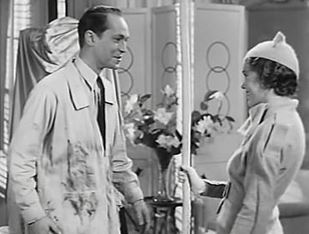
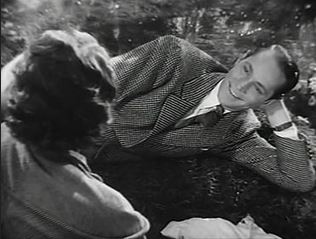
I am a huge fan of Franchot Tone (obviously, ha!) and Loretta Young, so their 1933 film Midnight Mary is one of my favorites! The film is most definitely a Loretta Young vehicle and it takes a while before Franchot appears, but you will not be disappointed. Mary Martin (Loretta Young) has had a rough life from the start, losing her mother and getting mixed up with the wrong crowd at a very early age. Although she is viewed by society as an immoral woman, Mary has a heart of gold (as is often the case with Loretta Young's precode heroines.) In a robbery gone wrong, the debonair, wealthy lawyer Tom Mannering, Jr. (Franchot Tone) is enchanted by and covers for Mary.


Tom puts Mary through secretarial school and gives her a job at his law firm. Although Tom expects nothing in return for his generosity, their attraction to each other is undeniable. As is typical with precodes, Mary's past eventually comes back to haunt her. I won't spoil the plot for you, but watch Midnight Mary! You won't regret it.


I wish Loretta and Franchot had made many more movies together. As fate would have it, they only costarred in one other film, The Unguarded Hour in 1936.
Franchot and Loretta in Midnight Mary.


Midnight Mary is available in the Forbidden Hollywood Collection, Volume Three. It is combined with Other Men's Women, The Purchase Price, Frisco Jenny, Heroes for Sale, and Wild Boys of the Road. If you're a fan of precodes, you can purchase this set at: