Showing posts with label blacklist. Show all posts

Friday, March 3, 2017

John Garfield Blogathon

I am happy to be participating in Phyllis Loves Classic Movies' John Garfield Blogathon since John and Franchot were good friends with similar career interests. Garfield has been a favorite of mine ever since he stole my fourteen-year-old heart when I first watched Four Daughters.

The Group Theatre

Franchot and John both got their start on the New York stage and honed their skills in the Group Theatre. Franchot was one of the Group's original members when Harold Clurman, Cheryl Crawford, and Lee Strasberg formed the Group Theatre with the hope of presenting plays that featured believable characters who spread important real-world messages through their thought-provoking scripts. Franchot actually starred in the group's very first production The House of Connelly in 1931 and the plays that followed that year and in 1932. Franchot used his own money to finance much of the group's work and was a firm believer in its essentiality to modern theater. In fact, when Franchot first pursued a film career in Hollywood in 1933, his main intent was to earn a lot of money quickly and eventually return to the Group with the additional funds. But he immediately fell in love with Joan and—despite sporadic statements that he may permanently return to a solely theatrical career—Franchot never fully abandoned Hollywood.

John joined the Group after Franchot physically left it (I say this because Franchot always morally and financially supported the Theatre.) John was a student of method acting at the American Laboratory Theatre, which included Group Theatre founders Strasberg, Crawford, and Clurman. John gained critical success in Lost Boy in 1932. After an apprenticeship, John was accepted as a member of the newly named "The Group," but, like Franchot, was drawn to Hollywood. Unlike Franchot, John's first film Four Daughters garnered him immediate acclaim and an Oscar nomination. Despite his obvious talent, John, like Franchot, was soon relegated to quickly churned out, pleasant films. But John fought back against the studios much harder than Franchot ever did. While Franchot was never able to recapture the early critical success of his mid-1930's work, John's lasting success came in the 40's with films like Destination Tokyo, The Postman Always Rings Twice, Humoresque, and Gentlemen's Agreement. I went through a period where I watched every single one of Garfield's films, and I cannot think of one performance that did not impress me.

In spite of their success, some Group members made both John and Franchot feel guilty for leaving to pursue opportunities in Hollywood. In later interviews, some group members shared that they felt that Hollywood had put John and Franchot’s focus on money, women, and alcohol, and interfered with their ability to produce quality work. (In my opinion, the two actors were able to balance their dedication to the craft with their extracurricular pleasures quite successfully.) This frustration with Franchot and John for pursuing film careers makes better sense when you realize that one of the Group's main objectives was to be a cooperative ensemble and an emphasis was placed on the good of the group, not the pursuit of fame by one individual.

For more information on the Group Theatre and both actors' involvement, I highly recommend the full-length American Masters documentary on the Group Theatre that the Stella Adler Studio of Acting posted on Youtube:

Friendship in the 1940's

In the early 40's, Franchot and John were involved in many of the same wartime support efforts. They both worked hard to support their fellow men overseas by serving on multiple war effort committees, making public appearances, and selling war bonds.

In Hollywood, John and Franchot were prominent board members of the Screen Actors Guild and participated in meetings until September 15, 1946 when they had to resign due to a new “conflict of interest” by-law. Also resigning were Robert Montgomery, James Cagney, Dick Powell, Harpo Marx, and Dennis O’Keefe.

Another connection I find interesting is that John's 1941 film Out of the Fog was based on Franchot's 1939 play The Gentle People and, in these productions, John and Franchot played the same role.

In 1945, Franchot and John returned to New York to discuss future theatre plans
with their former Group Theatre leaders. Film Daily. November 12, 1945.

Variety. November 1945.

Their similar career beginnings, current involvement in important causes, and enjoyment of a good time brought Franchot and John together as friends. They were frequently seen out together in bars and restaurants with a drink in one hand and a pretty lady not far from reach. Sherry Davis recalled that her grandfather, actor Robert Davis named his son Franchot because of his friendship with Tone. Robert Davis, Franchot, and John would gallivant around the nightspots drinking heavily, until young Franchot Davis was sent by his mother Myra to fetch them home.

John and Franchot on the set of Jigsaw, 1949.

In 1949, John made a cameo in his pal Franchot's noir Jigsaw. That film (a good one, in my opinion!) is in the public domain and can be viewed in full on Youtube here.


The Blacklist

The promise of the 30's and fun of the 40's were no match for the HUAAC who attacked John and Franchot—both public about their liberal beliefs—in the late 40's and early 50's. Although Franchot was publicly cleared by the Dies committee early on, he was softly but purposely blacklisted throughout the 50's. (You can read a more in-depth post on Franchot's blacklisting here.) Obviously, John was more publicly and viciously attacked by the House Committee. John refused to name names when he was forced to testify and as a result, was blacklisted by the major studios. But the blacklist damaged more than his career. It destroyed his health and led to his tragic death of a heart attack at only 39 years old.

Thank you Phyllis for hosting the John Garfield Blogathon! For some great Garfield reading, please head over to Phyllis Loves Classic Movies for the full roster.

Sources:
  • Kramer, Joan, David Heeley, Joanne Woodward, Steve Lawson, Stella Adler, Harold Clurmaan, Cheryl Crawford, and Lee Strasberg. Broadway's Dreamers: The Legacy of the Group Theatre. New York, N.Y: PDR Productions, 1994.
  • Gelman, Howard. The Films of John Garfield. Citadel Press, 1975.
  • Hirsch, Foster. A Method to their Madness: The History of the Actors Studio. Da Capo Press, 2001.
  • Kazan, Elia. Elia Kazan: A Life. New York: Knopf, 1988.
  • Lasseter, Don. Body Double. Kensington, 2002.
  • Media Lantern Digital History Project: http://lantern.mediahist.org/
  • SAG: www.sagaftra.org
  • Smith, Wendy. Real Life Drama: The Group Theatre and America, 1931-1940; New York: Knopf, 1990.

Friday, October 14, 2016

Franchot Targeted in the Blacklist: Franchot & Politics

I think all classic film enthusiasts have some knowledge about the powerful and predatory House Un-American Activities Committee that used public threats and scare tactics to terrorize the film industry. It would be denounced by former President Truman in the late 50's and lose its control in the 60's. But by the end of McCarthy era, the damage had already been done. Due to the spiteful insinuations of the committee's public witch hunt, many in the film industry were never able to work again. Although Franchot cleared his name in front of the Dies Committee as early as 1940, an interrogation of anti-communist leader Vincent Hartnett would reveal that Franchot Tone continued to feel the pressure of the blacklist throughout his television career of the 1950's and 60's.

Franchot preferred to work in plays with messages about the human condition and state of the world. He was always most proud of his early association with the Group Theatre, a group of idealistic and educated thespians, playwrights, and directors who valued scripts with artistic integrity, realism, and truth. Like Franchot, many Group Theatre veterans (most famously and tragically, John Garfield) were investigated in some capacity by the House Un-American Activities Committee for their liberal views by the 1950's.

In 1938, conservative congressman Martin Dies relocated to Los Angeles to sniff out communists hiding in the entertainment industry. By 1940, Communist Party organizer John Leech had provided a list of actors he associated with leftist ideas. Among others, the list included: Humphrey Bogart, Fredric March, Franchot Tone, James Cagney, Luise Rainer, Francis Lederer, and Jean Muir. Dies vowed that all named actors would be cleared if they would appear at a hearing before the Dies Committee. If the named actors did not agree to a meeting, Dies announced he would find them guilty of anti-American activity.
Source: Spokane Daily Chronicle. August 28, 1940.
The above photo appeared in newspapers across the county in August 1940. The caption that accompanied it read, "Movie actor Franchot Tone (right) is shown being sworn in by Representative Martin Dies (Dem., Texas) (left) at special hearing before house committee investigating un-American activities at the Waldorf-Astoria hotel in New York. Tone was exonerated at the hearing, which was held yesterday." Further investigation reveals that actress Luise Rainer and actor Francis Lederer were also cleared with Franchot of being communist sympathizers. Martin Dies, the committee representative, noted that although the three actors had allowed their "names to be used or have contributed money" to what the committee deemed communist-led organizations, no evidence existed that their "cooperation was for any purpose except humanitarian." When questioned about his support of needy causes, Franchot was reported to have defended himself by saying, "You see, when you have so much money thrown in your lap, your conscience is aroused."

Source: Motion Picture Herald headline. August 24, 1940.
Still, in 1949, Franchot was listed as one of "Stalin's Stars" in the Red Treason in Hollywood published by Myron C. Fagan. Also accused were Franchot's past costars Bette Davis, Melvyn Douglas, Katharine Hepburn, Gene Kelly, and Sylvia Sidney. In his 1963 book Fear on Trial, author John Henry Faulk includes a transcript of attorney Louis Nizer's interrogation of Vincent Hartnett. Faulk was a humorist who was publicly accused of communist activity by Hartnett after he staunchly opposed Hartnett's right-wing organization AWARE, Inc. Hartnett's organization specialized in blacklisting entertainers and was successful in the blacklisting of Faulk from 1957 to 1962.  As early as 1956, Faulk took legal action against Hartnett's libel. The trial did not begin until 1962, at which time Faulk was vindicated and awarded damages. In the court testimony provided by Faulk, I learned that Franchot was being quietly, but actively blacklisted throughout the 1950's. During the trial, attorney Nizer asked Hartnett if he had written to Laurence Johnson (AWARE, Inc. cofounder) about Franchot. Here's the revealing exchange:
Nizer: What were you writing to Mr. Laurence Johnson with respect to Mr. Franchot Tone? Will you reconstruct that for us?
Hartnett: As best I recall, he had probably asked me for a report on Franchot Tone, which I furnished him; and I believe I had made inquiry to see if Franchot Tone had offset his past record, and had been told he had not done so, at least my source of information. Yet, as best I recall, I expressed an opinion that Franchot Tone should do more than—
Nizer: Before he could appear on television?
Bolan: I object.
Nizer: He should do more before he could appear—he should appear or be allowed to appear on television? Isn't that the substance of it?
Hartnett: Before he was allowed to appear on television?
Nizer: Yes.
Hartnett: Could be. I am not sure of that.
Nizer: Could be. Did you ever write to him, 'if he refused to take a public stand, then we can take the necessary measures?' Did you ever write that to Laurence Johnson?
Hartnett: Yes, that sounds right.
Nizer: 'We' in that case is you and Laurence Johnson, right?
Hartnett: It would seem so...
Nizer: So you asked groups, various individuals to write protests to try to get people off the air that in your opinion had pro-communist affiliation; right?
Hartnett: Yes, I did.
As you can read, Hartnett admits to a directed attack of Franchot and his career in the 1950's. As early as 1934, Franchot's political ties were publicly questioned when columnist Walter Winchell reported that Franchot Tone was the only major film actor who had refused to contribute money to the Republican campaign fund, despite strong demands and pressure to do so.

Several of Franchot's ancestors were prominent Republican politicians and his mother was an outspoken member of women's liberal groups, so Franchot was well-versed in both the conservative and liberal views. (Next week's post will be on the impressive political careers of Franchot's maternal family.) In an interview with Andre Soares on Alt Film Guide, Tone researcher Lisa Burks commented on Franchot's belief in the democratic process, his eagerness to help families in need, and his family background. You can read that full interview here.

During the blacklist, Franchot felt compelled to help other professionals in need. Anonymously, Franchot supported blacklisted screenwriters who were no longer able to gain employment. Screenwriter Ring Lardner, Jr. worked under a pseudonym when Franchot hired him "out of conviction." Lardner, Jr. recalled, in Tender Comrades and Dark History of Hollywood:
I had to go into a bank in Beverly Hills where Franchot Tone withdrew $10,000 in cash and gave it to me.
Knowing now just how targeted Franchot was by Hartnett, I realize how fortunate Franchot was to survive the blacklist.  I can't imagine having those classic Twilight Zone, Bonanza, Alfred Hitchcock Presents, and Ben Casey episodes without Franchot's unique and memorable performances in them. It is clear, through the Faulk case testimony, that Franchot was denied many other opportunities in the 1950's.

With a heart for humanity and the wealth to support others in need, Franchot defended himself in front of the Dies Committee and, years later, the FBI. In the process, he never sacrificed his colleagues and never abandoned his convictions.


If you'd like to read more about the Hollywood blacklist, please see my sources below. For other posts in the Franchot & Politics series, click here. Stay tuned for next Friday's entry into the series!

Sources:

  • Ceplair, Larry, and Steven Englund. The Inquisition in Hollywood: Politics in the Film Community, 1930-1960. Garden City, NY: Anchor/Doubleday, 1980. Print.
  • Connolly, Kieron. Dark History of Hollywood: A Century of Greed, Corruption, and Scandal behind the Movies. London: Amber, 2014. Print.
  • Faulk, John Henry. Fear on Trial. New York: Simon and Schuster, 1964. Print. 
  • "It Seems to Me." Pittsburgh Press. October 29, 1934.
  • McGilligan, Patrick, and Paul Buhle. Tender Comrades: A Backstory of the Hollywood Blacklist. New York: St. Martin's, 1997. 
  • Morgan, Ted. Reds: McCarthyism in Twentieth-century America. New York: Random House, 2004. Print.Print. 
  • Radosh, Ronald, and Allis Radosh. Red Star over Hollywood: The Film Colony's Long Romance with the Left. San Francisco: Encounter, 2005. Print. 
  • "Screen Players Freed of Charge." Evening Independent. August 28, 1940.
  • Slide, Anthony. Actors on Red Alert: Career Interviews with Five Actors and Actresses Affected by the Blacklist. Lanham, MD: Scarecrow, 1999. Print. 
  • Smith, Wendy. Real Life Drama: The Group Theatre and America, 1931-1940; New York: Knopf, 1990.
  • "Wirephoto: Dies Committee Clears Actor Franchot Tone of Red Charges." Spokane Daily Chronicle. August 28, 1940.
  • Slate:http://www.slate.com/articles/podcasts/you_must_remember_this/2016/02/the_origins_of_the_hollywood_blacklist.html
  • University of Texas: https://www.lib.utexas.edu/taro/utcah/01497/cah-01497.html
  • Alt Film Guide: http://www.altfg.com/film/franchot-tone-lisa-burks/

Wednesday, July 27, 2016

The Award (1955)

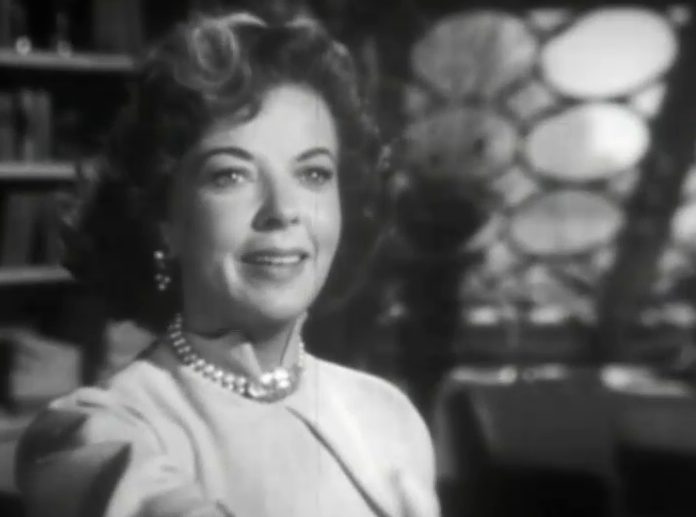
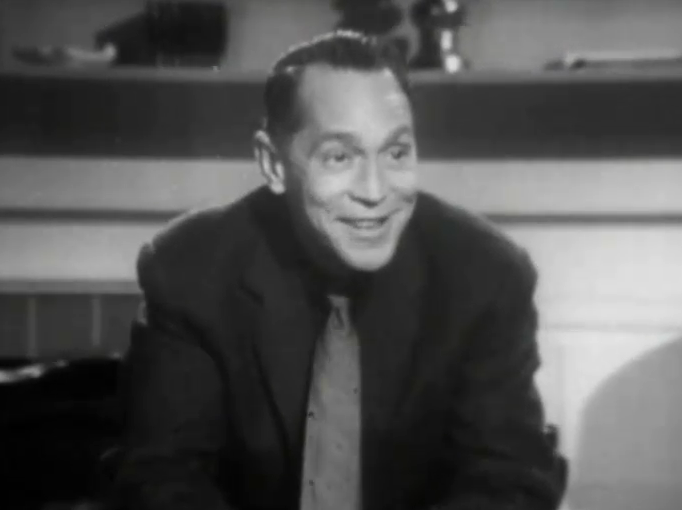
The Award, a Four Star Playhouse production, aired on CBS on June 30, 1955. Written by Leslie Stevens and directed by Roy Kellino, the episode stars Franchot Tone and innovative actress-director Ida Lupino.

Unlike much of Franchot's work that I highlight here, finding a copy of The Award is easy! Because this episode has fallen into the public domain, you can watch it instantly online. The full episode is available to watch on Jimbo Berkey's public domain site here.


I know you'll want to watch it for yourself, so I'll just include a brief summary here. Hollywood star Valerie Banks (Lupino) has just experienced a major flop in a Broadway show and is being ridiculed in newspapers across the country. Full of ego, Valerie cannot understand why audiences do not like her in the play Autumn Joy. She seeks out acting coach Ben Cheney (Tone) for an easy fix to her problem.  Because she is accustomed to being indulged by peers and fans, Valerie is dissatisfied with the solution Ben proposes.


During the episode, Franchot's character imparts the following advice to Valerie:

Well, that does it. You fight like a tiger and then fold when you’re beaten. Are you gonna let that stop you? Sure it’s broken. Is that the end of it? People get broken but they keep on going if they’re any good. You get that and nothing can stop you. Even when you’re all broken up. Pick up the pieces and start over.
These are my favorite lines in the teleplay. Franchot's delivery of these lines is spot on, but more than that, it reminds me of the strength Franchot himself displayed in the 1950's. Normally regarded as an easygoing, kind, and sensitive gentleman, Franchot was mired in scandal in the early 50's. Divorce proceedings and custody hearings with wife Jean Wallace became fodder for gossip columnists. The notoriously private Franchot became the butt of jokes when he was brutally beaten by his fiancĂ©'s lover and married her (the lovely, but troubled actress Barbara Payton) a few weeks later. This negative publicity plus pressure placed on him during the blacklist (both of which I'll write about in the near future) certainly affected his career. It is not my intent to paint Franchot as a saint. He certainly was human and made some poor decisions. However, I do find it admirable that Franchot didn't cave to the HUAC and managed to survive the bad publicity by throwing himself into non-stop theater and television performances. I believe his dedication to his work and the incredible performances he continued to give during this period restored his public persona. In the words of his character Ben Cheney, Franchot didn't fold when he was (literally) beaten. He didn't stop. He got broken and kept on going...because he was that good.