Showing posts with label drama. Show all posts

Thursday, March 25, 2021

Mutiny on the Bounty (1935)

Mutiny on the Bounty

The filming of Mutiny on the Bounty was delayed and rescheduled several times in 1934 and 1935. In September 1934, Motion Picture Herald reported that two different ships were being constructed as scenery and for crew commuting purposes and that 90 percent of the film would be recorded in the South Seas. In fact, shooting locations would include Catalina Island and multiple spots in the South Seas.

Franchot was not originally slated to play the role of Roger Byam. At one point, Cary Grant was in talks to play the midshipman In 1934, Hollywood Reporter and Hollywood Filmograph both reported the film would star Wallace Beery, Clark Gable and Robert Montgomery. When it came time to shoot, Gable remained but Beery and Montgomery were replaced by Laughton and Tone, respectively. On July 10, 1935, Variety reported that the start of production was contingent upon "Franchot Tone's washing up" on location.


The shoot was exhausting and not without tragedy. As a barge being used for scenes sank off Miguel Island, cameraman Glenn Strong attempted to rescue a camera of shot film and lost his life. Fifty other crew members had to be rescued from the sinking. After the picture was finished, actor Charles Laughton responded to an interviewer by saying:
I'm worn out. You'd be worn out, too, if you'd just finished Mutiny on the Bounty. What a picture. Such work. The location was at Catalina. We climbed up the rigging and sat on guns, and bits of mast kept falling on us.


Franchot was reported as having put on twenty pounds during filming, but if he did, it certainly doesn't show in the final footage. When writer Muriel Babcock visited the set, she found Franchot a bit standoffish. Muriel spent most of her experience fawning over Gable and wrote:
Franchot is invariably bored. He had no scenes on board ship that day, but I saw him in the evening on land nonchalantly putting nickels in the marble machine. He looked surprised at my appearance and inquired, "What for heaven's sakes are you doing here?" And when I told him he said, "My, it doesn't seem possible anyone would deliberately choose such an assignment! When Clark asked to go on a speed boat that night Franchot "wouldn't be bothered". 

However, I think Muriel caught Franchot on an off day—possibly she may have visited when he had a painful tooth that had to be extracted—because Franchot and other cast members bonded over shooting and fishing. In fact, Franchot and Clark—often considered rivals because of their mutual love for Joan Crawford—became fast friends on the set and held admiration for one another because of the experience. For example, New Movie Magazine wrote in September 1935:

And so to a hectic day with the Mutiny on the Bounty company at Catalina aboard an exact replica of the old Bounty that was sunk by mutineers 150 years ago in the South Seas near Tahiti. Discovering that it was really great sport to shoot fish, Clark Gable could be found hanging over the ship's rail any time of day drawing a bead on any herring or filet of sole that happened to be unfortunate enough to swim that way. Watching the fun Franchot Tone, Herbert Mundin and Donald Crisp were so intrigued that they sent ashore for some rifles and in no time at all the placid Bounty sounded like nothing so much as a man-o-war going full blast!


Following the film's release, Mutiny was heralded as the picture of the year. Movie Classic deemed it: 
an epic of man's struggle for justice and peace, embracing every emotion of mankind, with the restless, tireless, ageless sea for its setting. 

The National Board of Review agreed:

In its best and predominate sequences it fills the screen with cinematically visualized imagination. It opens up the sea, and the sea moves or lies placid. It brings the wind and it lets it go. It brings the ship, her sweat, blood, and vigor, her sadness and the sorrow of her people, in a word, her spirit, her adventure, and her end—it brings these succinctly, visually, movingly, as only the motion picture can, and must do.  


And Franchot was praised as a star to watch. Topper's Film Reviews in Hollywood Magazine noted:
Franchot Tone emerges as the big hit of the picture. He drew the only burst of applause at the preview upon completion of his defense in the Admiralty Court on mutiny charges.

Hollywood magazine predicted that Franchot would emerge an in-demand star in 1935:

The role of Roger Byam was one of the biggest plums of the year in Hollywood, and it fell to Franchot Tone by the sort of accident that put him in Lives of a Bengal Lancer. Another actor withdrew to take a different picture assignment and history repeated itself when the Bounty was cast. Robert Montgomery was broken-hearted when other work interfered and Tone got the job. The role fits him glove tight, and depend on it, Franchot will emerge a star when the Bounty is shown. He, too, did his share of suffering for the sake of Metro, to make the Bounty. A paining tooth was no fun, marooned as he was a the isthmus, but a boat finally was hired and he had the tooth yanked without delaying production. Metro chose wisely in casting Franchot, for bear in mind that Gable leaves the picture after the mutiny, and so does Captain Bligh. Laughton and Tone must carry the picture from then on.  


Yet, after this major, critically-acclaimed performance and an Oscar nomination for Best Actor, Franchot was relegated back to a lot of tuxedo roles and programmers after 1935. (I've noted before that if it had been up to Irving Thalberg, MGM's support of Tone would have been substantial.) Many critics and fans (still today) were frustrated at how Franchot's career was treated following such a brilliant performance in Mutiny. Franchot consistently noted that Mutiny and Bengal Lancers were his favorites of his performances and expected those roles to give his film career the momentum he desired. Silver Screen, in 1936, wrote:  
Franchot Tone's studio kept him in white tie and tails most of the time and never gave the poor guy a chance to act. But Paramount borrowed him for The Lives of a Bengal Lancer and he gave such a good performance that his home studio gave him the third most important part in Mutiny on the Bounty and dead indeed is your soul if you did not thrill to his speech before the big shots of the British Navy. But, unfortunately, Franchot's reward for this magnificent bit of acting was one of the dullest parts of the year in a very dull picture called Exclusive Story.

Mutiny was the highest grossing film of 1935 and won the Academy Award for Best Picture. Franchot, Clark and Charles were all nominated as Best Actor for their performances, yet all lost to Victor McLaglen for The Informer—in future years the Best Supporting Actor award would be introduced. The film also received nominations for Best Director, Best Screenplay, Best Music Score and Best Film Editing. 


I would be remiss to write a post on Mutiny without including these three photos which I spotted in past online auctions, but sadly (nearly inconsolable about the first one) I did not win.

Un-retouched candid photo of Franchot on the set

A candid of Franchot with a fan on the set.

Another candid of Franchot with fans on the set.

The Film

Set in England in 1787, Mutiny on the Bounty begins with laboring men of all ages being forced into two years of naval service on the HMS Bounty. In stark contrast to the men unhappy to have their freedom taken away, wealthy Roger Byam (Franchot Tone) is eager to board the ship. Byam is very green and idealistic—so much so that Christian (Clark Gable) remarks "A little child shall lead them" when Byam asserts that the ship is safe under his command. Unlike the other men, he has no clue as to how traumatic the next two years of his life will be. After all, Byam is going along for scientific study. Because of his societal position and his family's prominent naval history, Byam has been assigned the task of writing a dictionary of the Tahitian language. When he is warned that Captain Bligh is a "seagoing disaster," the good-natured Byam laughs.


On boarding, Byam discovers that the ship is not as large as he expected and that he will bunk with Hayward and Stewart. As they cross the Pacific Ocean,  the crew is subjected to flogging, severe food and water rationing, chains and other brutal punishments for any perceived infraction by the ruthless Captain Bligh (Charles Laughton). Bligh makes his position known before the ship leaves port, saying:
Discipline's the thing. A seaman's a seaman. A captain's a captain. And a midshipman
—Sir Joseph or no Sir Joseph—is the lowest form of animal life.
Byam quickly learns the ropes and adjusts to life at sea. Unaware that an amused Christian is listening, Byam brags to his bunkmates:
We're off around the world, boys. Light hearts and tight britches off around the world...Don't worry, Stewart, if you get tangled, I'll jump in and pull you out...Mr. Christian holds no terrors for me. I can wade the seven seas and never wet my shirt. They have whales down there that can sink a ship but I can sink the whale. Behold the face that launched a thousand ships!

For all his playful talk, Byam truly does pull his weight and immerse with the crew from the start. When Bligh forces him to hold the masthead during a brutal rainstorm, a sick and freezing Byam holds tight through the night.

Byam remains respectful of the captain although he abhors his practices and becomes good friends with Lieutenant Fletcher Christian. Christian is the voice of reason throughout the film, the man that all other characters (and we, the viewers) look to for guidance and compassion. Still, Christian's been trained to follow the orders of his captain completely and is cautious about challenging Bligh's increasingly brutal practices. When he does defend his fellow men, Christian is punished.


The ship arrives in Tahiti where Byam works with the chief (William Bambridge) to create his Tahitian dictionary and quickly falls in love with the chief's daughter Tehani (Movita Castaneda).  The men finally have an opportunity to enjoy themselves without restraint. After having two passes on the island denied by Captain Bligh, Christian defies him to enjoy a day on the island with Maimiti (Mamo Clark).


As the ship leaves Tahiti for its voyage back, the crew grows weaker and Bligh's punishments intensify. After a man dies and the men continue to starve, Christian can stand by no longer. He incites mutiny and, with the aid of the crew, seizes the ship and forces the Captain and his allies into other boats.


Byam has been locked in his cabin and does not agree with Christian's actions. When Christian asks him for his word that he will not try to take the ship back from him, Byam responds:
You may have it but I'll escape if I can.
Christian has to hit Byam in order to restrain him from stopping the mutiny. When he apologizes, Byam replies:
That didn't hurt. What hurts is that you and I can never again be friends.
Christian sets the ship back to the island where he and Roger return to their loves. With time, their friendship and trust in each other is restored. 


When a British ship is spotted, Byam and other men decide to return to England and allow Christian to escape to another island with his new family and crew. Byam and the loyal crew are shocked to find that Captain Bligh is aboard the new ship as he takes immediate action to imprison them for mutiny.  Upon return to England, the men are court-martialed and found guilty by the court. 


As Byam, Franchot delivers one of the most memorable and powerful speeches in film history. He states:
Milord, as much as I desire to live, I am not afraid to die. Since I first sailed on the Bounty over 4 years ago, I've known how men can be made to suffer worse things than death
—cruelly, beyond duty, beyond necessity. 
Captain Bligh, you've told your story of the mutiny on the Bounty, how men plotted against you, seized your ship, cast you adrift in an open boat. A great venture in science brought to nothing. Two British ships lost. But there's another story, Captain Bligh...of ten coconuts and two cheeses and  a story of a man who robbed his seamen, cursed them, flogged them not to punish but to break their spirit. A story of greed and tyranny and of anger against it, of what it cost. 
One man, milord, would not endure such tyranny. That's why you hounded him, that's why you hated him, hated his friends. And that's why you're beaten. Fletcher Christian's still free.  But Christian lost too, milord. God knows he's judged himself more harshly than you could judge him. I say to his father, he was my friend, no finer man ever lived. I don't try to justify his crime, his mutiny, but I condemn the tyranny that drove him to it. 
I don't speak here for myself alone but for these men you've condemned. I speak in their names and Fletcher Christian's name and all men at sea. These men don't ask for comfort. They don't ask for safety. If they could speak to you they'd say "Let us choose to do our duty willingly, not the choice of a slave but the choice of free Englishmen." They ask only the freedom that England expects for every man. If one man among you believe that, one man, he could command the fleets of England. He could sweep the seas for England if he called his men to their duty not by flaying their backs, but by lifting their hearts, their...that's all. 
Because of his familial connections and pressure from influential friends, Byam receives a pardon by the king and his life is spared.  As the film ends, we see Byam returning to life on the sea and Christian inhabiting a new island.

Sources:
Asher, Jerry. "Franchot tells on himself." Picture Play, 1935.
"A New Log of the Bounty." Hollywood. Jan-Nov 1935.
Babcock, Muriel. "The Only Girl on a Gable Location. Screenland. November 1935.
The Year's Best Pictures and What They Brought Us." Silver Screen April 1936.
Variety, 1934.
Motion Picture Herald, September 1934.
Hollywood Filmograph. January-June 1934.
"Topper's Film Reviews." Hollywood Magazine. June 1935.
Movie Classic. February 1936.
Hollywood. January-November 1935.

Wednesday, April 1, 2020

Between Two Women (1937)


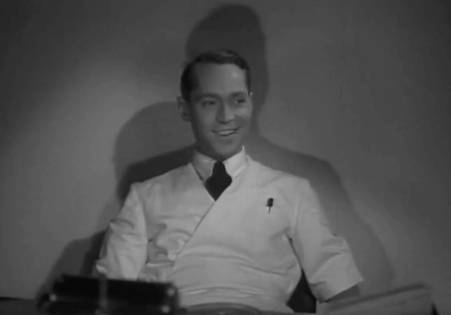
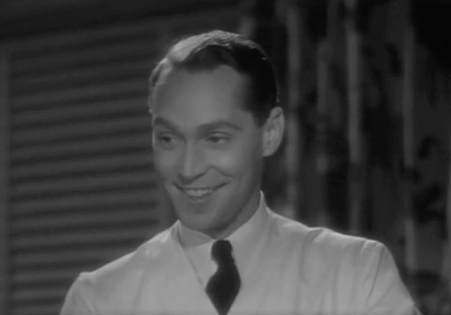
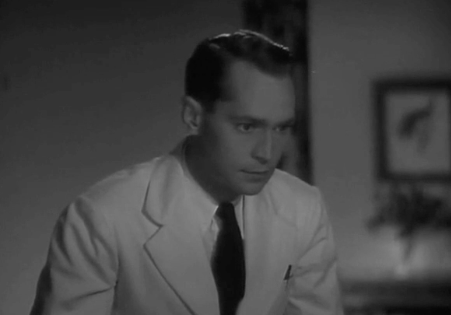
Directed by George B. Seitz and starring Franchot Tone, Maureen O'Sullivan and Virginia Bruce, the medical drama Between Two Women premiered to American audiences on July 9, 1937.

Between Two Women is one of my favorite Franchot movies and I keep hoping it is going to be released on DVD by Warner Archive. It deserves a quality DVD release. It is a great romantic drama, well acted by all of its cast, and Franchot particularly shines in this role.

The film received positive reviews from the fan magazines at the time. Hollywood Magazine said that it was "smoothly directed...a convincing story of the loves, desires and heartaches of those who minister to humanity...[Tone, Bruce, O'Sullivan] have never appeared to better advantage than in this powerful drama." Photoplay called it, "unusually exciting and realistic...Franchot Tone brings all his ability to the role...Splendid." Silver Screen devoted an entire article to the film and its story.
While I will not spoil the final events of the film, the film summary that follows will include some plot spoilers.

Silver Screen Magazine. August 1937.

Allan Meighan (Franchot Tone) is a studious, conscientious intern in a large hospital. He's referred to by one patient as the "strong, silent man who saved my life." Claire Donahue (Maureen O'Sullivan) is a nursing intern who is promoted to head surgical nurse. Allan and Claire are good friends and enjoy working together.


Allan has a few more weeks until he will begin residency. He's applied to his current hospital but hasn't received word yet. After intern Tony Woolcott refuses to go to an accident scene, Allan goes instead. When he has to amputate an arm to save the life of a man trapped in rubble, Allan is named resident at the hospital.

Claire's husband Tom is an alcoholic who can't keep his job and hits his wife. He often stops by the hospital to ask for money from Claire. Claire makes excuses, "He only drinks because he's discouraged because he feels licked."


Socialite Patricia "Pat" Sloan (Virginia Bruce) crashes her car due to passing out from a ruptured appendix. Allan performs surgery and requests Claire "the best nurse he knows" for night duty. Patricia makes eyes at Allan as soon as she wakes from the anesthesia and notices how uncomfortable Claire becomes by it.

Tony Woolcott (Leonard Penn), a wealthy intern who recklessly drinks on the job and has no care for humanity, has eyes for Pat, but Pat desires to be the bride of Dr. Meighan. Allan warns her that he doesn't make enough money to get married. She makes an agreement that he buy necessities and she'll add a few luxuries with her own money.

Allan falls in love with Pat but fears that he won't make her happy.When Claire walks into the hospital room, Pat announces that they are engaged. Claire is shocked. She cries alone as she walks the hospital hallways.


There are already cracks showing in the marriage immediately after the honeymoon when Pat is less than thrilled about living in a modest home. They clearly are attracted to each other but Allan's first duty is to the hospital and Pat does not want his attention divided. Allan is called away from each social engagement they attend because he's needed in surgery. With each call, Pat grows more resentful.

When Allan starts to ignore his duty to the hospital to please Pat, he begins missing out on big professional opportunities and growth for himself as a surgeon. Allan questions Claire about why she stays with a drunk and Claire responds, "You see, I've adjusted my life to Tom. You still haven't adjusted yours to Patricia."


I'm going to stop here with the summary because the last half of the film has several huge moments that change the direction of Allan's plans and stir different feelings in his heart. It's a moving, unassuming film that hooks me every time I watch it. It comes on television every so often, but I'm hoping Warner Archive realizes what a gem this movie is and releases it soon.


Sources:
Silver Screen Magazine. August 1937.
Photoplay. September 1937.
Hollywood. September 1937.
Modern Screen. March 1938.

Wednesday, January 15, 2020

Suzy (1936)

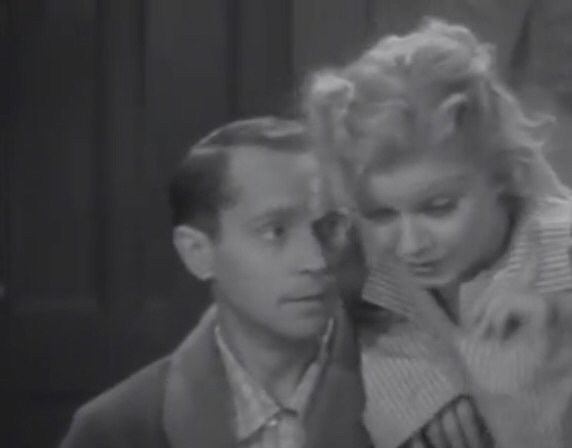
Suzy (Jean Harlow) is a chorus girl who convinces her pal Maisie (Inez Courtney) that she can easily seduce a wealthy man into a relationship and that love can naturally follow. On a foggy day in London, Suzy falls in front of a car driven by a chauffeur and with Terry Moore (not the actress, ha! Franchot's character) in the backseat. Suzy assumes the car belongs to Terry and that he is wealthy.


When he invites her to the derby, Suzy confesses to the maid that she will absolutely marry Terry. Terry pulls up in a decidedly cheaper automobile than the Rolls Royce, and Suzy realizes Terry is not the millionaire she assumed he was. Although not wealthy, Terry is hard to resist. He's an intelligent triple threat: inventor, engineer, and pilot. He's sweet to Suzy and completely falling in love with her. Suzy agrees to marry Terry, but their marriage is short-lived; showing off his work in the lab, Terry and Suzy accidentally cross the path of a German spy (Benita Hume).


Terry is shot, his shooter flees, and Suzy is accused of murder by the landlady. Devastated by the death of her new husband and threatened with a murder charge, Suzy escapes to Paris where her friend Maisie is now living and starts fresh.

As World War I begins, Suzy works as a singer in a bar, meeting wealthy pilot Andre (Cary Grant). Andre charms and marries Suzy, but he is not a faithful husband when he returns to the front. Suzy finds herself spending most of her time with Andre's father Baron Charville (Lewis Stone) and desperately missing Andre.

Next up is a necessary plot spoiler for this post, but I promise it is not a spoiler of the film's ending.

When Andre is wounded and hospitalized, Suzy visits him and there in the hospital room is...
Terry!

Terry was terribly wounded by the earlier shooting, but he survived unbeknownst to Suzy who fled the scene so abruptly. Suzy is shocked to see her husband standing in front of her. Terry, understandably, feels abandoned and betrayed by Suzy, but neither of them share their past with Andre. Terry has been inventing new fighter planes for Andre to pilot and is close to him. Meanwhile, a mysterious woman appears in Andre's life.


Suzy must decide whether she will stay with the wealthy man whom she loves but cannot trust or turn to her former husband Terry for whom she still feels deeply...unless an irrevocable event makes this decision for her.

This is my second favorite of Jean and Franchot's pairings (the first is The Girl from Missouri) and sadly it was their last chance to work together before Jean's untimely death the following year. The acting they do in Terry's apartment come across as effortless and casual; you completely believe that these two are becoming close friends and falling for one another. Jean is adorable in her borrowed pajamas from Terry's closet and her hair up and messy.

My only criticism is that Franchot drops his character's Irish accent occasionally throughout the film, but I find that pretty typical with most American movie stars taking on accents in 1930's films. Cary Grant is the playboy pilot (it's kind of a surprise that Franchot didn't end up with that role since he was so often typecast as the wealthy playboy) who is loved by both Suzy and Terry. Lewis Stone is fabulous as always as the father figure.


Suzy is available on DVD, but often out of print or only available via Warner Archive's Jean Harlow box set.