Showing posts with label harold clurman. Show all posts

Saturday, January 11, 2020

Franchot's Association with the Group Theater, Part 2

Franchot left the Group for Hollywood (click here for part one of this story), but he continued to support them. Harold Clurman wrote that Franchot's financial generosity funded much of the Group's script purchases and productions.

Franchot wrote to Harold that the Group had been ¨the most important influence¨ in his life, but that he deeply loved Joan Crawford and intended to remain with her in Hollywood. Franchot knew that the Group members judged him for his decision, yet they also came to him frequently for money, the same money he made from the Hollywood career choices on which they judged him. Clurman recalled spending afternoons with Franchot and Joan when he visited California:
Franchot was happy to play the host to his companions of old. To him we were clean spirits who brought light and warmth into his almost locked heart. Joan Crawford, a good sport, wanted to make friends with Franchot's friends. She thought at times of appearing on the stage, an ambition perhaps stimulated by Franchot. She wished to be able to follow him in all his steps, so that he might not be included to wander too far from hers.
In the afternoon we would chat, mostly about the theatre, play badminton, swim in the pool, dine, and see a picture in the projection-room, right off the pool. It was quite a pleasant routine that we followed almost every time we visited them. Once, while I lay afloat in the pool, basking lazily in the Sunday sun, Franchot observed me with friendly malice and remarked: “The life of a prostitute is pretty comfortable, isn’t it?”
Often, Franchot would take a loss on his investments with the Group. Clurman remembered:
He wanted to know about his failure to realize any money on Awake and Sing, and I tried not to be sheepish in admitting our mismanagement. He did not take the matter amiss however (in these questions he always alternated between peevishness and indulgence). Basically Franchot was an idealist, and he still idealized Lee Strasberg and me. Though in the long run there is more peril than pleasure in being idealized, I was at the moment the beneficiary of Franchot’s warmest hospitality. I was the (awkward) prophet of a religion centered in the theatre. Franchot’s wife, Joan Crawford, was prepared to believe. Some day, Franchot intimidated, he would return to the theatre, and, at the time, theatre was synonymous to him with the Group.
Franchot's return to the Group-1939's The Gentle People

The success of Golden Boy strengthened Franchot's desires to return to the stage, or as Clurman put it, Franchot ¨glowed in anticipation.¨ Once his marriage to Joan ended, Franchot found himself financing and starring in The Gentle People. Clurman no doubt was eager for Franchot's return to the theater and credited his ¨excellent¨ talent many times over the years, but he also seemed to be banking on the fact that two former Group actors-turned-movie stars (Franchot and Sylvia Sidney) would fill seats whether the play was a hit or not. Although definitely using Franchot's financial and professional reputation for the Group's gain, Clurman did seem to care and worry about Franchot the idealist:
I warned Franchot that he might encounter disappointment in the Group…I suspected that Franchot looked toward the Group with the fondness of a youthful memory. “Franchot, “I said, “promise me that you will stay with us for one year no matter what happens. Give yourself and us a chance.” Franchot looked solemn and uncertain, but he promised.
Franchot threw himself into his work with an eager will. On the whole, he was well pleased with the conduct of rehearsals; his criticisms were affable and slight. When conferences on the progress of The Gentle People were held, I failed to invite him to join them, as it was not our custom to consult members of the cast on production problems of the plays in which they took part. That Franchot was not only one of the leading players but the play’s backer gave him no special privilege in this matter. It was not my intention to snub him in any way, but Irwin Shaw pointed out that, whatever my intention , my behavior was tactless. Franchot, however, bore this with good grace. 
But Franchot was restless, just as he'd been in the year leading up to his departure from the Group and arrival in Hollywood years before. He praised the Group at a speech he gave at the Town Hall Club, saying:
I’d better not get started on the Group,” he began, “because I’ll get emotional about it and then I won’t be able to talk at all...The Group has a well-defined attitude toward human problems and affairs, and while I’m perfectly sure that such a formalized policy as this is by no means necessary to success in the theatre, it is necessary to me.


Still, Franchot turned down Clurman's offer to do the play Quiet City saying that he was too tired to do more than one play at a time. When he was offered My Heart's in the Highlands, Franchot made stipulations before stating that he didn't feel he would do a good job in the role.

When Franchot wouldn't fully commit to the Group in the 1940's, Elia Kazan, Clurman, and others staged a sort of intervention with him. They asked him to commit to them and trust in them and the theater. Franchot asked if they respected him. When they answered that he was the kind of actor they needed, Franchot asked pointedly, ¨But you don't respect the reputation I have made in pictures?¨ Clurman answered, ¨This is not why we want you.¨ Franchot confirmed his fears about the Group when he asked, ¨But you are willing to exploit my name for its commercial value?¨ and Clurman answered, ¨Of course.¨

In his book, Clurman seems misunderstood about why Franchot alternated between complete worship and bitterness in his feelings about the Group, even going so far to say that Franchot ¨built up a case against us in his mind. Perhaps he needed an inner justification for giving us up.¨ I don't believe it's that hard to see why Franchot had mixed feelings about the Group and in all of my own personal research I have only read kind or nostalgic remarks about the Group from Franchot in interviews. As late as 1966 Franchot was praising Lee Strasberg to TV Guide:
Everything I know about acting I learned from Lee Strasberg. At the Group, I learned Strasberg's variant on the Stanislavsky System—that's S-y-s-t-e-m, not Method. Method actors lack discipline. System actors are disciplined. I'm a pretty good actor today only because I've always renewed myself at the feedbag—the theater.
It's clear that Franchot acted out in many ways, but it is also clear that he had some insecurities and wanted to be told he was valued for his own talent. When he wrote to Clurman baring his soul about his deep appreciation for the Group, Franchot probably hoped for a return letter with the same sentiment about himself. Instead, he received a letter requesting money to fund another show. Back in the early 30's, young Franchot had been hurt when Strasberg told him they didn't care that he was leaving for Hollywood; after all, Franchot was secretly hoping for validation (and a personal request to stay with the Group) from this father figure he idealized. It's no surprise that Franchot would be sullen and hurt again in the 1940's when he realized that the Group begging him to come back still didn't fully respect or include him despite now benefiting from his wealth and celebrity status.

Despite this complicated history with the organization, Franchot was proud of his association with the Group and always attributed his passion for acting with the skills and conditioning he gained as a Group member.

You might also be interested in these previous related posts:
Franchot's Association with the Group Theater, Part 1
Franchot and Sylvia Sidney
An Ernest Hemingway Hero
The Gentle People
The Strasbergs Remember Franchot
John Garfield Blogathon

Sources:
  • Clurman, Harold. The Fervent Years: The Story of the Group Theatre and the Thirties. Knopf, 1950. 
  • Kramer, Joan, David Heeley, Joanne Woodward, Steve Lawson, Stella Adler, Harold Clurmaan, Cheryl Crawford, and Lee Strasberg. Broadway's Dreamers: The Legacy of the Group Theatre. New York, N.Y: PDR Productions, 1994. 
  • Lewis, Robert. Slings and Arrows: Theater in My Life. Stein and Day, 1984. 
  • Smith, Wendy. Real Life Drama: The Group Theatre and America, 1931-1940. Knopf, 1990.
  • "Who Has Ever Had a Better Time?" TV Guide. January 1, 1966. 12-14.

Friday, November 8, 2019

Franchot's Association with the Group Theatre, Part 1

Theater director Harold Clurman invited Franchot to join the Group Theatre after seeing him in the 1928 play The International.

Although Franchot and actor Morris Carnovsky were already both on contract with the guild, they were allowed to participate in the Group Theatre's intensive project to create a community of actors that tackled social justice and the world within its plays. In his book The Fervent Years, Clurman explained the group's goal:
...to go away to some country place with twenty-eight actors and rehearse two plays till they were ready for production in New York. We would pay no salaries, but we would provide meals, living quarters, laundry expense.
We had chosen our actors before we knew what play we would do. They were our actors, and they would have to suit our plays. That is what we directors were there for. Nor did we have any money to finance our ambitious plan. We only had the will to carry it out. When the Guild agreed to let us have The House of Connelly and a thousand dollars, they were our only concrete assets.
Billy Rose Theatre Division, The New York Public Library.
"Margaret Barker and Franchot Tone in the stage production The House of Connelly."
The New York Public Library Digital Collections. 1931.
 http://digitalcollections.nypl.org/items/6adb3a10-2408-0133-8625-58d385a7b928

On the morning of June 8, 1931, a group of over 30 people (including actors, spouses, children, directors, friends) traveled to Connecticut to begin working. On moving in day, Franchot started a baseball game “to overcome the natural self-consciousness of the occasion.” Clurman also noticed that Stella Adler looked sadly on her fellow actors, as it looked more like a “camp for overgrown high-school kids.”

The actors rehearsed morning, noon, and night, and in between rehearsals played piano, cards, and debated. During the card games, Franchot led the others in pranking a young member of the group. They would deal him unbeatable hands until he gained confidence in betting and then deal him terrible hands. Lee and Harold observed this one night and found it “very funny, particularly since the hoax was executed with consummate sangfroid and deftness by Franchot Tone.”

Although Franchot was a respected man and actor within the group and had helped to make the group feel comfortable, there came a time when "some of the actors began to be troubled by Franchot Tone’s attitude." Clurman went on:
He was, of course, one of the original 1928 group. Since then he had had the opportunity to feel his oats. He had played leading parts on Broadway, he was in demand, and the other actors sensed in him a general resistance that at times manifested itself toward the directors and at other times toward the influences prevailing among the group. Actually he was suffering from a variety of growing-pains, but our work as such was not in question.
He was lonely. Though he had been raised in easy circumstances, and had been popular at college, he was not a good mixer. He was shy, with a tendency toward suspiciousness when ill at ease. He particularly suspected that he was not liked because, being more privileged than others, he was regarded as somewhat inferior in character. There was perhaps a mite of truth in his suspicions, but, for my part, I believed they lay chiefly in his distrust of himself. The tension that gripped him made him rude, almost insolent. He was unconsciously revenging himself on us, testing both himself and us. Thus he demonstrated little courtesy to Strasberg, although he had real admiration for him.
Franchot, intelligent and sometimes psychologically keen, said to me, 'In the old days we talked only when we didn’t work. Now we work only when we don’t talk!' I was somewhat taken aback by the remark and repeated it to Strasberg. He agreed at once: Yes, we talk a lot because we are not simply rehearsing a play; we are laying the foundation for a theatre. Our theatre is more than just a matter of getting one or two plays produced.
The actors, I repeat, watched Franchot with increasing misgivings. Why was he allowed to get away with little breaches of politeness and discipline? He rarely came to the afternoon talks. He lumbered into rehearsals, sat aloof, whittled away at the side of the barn as he rehearsed. No one reprimanded him. Was he a favored child among the directors? Was he to be treated as a star? Was Lee afraid of him? These disturbing questions were never openly put because the actors had an abiding confidence in the directors’ good sense in handling the problem⁠—if it was a problem.
Despite Franchot's turn to loneliness and rebelliousness, Clurman refers to him at this time as "the finest young actor of recent arrival." Franchot continuously contributed his own money to help fund the group's endeavors, often giving $1,000 or more for each play. With the Group, Franchot starred in 1931, House of Connelly, Night over Taos, Red Rust, and Success Story.

Billy Rose Theatre Division, The New York Public Library.
"Rose McClendon, Fanny de Knight, Franchot Tone, and Margaret Barker
 in the stage production The House of Connelly." The New York Public Library Digital Collections.
1931. http://digitalcollections.nypl.org/items/d100e900-2405-0133-b1f9-58d385a7b928


Beginning in 1932, Clurman noticed that the group began "turning in on itself." Actors became more confrontational and suspicious of one another's motives. The bubble started to burst. Clurman recalled the changes in Franchot at this time:
In Franchot’s case the matter was special. The girl Franchot was attached to at the time, the one who worked with us in the old Riverside Drive days, visited him one weekend. Somehow we didn’t think she was Group material. Franchot’s life with the Group would have been much easier if she had spent more time with us, but Franchot was too proud to say so, and we were too one-tracked in our thinking to notice it. The girl felt separated from Franchot by us and would have been pleased if we had asked her to remain and work with us, even as an apprentice. We disregarded her very existence, and Franchot was irritated by our tactlessness.
Franchot was very emotionally attached to the Group and, in spite of or perhaps witnessed in his rebellious nature, was desperate for the Group's leaders to care about him, to show him that he was needed, that he mattered. The more I read about Franchot from those who knew him personally, the more I see that he had this dichotomy about his personality. On one hand, he was a confident, private individual who seemed to live and love easily. On the other hand, he felt a great deal of melancholy, of not fitting in, and wishing for more approval and assurance from those in his circle and the public at large. In his book, Clurman devoted a lot of time to the complicated personality of Franchot. Clurman said:
Franchot’s problem, however, was deeper than this. In Boston, when I finally got around to talking to him about his refractoriness, he asked me questions relating to my estimate of him as an actor. By my lights, how good would he become? In answering him I dwelt on his need to stick by what was strongest and most alive in himself. Tears came to his eyes. He confessed later that when I left he had actually sobbed, but he added with a sly grin: 'It didn’t do much good. The feeling didn’t last.'
Franchot loved us out of a great need, a feeling that we were good people who were bringing him just that supply of his sound work and clear faith that despite the advantages of his background, he had missed all his life. But he was very much part of the world that had provided him with these advantages, and he could not, would not, turn his back on it; it was the big world, the substantial world, in which all of us, willy-nilly, were living.
Of course, even in his attachment to the big world there was a contradiction. Franchot’s father, though associated with business, was basically a scientist; and Franchot’s mother was as much of an aristocrat as we ever get in America. Both of them were glad that Franchot preferred the Group to the ordinary commercial thatre. But the entertainment channels of the big world lie in the commercial theatre. We have no national theatre for our “best people.” We have Broadway, and Broadway has Hollywood. The cradle of opinion with theatre folk was not some Mermaid Tavern of intellectuals or artists, but the speakeasies of Fifty-second Street.
There they laughed at Franchot’s devotion to the Group. Franchot probably thought Lilyan Tashman and her crowd who came to see him in Taos lacked taste, but he did not, for all that, feel particularly comfortable at their seeing him in a flop that had been preceded by another, whose most enthusiastic audience sat in the balcony uttering strange cries of approval. Franchot was torn between the Group of tactless people, led chiefly by two exasperated hotheads who offered a way of life that was personally real and perhaps part of the mainstream of the time, and a Broadway plus Hollywood which, though he knew it to be shoddy, actually possessed the only power and glory the world could offer today.
Billy Rose Theatre Division, The New York Public Library.
"Luther Adler, Stella Adler, Franchot Tone, and Dorothy Patten in the stage production Success Story"
The New York Public Library Digital Collections. 1932.
http://digitalcollections.nypl.org/items/281640c0-2409-0133-1322-58d385a7b928

Franchot seemed to behave more strangely during the final summer with the Group. (In all fairness, if you read Wendy Smith's book Real Life Drama, it seems a lot of the members were acting strangely during this time.) Clurman remembered:
Franchot behaved more peculiarly this summer than the last. He was remarkably fine at rehearsals of Success Story, but he was rather antisocial in other ways. He drank stiffly, and carried off some other pretty good bottlemen to drink with him almost every night after rehearsals. When he came back he sometimes took delight in driving his car over the main lawn and crashing all the garden furniture left there during the day. He grew a beard, walked about in a loincloth, went shooting fairly close to the rehearsal grounds. He shied away from most of us, alternating between a distant courtesy that implied an insult, and the manner of a cagey maniac.
With all this, Franchot was always shrewd and observant. He saw what was going on. What was going on was a subtle transformation with the Group as a whole. The very air was fermenting with something that blew from we know not where, but which roused everyone to doubts, questions, wonder, eagerness, dispute. ….
The day came when Strasberg was no longer able to tolerate the disruptive ambiguity of Franchot’s behavior. He decided to have the showdown I had recommended the year before, and both us now confronted Franchot with ultimatum written on our faces. Franchot admitted at once that he had decided to quit the Group, that he was going into pictures. I do not know whether he had already made arrangements or whether our severity at this meeting finally decided him. I am inclined to believe that some of his mischievous conduct arose from an anger with himself, and some was designed to provoke us to such a discussion as we were having. Perhaps, however, he expected a gentler approach, for people like Franchot, always want evidence that they are loved. Strasberg, hurt himself, lashed forth a white-hot 'We don’t care' when Franchot disclosed his intentions. 'I know you don’t care,' Franchot answered quietly but painfully, as if to say: 'That is exactly why I wish to go.'
That day the bad news of Franchot’s resignation was announced to the Group at a special meeting addressed by Strasberg. It was the first resignation of any importance from our organization. The actors were shocked, for they appreciated Franchot’s value. Strasberg’s talk was calculated to affirm the strength and integrity of the Group, which could ill afford to keep a member whose spirit had turned against it. When the day came for Franchot to leave, he told me he was going to try Hollywood. At Tony’s, on West Fifty-second Street, he wept over his drink. …
I find it interesting that, according to Clurman, Franchot was pushed out of the Group for "disruptive ambiguity" much like he was pushed out of The Hill School as a teen for "subtle influence for disorder." And both of these punishments only led to more success for Franchot—leaving The Hill School led to success at Cornell University while leaving the Group led to success in films.

Clurman goes on to address the difficulty the Group had replacing Franchot in their plays. I think it's telling that despite his causing trouble, the other actors always appreciated Franchot's value and that Clurman was able to see that some of his rebelliousness was due to Franchot's schrewd observation of the inner shifting of the group.

Although he'd worked himself into a corner with Strasberg and Clurman, Franchot was definitely torn in leaving the Group for Hollywood and would never be able to definitely choose one over the other for the rest of his career. Actress Ruth Nelson shared in the documentary Broadway Dreamers:
I remember the night, his last Saturday night with Success Story. He came to me to say goodbye. He leaned over, kissed me, and had tears in his eyes. I said, 'Franchot, if that's the way you feel, why are you leaving?' And he said, 'Well, Ruthie, I just have to find out what it's [Hollywood] all about.'
Actors Sandy Meisner and Robert Lewis went with Franchot to Grand Central Station. As they said their goodbyes, an emotional Franchot:
...stood on the steps of the famous Twentieth Century Limited club car, teary-eyed, and as the train started to pull out of the station, he called to us, 'Keep your line.'
Walking across Forty-second Street, I turned to Sandy and observed, 'Did you hear what he said? Here we are, going back to our struggling new Group while he's off to Hollywood to make a movie with Lilyan Tashman and he tells us to keep our line.'
Said Sandy, 'He meant keep it for him.'
I think Clurman's belief that Franchot "expected a gentler approach, for people like Franchot, always want evidence that they are loved" is valid and that his statements about the emotional contrasts in Franchot's character echo those of Gloria Vanderbilt and Clifford Odets and Christopher Plummer.

Franchot, of course, would maintain an association with the Group Theatre, both publicly as an actor and privately as a benefactor. Much more on the post-1933 involvement with the Group coming soon!

Sources:
  • Clurman, Harold. The Fervent Years: The Story of the Group Theatre and the Thirties. Knopf, 1950.
  • Kramer, Joan, David Heeley, Joanne Woodward, Steve Lawson, Stella Adler, Harold Clurmaan, Cheryl Crawford, and Lee Strasberg. Broadway's Dreamers: The Legacy of the Group Theatre. New York, N.Y: PDR Productions, 1994.
  • Lewis, Robert. Slings and Arrows: Theater in My Life. Stein and Day, 1984.
  • Smith, Wendy. Real Life Drama: The Group Theatre and America, 1931-1940. Knopf, 1990.

Wednesday, July 3, 2019

An Interesting Independence Day Display

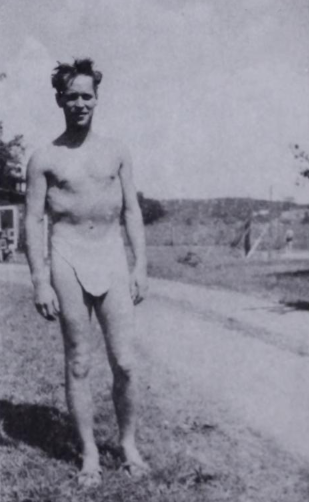
Both Harold Clurman, in his book The Fervent Years, and Robert Lewis, in his book Slings and Arrows, recounted Franchot defiantly celebrating the 4th of July alone while he was a member of the Group Theatre in the early 1930's. Both refer to this display as being attached to Franchot's frustration with the constant "plethora of intellectual talk and classic music", but that reason seems so in contrast with everything else I've learned about him. Franchot was a fond participator in deep discussion and I can't tell you how much I've read about his enthusiasm for classical music, especially Mozart.

But Franchot's time with the Group Theatre seemed to be a complicated mixture of joyful success and feelings of alienation and I have much more to share about that subject in a future post. Perhaps Franchot was just letting off steam or drunk. Perhaps even the most devoted Mozart fan can grow weary of endless playback.  Or, perhaps, Franchot was just very enthusiastic about Independence Day. Here's what Clurman said:
On the Fourth of July, Franchot alone had decided to celebrate by shooting off fireworks. He began rather early in the day. Perhaps this was his childhood custom, perhaps it released his tension, perhaps it was his protest against what seemed to be the indifference of the others to the proprieties of this holiday. Solitary, with darkened brow, he went from place to place over the grounds and set off his firecrackers. Carnovsky and others were fond of music and played recordings of Mozart at every opportunity (except one man who played Caruso records, and Puccini). Carnovsky, no longer able to tolerate Franchot's acoustic vandalism, came out on the porch and cried: "Franchot, for God's sake, I can't stand the noise." Franchot turned and yelled: "And I can't stand your  noise"—referring to Mozart and the rest. He stamped off yelling: "I am an American." 
I have written a little bit about the Group Theatre (click here), but have some more detailed stories of Franchot's time with the Group coming soon.

Happy Independence Day! Set off some fireworks for loin-clothed Franchot the American!
Photo Source: Slings and Arrows, 1996.

Sources: 

Clurman, Harold. The Fervent Years. Harcourt. 1945.
Lewis, Robert. Slings and Arrows: Theatre in My Life. 1996.

Monday, June 20, 2016

The Gentle People (1939)

The Gentle People ran for 141 performances from January to May 1939 at the Belasco Theatre. The play, written by Irwin Shaw and directed by Harold Clurman, was a Group Theatre production and Franchot's first play in 6 years. The cast included: Franchot Tone, Sylvia Sidney, Sam Jaffe, Elia Kazan, Karl Malden, and Lee J. Cobb.

The play is about two men who fish in their downtime to escape everyday pressures. On one outing, a gangster named Harold Goff (Franchot Tone) demands protection money from Jonah Goodman (Sam Jaffe) and Philip Anagnos (Roman Bohnen). To save their boat and maintain peace, the fishermen pay him. Soon, through his romance with one of the men's daughters (Sylvia Sidney), Harold discovers that the humble, middle-aged guys have saved quite a bit of their hard-earned money. When a court of law does not protect the men from Harold's threats, they take the matter into their own hands. Jonah and Philip take the scheming gangster out for a boat ride and he never returns.
Franchot Tone and Sylvia Sidney in The Gentle People. Source: www.collections.mcny.org

Franchot in The Gentle People. Source: Life, February 6, 1939.

On February 6, 1939, Life magazine reported:
Where The Gentle People lags, it is supported by radiant acting from Franchot Tone, Sylvia Sidney and Sam Jaffe, all returned from Hollywood to Broadway, and from the Group company who have become past masters at U.S. realism.
Postcard promoting The Gentle People from my collection.
The back of the postcard includes a comment and critique section
for the play's audience members to complete.
There was much publicity surrounding Franchot's return to the New York stage, because it coincided with his divorce from Joan Crawford. Reporter Inez Robb was disappointed to find that the "never lovelier" Franchot darted into the Belasco Theatre and successfully dodged all questions about his personal life during the run of the play. Although Ms. Robb speculated that Franchot was completely over Joan, columnist George Ross predicted the Tones would reunite following a performance of The Gentle People, to which Franchot had given Joan tickets.

Franchot, who had been a celebrated young stage actor before he moved to Hollywood, dealt with a lot of putdowns and pondering in the gossip columns of the day. While he was busy rehearsing the play, most of the entertainment columnists were focusing on Franchot's "mighty, mighty purty" face, hinting that he'd been a failure at M-G-M, and questioning whether he could make it as an actor without Joan Crawford at his side. Once the play began its run, Franchot received rave reviews and the play was a major success. From 1939 on, Franchot would steadily perform in both films and plays.
Sylvia Sidney and Franchot Tone. Source: www.julia-loves-bette-davis.tumblr.com
Sources:
Robb, Inez. "Valet Helps Franchot Tone Evade Persistent Press, Public." The Deseret News. February 14, 1939.
Ross, George. "Rumor Rumbles." The Pittsburgh Press. January 19, 1939.
"The Gentle People." Internet Broadway Database. https://www.ibdb.com/Show/View/3806
"The Gentle People." Playbill. http://www.playbill.com/production/the-gentle-people-belasco-theatre-vault-0000010886