Showing posts with label candid. Show all posts

Thursday, April 30, 2020

Franchot on Understanding the Acting Profession

Franchot over breakfast. Source: Elmira Star-Gazette.
Reporter Peggy Gallagher interviewed Franchot over breakfast on his first morning in Elmira, New York. He was due to give a presentation on Mark Twain at Elmira College that evening. When asked if he was comfortable portraying older men or father figures, Franchot assured that he felt very comfortable in the role and proudly talked of his sons Pat and Jeff:

And, the rascals! They both want to be actors...A useless profession! Unless you thoroughly understand it, of course. But, I don't see that they'll ever work their way out. They're thoroughly soaked in theater. 

Franchot went on to explain that although he'd prefer "physics, law, chemistry" for his sons, he would not have chosen a different life for himself.

But, that's what I mean—I understand it. Let me explain it this way: entertainment, as a function of escape for the human race, has been in its best times a signpost to the greater aspirations of which the human race is capable...how's that sound for 9:30 in the morning?

When Gallagher pressed for more meaning, Franchot answered:

It means the entertainment business makes dreams real—and it's the dreams of man which have made our world possible.

Franchot went on to share that he preferred the theater over film because of the "immediate relationship with the audience."

And when asked about the high point of his career, Franchot insisted that his high point was still to come.

There was a very wonderful book by the author, Christopher Morley, about a cocker spaniel named Mr. Gissing. Mr. Gissing lived in a valley. He kept looking at the hillside and at the blue beyond. He decided he wanted to climb the hill and find out where the blue began. But when he reached the top, doggone if he didn't find another hill!

The novel that Franchot refers to is Where the Blue Begins and was first published in 1922 and its author also penned the 1939 novel Kitty Foyle, which was brought to the screen with Ginger Rogers in the title role in 1940.

Franchot talked quite a bit with Elmira reporters (here's what he said about politics) and there is more to come about his presentation on Mark Twain!

Source:
Gallagher, Peggy. "Franchot to Give Twain Tone." Elmira Star-Gazette. October 14, 1960.

Tuesday, April 21, 2020

Franchot on Politics

Franchot Tone 1960
Franchot found himself in a sea of reporters and fans when he landed at an airport in Elmira, New York in 1960. Franchot asked them to gather in the airport waiting room, where reporter Mary Lee Morken said he "wrapped the crowd around him like a cloak" and answered questions. When Franchot was asked by a newsman whether or not he had ever participated in political work, Franchot responded:

I was one of the members of the Hollywood Democratic Committee. We were quite active. Melvyn Douglas and lot of others—I can't remember now. It was back about 1940. I think we were quite influential in breaking up—well, let me put it this way. We helped elect Olson, who was the first Democratic governor elected in California in 50 years. We helped break the way for Gov. Warren, one of the finest statesmen of our times.

When someone asked whether actors should even be "mixed up" in politics, Franchot is described as bristling and answering disdainfully:

I think every citizen should be 'mixed up' in politics.

Another person in the crowd broke the tension by asking Franchot if he'd consider playing Abraham Lincoln. Franchot made the crowd laugh when he answered:

I'd be afraid to play Lincoln. Any actor who plays Lincoln is never happy until they shoot him.

Franchot granted multiple interviews during his visit to Elmira College where he was speaking on Mark Twain and his performance as Twain in the television production The Shape of the River. I will be sharing more of Franchot's quotes from this trip as well as details of his itinerary over the next week.

Click here for previous posts on Franchot and politics.

Source:
Morken, Mary Lee. "Actor Long Acquainted with Twain." Elmira Advertiser. October 14, 1960. 

Saturday, September 14, 2019

Franchot in North Carolina

Last month, I was searching digital archives in California and New York and coming up with the same articles and photos I've seen time and again. I took a chance and searched my home state of North Carolina's digital archives, which I've never thought to do for Franchot before. And...
Franchot visiting Pat on campus.
Source: University of North Carolina at Chapel Hill Photographic Laboratory Collection #P0031,
North Carolina Collection Photographic Archives, The Wilson Library, University of North Carolina at Chapel Hill.

I was finding Franchot all over again! I knew that Franchot's oldest son Pat attended the University of North Carolina at Chapel Hill, but never even considered Franchot was sitting right in their archives.

Franchot visited Pat on campus in April 1964 and, fortunately for us, photos were taken of father and son and Franchot was interviewed by the local paper.

Franchot said:
Well, I just couldn't resist an opportunity to come down to Chapel Hill and spend a pleasant week with my son, Pat. Of course, since I've been here, I've been wearing out the pavement between the Carolina Inn and Swain Hall, and the only chance I've had to see Pat is during meals.
When asked about his acting career, Franchot said:
 ...just one of those things that happened. I was exposed to the old silent movies and I also had the opportunity of seeing a number of stage plays. After I would see a picture or a play, I used to go home and stand in front of a mirror and act out scenes for myself...Nowadays, an actor works in all the media. There are differences, of course. The stage actor must act with his whole body because the audience always sees him that way. In films and, to a large extent in television, the acting is in his eyes.
And what did Franchot think of Pat, who had been in several university plays, becoming an actor? Franchot smiled:
Who knows? He seems to have the bug, but he may come to his senses.
The reporter summarized his meeting with Franchot by writing:
By his own admission, he has found a full and complete life in acting, and he went out for the final rehearsal with an air of confidence and satisfaction which indicated he was doing the thing he loved best.
Franchot visiting Pat on campus. 
Source: University of North Carolina at Chapel Hill Photographic Laboratory Collection #P0031, 
North Carolina Collection Photographic Archives, The Wilson Library, University of North Carolina at Chapel Hill.
In a separate article, the Daily Tar Heel examined how the son of a movie star came to study in North Carolina. Bob Quincy reported that sophomore Pat Tone was making a name for himself with a javelin at UNC-Chapel Hill. The coach commented that Pat was "strong and works hard."

Quincy noted:
Pat and his actor dad spent several weeks together here recently...He and his son are quite close and spent many hours enjoying the good life. The Tones have a track background, and it began at the same institution. Both attended the Hill School in New Jersey*. Papa Franchot was a manager of the track team in his time. Pat excelled in weights and dashes.
*My note: The Hill School was actually in Pennsylvania. 


The javelin caught Pat's eye after watching UCLA athletes when visiting his mother Jean Wallace and he chose to move to North Carolina because a lot of his peers were moving south to attend school. Franchot must've approved this choice, because Pat notes:
Dad had gone to Cornell. But he is a very good friend of Paul Green, the playwright, who lives near the Carolina campus. They have worked together on many projects.

Shakespeare: A Portrait

I was already thrilled to my core to find these two articles and two photographs, but there's more! While he was in town, Franchot appeared in the university's 90-minute television show commemorating William Shakepeare's 400th birthday anniversary. The show was entitled Shakespeare: A Portrait and aired on the local WUNC-TV on April 23, 1964. It seems that the Chairman of the Department of Radio, Television and Motion Pictures requested Franchot's participation and Franchot accepted. Franchot praised the students and crew that worked with him on the project. I was unaware of this production and am now digging into whether or not a recording or photographs of it still exist in the university or WUNC-TV archives.

Sources: 
Digital NC: http://www.digitalnc.org/
Digital Public Library of America:  https://dp.la/
Hardy, William M. "Tone Kills 2 Birds with 1 Stone." The Daily Tar Heel. April 19, 1964.
Quincy, Bob. "Former Actor's Son Goes Own Way with NC Javelin." The Daily Tar Heel. April 18, 1964.

Sunday, August 26, 2018

Franchot and Sylvia Sidney

Sylvia Sidney was born on August 8, 1910 in New York and, like Franchot, never abandoned her first love of the theater. In fact, Franchot and Sylvia had a lot of connections throughout the years as you'll see. Sylvia successfully juggled theater, film, and television from the mid-1920's all the way up to her last role the 1998 tv reboot of Fantasy Island. (Sylvia would argue with me that it was simply a "part," not a role...she was particular about that.)


Sylvia is a member, along with Loretta Young and Natalie Wood, of my trio of favorite actresses. I could watch her work without end. I'm fortunate that Franchot worked with all three in his lifetime. I've watched a lot of Sylvia over the last several years and wrote about the Tone-Sidney 1939 play The Gentle People back in 2016 (here.) This summer I finally read Scott O'Brien's biography Sylvia Sidney: Paid by the Tear which I highly recommend. Sylvia was beautiful, driven, talented, and very outspoken. As she grew older, she became especially cantakerous, but sometimes her quips to reporters and fans were delivered with an ounce of humor and mischief. If you've ever watched 1990's interviews of her on Youtube, you know what I am talking about here. Let's just say if I had had the opportunity to meet her, she may have very well made me cry. O'Brien writes that when a fan approached Sylvia in Bloomingdale's and told he had hundreds of photos of her, Sylvia replied, "You're f'***ing crazy! Your house must be a mess!" Reading that passage made me laugh out loud, but if I were that fan, I would've been shocked. Without further ado, all of the Sylvia Sidney photos and play-related scans in this post are from my own collection. I assure you I'm not crazy and my house is mostly tidy.


Sylvia was so much more than a grouchy workaholic (look how exuberant her smile is in the candids above) and O'Brien's biography really delves into her familial and professional experiences and her dedication to her son, dogs, and career. I also think it's telling that Sylvia liked to attend celebratory film events and then criticize its attendees for living in the past. She didn't have to attend these events or be interviewed. But she did and I think it's because she secretly liked it. There were disappointments throughout her life that I believe hardened her shell a bit so that she increasingly spouted these harsh, irascible comments as a shield of protection. As a fan myself, I wish that she would've been more receptive to and outwardly appreciative of her fans' interest in her, but I must admit that I really admire how she lived her life on her own terms. I wish that I had an ounce of the audacity she possessed. 

Like Franchot, Sylvia grew up in a household without financial issues and very early on dedicated herself to being an actor. Both Franchot and Sylvia could've coasted through life, but possessed the drive to embrace their own paths and be discovered through hard work on the stage instead. They would both state how disenchanted the film world made them feel at times and continuously worked at improving their skills while delivering plays with important social messages through the Group Theatre. Both Franchot and Sylvia refused to take fame too seriously and embraced their transformation into character actors. On top of their personal and professional similarities, Franchot and Sylvia simply liked each other.

Ten years before they teamed up for their Group Theatre comebacks in The Gentle People, 24-year old Franchot and 19-year-old Sylvia acted together in Cross Roads. It ran for 28 performances at the Morosco Theatre in November and December 1929. Written by Martin Flavin, the play would be adapted into the 1932 film The Age of Consent. Eric Dressler played a first-year medical student Michael who wants to quit school to marry Pat. When Pat (Sylvia Sidney) wants to wait, Michael is caught in a clandestine evening with a waitress and his life at school and with Pat is threatened.

On November 6, Variety called it a "poignant, wistful little comedy...Excellently acted, the dialog, easy and natural, and it has all been staged superbly." By November 27, the play had grossed $8,500 (Measuringworth.com rates that around 1 million today.) 

The dialogue may have not been the only aspect that came "easy and natural" to its actors. Author O'Brien reveals that Franchot told interviewer Gladys Hall in 1933 that he had been "seriously in love" with a co-star:
We didn't marry, because I felt it would be unfair to the girl. She was very talented. She had a big career ahead of her. We broke it off and she has gone on, as I knew she should. She is a very successful star right now.
Although Franchot didn't name the costar, Hall then and O'Brien later guessed that Sylvia may be the girl. By 1933, Sylvia had become a big star in Hollywood. 1931 to 1933 saw Sylvia in such classics as An American Tragedy, City Streets, Merrily We Go to Hell, Street Scene, Madame Butterfly and Jennie Gerhardt. In 1934, movie magazines declared that Sylvia was the Hollywood beauty with the most ideal face. I believe that it is very likely that Franchot is referring to Sylvia in this interview. Although a great deal of his costars were very successful in theater, Sylvia's the only one of his early theater costars that comes to mind who had that level of stardom in Hollywood in 1933. Franchot had many, many love affairs—some not so serious and some very serious, some well-publicized and some very secretive. But I have a feeling he may be talking about Sylvia here, too. 


In 1939 after many years focused on films, Franchot returned to the stage in The Gentle People, a Group Theatre production co-starring Sylvia. On February 6, 1939, Life magazine reported:
Where The Gentle People lags, it is supported by radiant acting from Franchot Tone, Sylvia Sidney and Sam Jaffe, all returned from Hollywood to Broadway, and from the Group company who have become past masters at U.S. realism.
Variety, on January 11, 1939, reported:
Franchot Tone returned from Hollywood to play Goff, giving the part a clear reading and believable type of tough guy...Sylvia Sidney is the willful Stella, an assignment which she excellently delivers.


During the play's run that included 141 performances from January to May 1939 at the Belasco Theatre, Franchot and Sylvia were frequently seen out together socializing for fun as well as for a cause. Sylvia was married to actor and director Luther Adler at the time and would give birth to their only son Jody whom she absolutely adored by the end of the year. Still, Franchot and Sylvia were photographed together in restaurants and many wondered if a romance was afoot.


Franchot and Sylvia took the social causes that drew them to the Group Theatre to heart. They were committed to using their fame to bring awareness to injustice. Just two months before The Gentle People's opening night, German Jews were brutally attacked by paramilitary and civilians in retaliation for the assassination of a Nazi German diplomat. We know now that this horrific persecution would only get worse. To encourage the United States government to take a stand against Nazis and brutal acts such as these, Franchot and Sylvia hosted a fundraiser for Committee of 56. The 56 was named for the number of original signers of the Declaration of Independence. The Committee aimed to rally against acts of Nazism and boycott anything associated with Germany until those acts were prevented.

Franchot and Sylvia also traveled to Washington, D.C. together. They met with President Roosevelt to protest the budget cuts against the Federal Theatre Project.

Having spent a great deal of time together in 1939, Franchot and Sylvia went their separate ways but still took such similar paths. Sylvia had her son Jody with Luther Adler. In 1946, Sylvia divorced Luther and was married to Carlton Alsop from 1947 to 1951. Franchot would marry actress Jean Wallace in 1941 and have two sons. He and Jean would divorce in 1948 and he would later marry Barbara Payton and then Dolores Dorn. Franchot would balance a life in films, theater, and television as would Sylvia.

When I'm asked which two actors I'd liked to have seen in a film together, I've always immediately answered Franchot and Sylvia. I'm so disappointed that they didn't do something together in the 1930's. I think they would've been perfect in a romantic drama together. Look at Franchot's movies that include messages about the human condition and moral dilemma. I could easily picture Sylvia as Franchot's leading lady in Exclusive Story or Gentlemen are Born or Straight is the Way. Equally, I could envision Franchot as Sylvia's leading man in Street Scene, Jennie Gerhardt, and One Third of a Nation.

It seems I was almost granted my wish in the 1940's. O'Brien's book reveals that Franchot and Sylvia nearly did co-star in a film in 1946. They both signed on to co-star in the film Repeat Performance. After the film was delayed, Sylvia dropped out to film Love from a Stranger instead. Franchot would film Honeymoon, Lost Honeymoon, and Her Husband's Affairs in 1947. Repeat Performance went on to star Louis Hayward and Joan Leslie and was released in 1947. It as a film noir that includes elements of time travel and science fiction.

In 1956, Luther Adler and Sylvia reunited to co-star in the play A Very Special Baby. There was a lot of tension and bickering between the two exes and although the play was noted for Sidney and Adler's superb acting, critics found the play to be "overwrought." Playwright Robert Alan Aurthur witnessed the battles and ended up writing The Thundering Wave, an episode of Playhouse 90. The Thundering Wave was about two exes who are reunited on the stage and clashes ensue. Those two exes, based on Sylvia and Luther, were performed by Joan Bennett and....Franchot Tone.


Sources:

  • "Cross Roads." Variety. November 6, 1929. pg 63.
  • Doherty, Thomas. "Remembering the Hollywood Mogul who Rescued Hundreds of Germany's Jews." The Hollywood Reporter. December 29, 2015.
  • "Low Tide Totals of Between Holiday Period Expected by B'way Legits." Variety. November 27, 1929. pg 59.
  • O'Brien, Scott. Sylvia Sidney: Paid by the Tear. Bear Manor Media, 2016.
  • Smith, Wendy. Real Life Drama: The Group Theatre and America, 1931-1940; New York: Knopf, 1990.

Wednesday, July 4, 2018

Run for Your Life: Tell It Like It Is (1967)

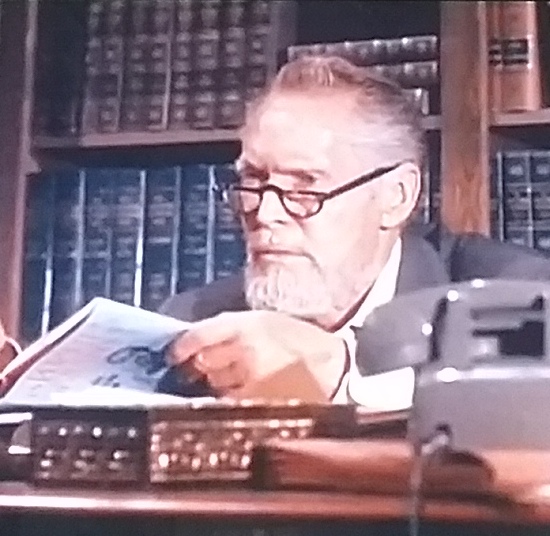
Franchot stars as Judge Taliaferro Wilson in season 3, episode 10 of the popular television drama Run for Your Life. Run for Your Life ran from 1965-68 on NBC. In each episode, an attorney with a terminal illness (Ben Gazzara) encounters different people and situations, often helping them out. This great show is sadly not on commercial DVD at the moment and is rarely shown on television. I hope that changes in the future. It was shown on COZI television network years ago and that's how I've taken these screenshots. COZI network is still around so maybe the episode will come on again at some point.
A candid of Franchot on the set of Run For Your Life, 1967.
Source: my collection.

The episode is called Tell It Like It Is because that's what Terry Haines, a shock jock-type television host, says that he is doing on his syndicated show. As he humiliates his guests in person and via phone and even embarrasses his audience members over their looks and intelligence, Haines keeps saying that they have no right to be mad because he is just "telling it like it is." When Paul Bryan (Ben Gazzara) learns that his former colleague Judge Taliaferro Wilson (Franchot Tone) has agreed to appear on Haines' show, he knows that he must intervene.

At his home, Wilson is happy to see Bryan. The judge explains that the show will be harmless and that he needs the publicity to sell his recent memoir. Wilson says there is no dirt about him to uncover and that he appreciates Bryan's concern and asks him to attend the taping with him.


The taping goes exactly as Bryan fears. Host Haines starts off by praising the judge, telling him he loves the book, and going on about what a respected man the judge is. Quickly though, the interview turns nasty. Haines accuses Judge Wilson of sending innocent men to their deaths, drunkenness on the stand, and lying in his book. Wilson is stunned by the accusations. He refutes the claims and Bryan, having been at the trials and knowing Wilson personally, grabs a microphone in the audience and backs him up.

Haines then brings forth a traffic ticket saying it's for intoxication, but Wilson reads the ticket and it's a citation of unsafe lane changing. Bryan knows the judge never performed his duties intoxicated, but Wilson, a man defined by his dignity, is clearly shaken by the ugliness of Haines' and his audience's behavior. He is utterly humiliated.


Here's a clip of that scene that Youtube user Windesong posted to Youtube:


Bryan later approaches the host and says that if he doesn't retract his statements on the following night's show that Bryan will represent the judge in a slander suit against Haines. If he doesn't, Paul tells him he will represent the judge himself in a slander suit against Haines. Bryan tells the host that he may have won briefly on his own turf, but that if he gets Haines in a courtroom for just a few minutes, Haines will know what true humiliation is.

Then the episode switches to real time. The episode, you see, began with Haines being shot in a parking garage and then quickly led to Bryan "telling it like it is" (truthfully) to the police as he recounted the day's events. The police and Bryan try to phone the judge to let him know of the shooting (Haines is hospitalized but not in critical condition), but he doesn't answer. Bryan is surprised when Wilson knocks on his door. Warning: Spoilers ahead and a video clip that makes me cry.

Wilson, defeated and still in shock, confesses to Bryan that he pulled the trigger. He says it felt like an out-of-body experience and never thought he could do it.  Wilson asks if he can get some sleep before he makes a full confession at the police station. Bryan goes to the hospital and confronts a smug and eternally classless Haines. Bryan tell hims that he is going to represent Wilson in court and that Wilson will fully "tell it like it is." Bryan reminds him that the respected judge will not be the only one on trial. He says:

Judge Wilson's going to be on trial, but so will you. The real you. It will all be in the legal record now, the way you tell it like it is. The kind of liar you are—the worst kind—a public liar. And when it's over, I don't think anybody's going to buy a Jerry Haines at any price, so I think you'd better start looking for a rock to crawl under.
Here's a tiny clip of Franchot's much longer confession that I shared on my Instagram account devoted to Franchot:


I cannot express how sincerely moving Franchot's performance is throughout the entirety of this episode. This is a first-rate example of what a talented actor Franchot was and how captivating he could be. It's a rare performance in color and also one of his final parts. I think it's beautiful in every possible way. He's raw and emotional and still very handsome. It honestly makes me cry every time I watch it. Judge Wilson is a perfect role for Franchot and Tell It Like It Is is an episode I wish was more readily available to view.


Monday, April 17, 2017

Gatineau Treasure

Last year, I wrote about Franchot's ties to the Gatineau region of Quebec. Franchot always spoke fondly of his time outdoors fishing on the Thirty-One Mile lakes, hunting in the woods, and relaxing in his cabin there. Franchot escaped his hectic life in Hollywood by returning to this region and shared its beauty with all four wives, spending several of his honeymoons here. It's easily one of my favorite aspects of Franchot's life to research, because it's so in contrast to the gentleman role in which he was often typecast and because it seems like such a joyous place for him. My original detailed post on the Tone family cabin and Franchot's visits can be found here. Franchot's fourth wife Dolores Dorn described her honeymoon there and I wrote about that here.

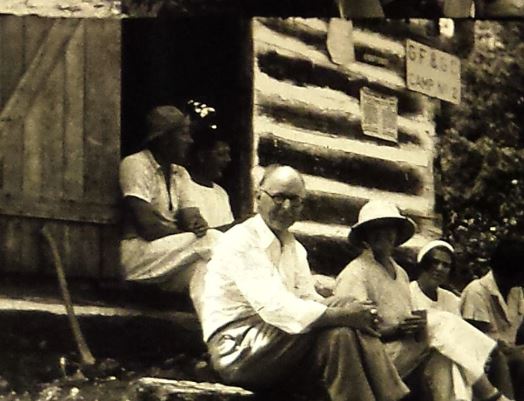
Recently, multiple 16 mm film of home movies belonging to Franchot's brother, Jerry, were up for auction on eBay. Most of the film was dedicated to Jerry's family with glimpses of Franchot's parents here and there. I didn't see any indication that Franchot would appear in most of the reels. Then, I saw one small preview picture of a 1938 reel from Gatineau and there he was with a huge grin on his face fishing from a boat. There was also a separate film of Gatineau from 1935, but I doubted Franchot would pop up there because '35 was a busy year for him. I bid on both despite the fact that I have no means to play or transfer 16 mm film. My plan was to find a way to transfer the film to digital, so that I could share the videos here. I bid as high as I felt I could, but a more competitive bidder took it home instead. eBay can be quite an emotional roller coaster! Ever since the auction ended, I've gone back and forth between devastation that I didn't bid just a little bit higher and relief that I didn't bid above my means.

Sadly, I didn't win but my hope is that the person who did win was either 1. Franchot's family (and if so, I apologize for the bidding war!) 2. a library or archive or  3. a fan like me who plans to transfer the film for others to enjoy.

I did, however, save the preview shots that were posted on eBay and they give a wonderful view of life at Franchot's family cabin in Canada!

From the 1938 color reel:
Franchot fishing. I love this candid shot!


Franchot with his father Frank J. Tone


Franchot's father Frank J. Tone and brother Jerry
 
I did not see any indication that Franchot appears in the '35 film, but it still gives a wonderful view of what vacation life was like for the Tones there. From the 1935 black and white reel:


Franchot's father Frank J. Tone with other family members


Don't forget that my Franchot Tone Blogathon happens later this week! Check back this weekend for great entries on Mr. Tone from multiple bloggers.

Sunday, February 26, 2017

A Bounty of Byam

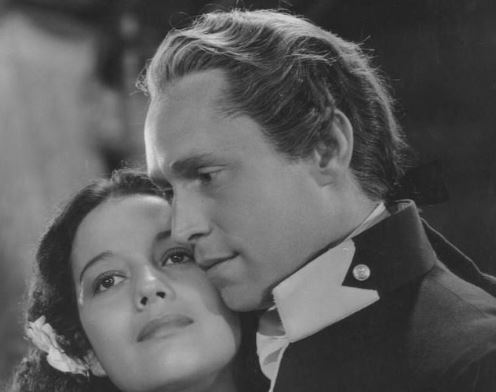
In honor of today's Academy Awards celebration, I want to showcase some behind-the-scenes and publicity photos of Franchot at work in Mutiny on the Bounty (1935). Franchot was nominated for a Best Actor Oscar for his work as Byam in Mutiny. Mutiny on the Bounty won the Academy Award for Best Picture at the 1936 ceremony. In addition to Franchot, Clark Gable and Charles Laughton were both nominated in the Best Actor category. Other nominations for Mutiny: Frank Lloyd for Best Director, Jules Furthman, Talbot Jennings, and Carey Wilson for Best Screenplay, Margaret Booth for Best Film Editing, and Nat W. Finston and Herbert Stothart for Best Music.

I'll post a film summary and screen captures soon, but for now, enjoy this selection of photos!

 
Source: Picture Play Magazine

This one's my favorite! Source: Picture Play Magazine

Source: eBay

Source: eBay

Source: Getty

Source: Flickr

Source: eBay

Source: eBay

Source: eBay

Source: redlist

Source: eBay

Source: eBay
Source: New York Daily News