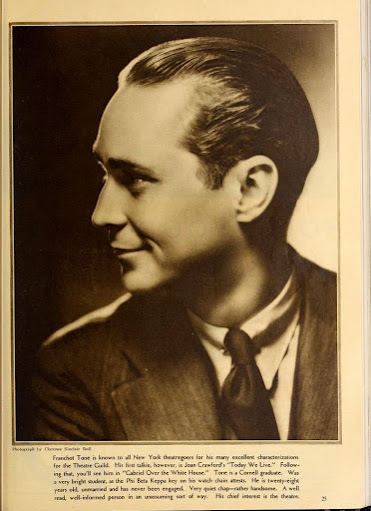
Saturday, August 29, 2020

Tales of Tomorrow: Diamond Lens (1952)


On his way to the guillotine, a scientist recounts his discovery of a diamond lens and his overwhelming need to perfect the microscope for all generations—an obsession so great that it would lead to murder.

This story entitled "Diamond Lens" aired in the Tales of Tomorrow anthology series on March 14, 1952. Franchot would also star in another episode called "The Horn" later that year. Both episodes are intriguing with fantastical elements and strong acting, and fortunately both are available on Youtube. However, my favorite of the two is "Diamond Lens." You can watch it here:
   
With only a half hour to live, Andre (Franchot Tone) shares his story with a priest who has been sent to perform last rites. Andre passionately tells of his life as a starving student of the microscope, a scientist out to make a name for himself while showing everyone a new way to see the world around them.


Andre has only one mission in life: to find the perfect diamond to create a microscope with a diamond lens. He goes without food and new clothes and lives in a tenement, but when a new tenant Gaston Dubois arrives so does an opportunity. The new tenant confides that there's a rare 150-carat diamond worth 50 million francs in his employer's shop.


Knowing this is the diamond he seeks, Andre begs Gaston to steal the diamond and strangles him to get him to reveal its hiding place. When the landlady barges in, the man escapes Andre's grip. Later, Gaston tries to prevent Andre from taking the diamond and is finally killed by Andre.
 
With only one mission in life, Andre feels no guilt about the murder as he sees it as a necessity. He is frankly giddy and full of wonder as he creates a special acid and shapes the diamond into a perfect lens.


When a police inspector shows up in the middle of his experiments, Andre gives himself away by knowing that the diamond is missing and a man dead, information not publicly available. The investigator opts to keep a close eye on Andre in the coming days.


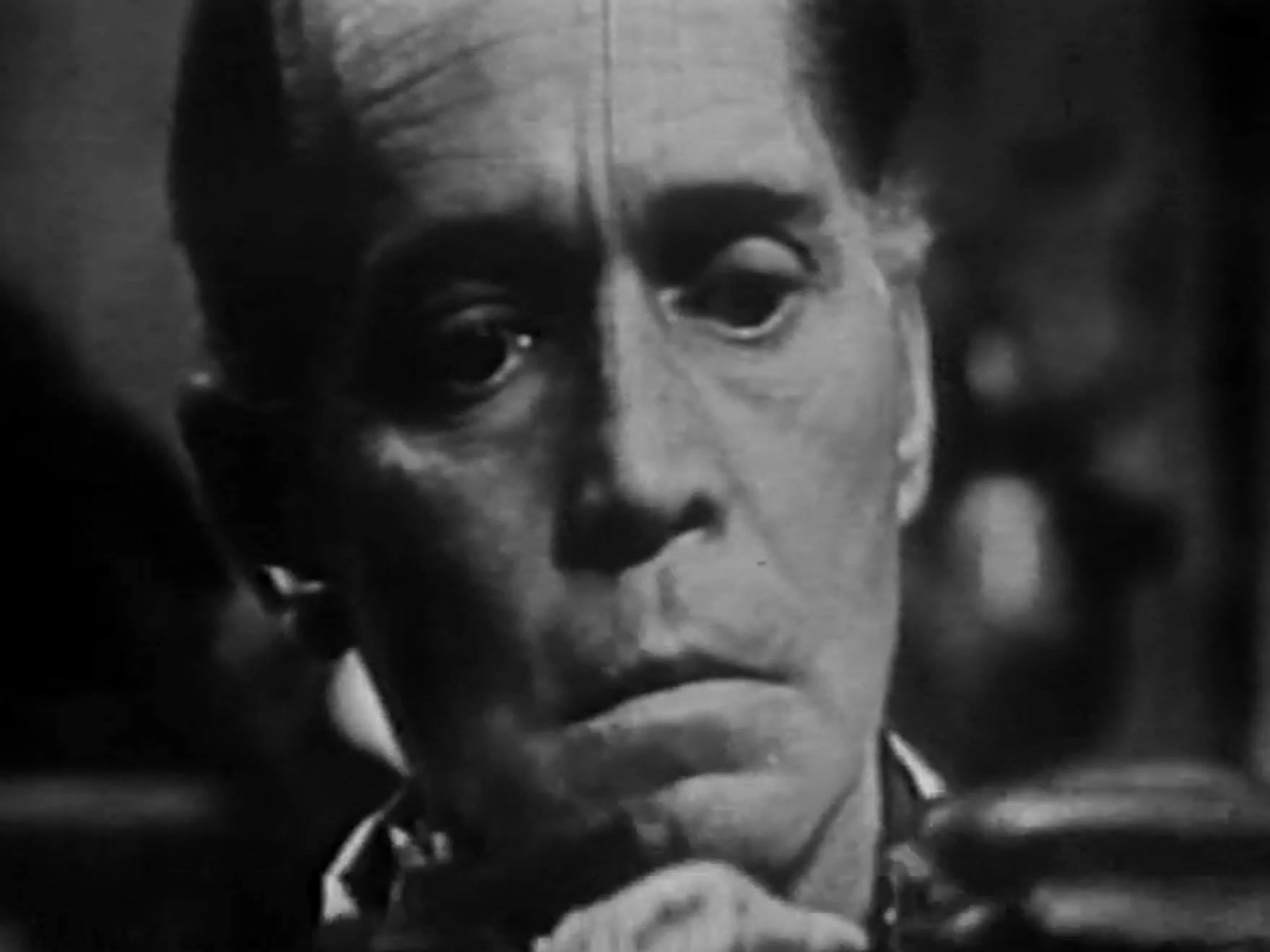

As Andre peers into the diamond lens for the first time, he is dazzled by what his eye beholds. In a single drop of water, Andre sees a new, magical world full of movement and details undetectable to the naked eye. Eager to see the professor about his groundbreaking discovery, Andre hides the diamond in a houseplant as his landlady arrives to clean. 

Andre returns with the professor, who calls him a crackpot, but the diamond is missing. The landlady has used the water pitcher to water the plants—only the water she has used was really Andre's secret acid, which has completely destroyed the precious diamond.

When the professor asserts that Andre is a lunatic who lied about the diamond, Andre replies that he committed murder to get it. As he utters this confession, he sees the police inspector at his door.


Tuesday, August 18, 2020

The Wiser Sex (1932)

Franchot Tone in The Wiser Sex, 1932.
Franchot Tone in his first film role in
The Wiser Sex, 1932. Source: scan from my collection.

In 1932 Franchot made his movie debut in the film The Wiser Sex, directed by Berthold Viertel and based on a play by Clyde Fitch. The movie stars Claudette Colbert, Melvyn Douglas, Lilyan Tashman, William Boyd and Ross Alexander.

The Wiser Sex, 1932 film publicity for Franchot Tone
The Film Daily, 1931.

As I was researching this film, I had an "a-ha!" moment. A lot of people refer to the 1933 film Today We Live as Franchot's first Hollywood film and I've always been perplexed by that and thought they were just overlooking his role in this 1932 film. Recently, it clicked. Better late than never, right? I realized everyone who says Today We Live is Franchot's first Hollywood film is absolutely correct. The Wiser Sex was filmed a year earlier, but not in Hollywood! The Wiser Sex was filmed at Paramount Studios in New York City, which I should have realized since Franchot was still acting in plays in '32.

Paramount Pictures presents The Wiser Sex. 1932 ad.
Film Daily Year Book, 1932.


The Wiser Sex is the only Franchot film I've been unable to see, but it does exist! The 35 mm is archived in the Library of Congress film division. It is available to view in-person for educational and research purposes but only with prior permission by the LOC and one person who did indeed view the film at the LOC said it was difficult for them to gain clearance. 

It has been shown to public audiences. I know of two times for certain it was screened. It was on the schedule for the 2013 Fall Cinesation Film Preservation Festival at the Lincoln Theater in Massillon, Ohio and has also been screened at the Mary Pickford Theater at the Library of Congress in 2003. 

The Wiser Sex is a 1932 film starring Claudette Colbert and Melvyn Douglas.
Movie Classic, 1932.

Claudette Colbert and Melvyn Douglas star in The Wiser Sex.
Screenland, 1932.

Film Summary

*Spoiler Alert*The movie stars Claudette Colbert as Margaret Hughes, a society woman who will do anything to prove her boyfriend David Rolfe (Melvyn Douglas) is innocent of murder. Franchot has a very brief role as Phil, David's naive cousin who is being taken advantage of by a golddigger (Lilyan Tashman). In fact, Phil is the character who is killed by a gangster and whose murder causes David's frame-up.

Publicity

Franchot did not receive a great deal of publicity for this role; that would come a year later with his substantial part in Today We Live. Claudette Colbert and Melvyn Douglas did get some attention for their performances. Here are some of the pieces that appeared in fan magazines:

Melvyn Douglas in The Wiser Sex 1932.
Silver Screen, 1932.

Spanish promotion for The Wiser Sex, 1932.
Mensajero Paramount, 1932.


Lilyan Tashman costars in The Wiser Sex.
Photoplay, 1932.

Claudette Colbert models clothes from The Wiser Sex.
Photoplay, 1932.


Here's hoping you and I are able to view Franchot's first film work someday—maybe at the LOC or a film festival and perhaps, if we are really lucky, one day on television or on a DVD release.

Sources:
¨The Wiser Sex.¨ Library of Congress. https://www.loc.gov/item/jots.200021840/
All clippings found at Media History Digital Library: https://lantern.mediahist.org/

Saturday, August 8, 2020

Today We Live (1933)

Today We Live is Franchot's second film (the first being The Wiser Sex) and his first film with Joan Crawford. With an all-star cast of Joan, Franchot, Robert Young and Gary Cooper, the World War I melodrama is directed by Howard Hawks and is based on a story by William Faulkner. As is the case with many movies of this era, the fashion is more 1933 and not so much 1916. Also, the majority of the characters are English and the film is set in England, but the accents are decidedly American despite the use of common English phrases. Again, a pretty common practice in films of the day but I know some viewers who really dislike this.

Franchot and Joan play brother and sister yet their chemistry onscreen already speaks volumes. Joan's character looks at Franchot's character just as lovingly and longingly as she does her actual two love interests. Franchot's character is the confidante and protector, the one steadfast thing in the unsteady life of Joan's character.

Film Summary

American Richard Bogard (Gary Cooper) arrives in England in 1916 and visits the Smith house just as Diana (Joan Crawford) receives news that her father has died in action. Distraught, Diana says she is without hope or faith and fears for her brother's safety as her brother Ronnie (Franchot Tone) and her neighbor Claude (Robert Young) reminisce about Mr. Smith and announce that they have just five more hours until they must report for duty. 

Ronnie confides in his sister that their childhood friend and neighbor Claude plans to propose to Diana. The three of them have a rationed dinner where Diana agrees to marry Claude with Ronnie's blessing.


While her loved ones are fighting in the war, the family's American guest Bogard spends more time with Diana and they realize that they have fallen in love with each other. Bogard decides to enlist in the war to fight for England and honor the woman he loves. A distraught Diana has now lost her father and has to contend with the fact that the lives of the three men she cares for are all now in danger.


Ronnie comes back injured but on the mend and Claude returns as in love with Diana as ever. Not wanting to hurt a soldier, Diana asks her brother for advice and understanding in a tender, lovely scene between Joan and Franchot. In an equally tender scene, Ronnie must share that Diana's true love Bogard has died in action.

Joan is wonderfully effective as a woman left lonely and bereaved by war. Despite this, she puts on a brave face and soldiers through it all, putting her own emotions aside and aiding the war effort. She is the beacon of strength for her brother and her fiancee. Before Claude is sent off on a dangerous assignment, Diana marries him. After he survives the mission, Claude and Diana break the news to Ronnie, who has long suspected and supported it.


And the next scene is a shock. Bogard, reported to have been deceased, is on the family's doorstep. I will not spoil the remainder of the film for you. The rest of the film is full of love, heartbreak, death and hope as well as some quite lengthy battle scenes.

Franchot's character Ronnie is the binding force and voice of reason for all characters and with the skills he applies to the role, it is easy to see why both Gary Cooper and Joan Crawford would praise him as the most talented, underrated actor for the rest of their lives.

Publicity

Franchot received a good amount of publicity build-up in fan magazines for his early role in Today We Live. Although Franchot's first film The Wiser Sex is the only film I've not seen, it is still available at the Library of Congress and reportedly his role is very small. Today We Live was his real break into the business it seems and, of course, the film that introduced him to Joan, a woman whom he would love for the rest of his life. Here are just a few of the various photos and publicity pieces that accompanied the film's release.

Modern Screen, 1933.

Photoplay, 1933
Photoplay, 1933.


Modern Screen, 1933.


The New Movie Magazine reviewed the film stating:
Joan belongs in pictures of this type; that's what you're going to say when you see her. She can do all that a star is asked to do, and she does; but when she has a real story, with clever character actors around her, shading her role with the sympathy and humor that it needs—then Miss Crawford can supply some of the finest entertainment that is available in motion picture theaters today.

Today We Live is on DVD from Warner Archive and can be purchased through most online DVD retailers. 


Tuesday, June 16, 2020

Franchot Visits Birmingham, Alabama

Photo of Franchot that
accompanied the article.

In February 1950 Franchot traveled to Birmingham, Alabama to promote The Man on the Eiffel Tower. It was a whirlwind one-day press tour of the city including multiple newspaper and radio interviews, a special luncheon at the Downtown Club, a cocktail party at Tutwiler Hotel where his suite was located and ended the evening by making a personal appearance at the Linley Heflin Unit Mardi Gras Ball which was held in the Municipal Auditorium. By midnight, Franchot was on a plane to New York where he was slated for business meetings with friend and TMotET director Burgess Meredith.

With Birmingham press, Franchot shared that he felt his youngest son Jeff might become an actor. Franchot added that Jeff enjoyed "mugging" and always put on a great show every Christmas that his aunt Karol (Jean Wallace's younger sister and only a child herself) would direct in front of the family Christmas tree.

On producing The Man on the Eiffel Tower, Franchot said:

Production, I like, because a producer can assure himself of more interesting parts. You'll like Man on the Eiffel Tower. It's not a mystery but a suspense picture. And Charles Laughton's not the villain. I am!

Interestingly, Franchot shared that his business meetings with Burgess Meredith in New York were to plan for their next film. Burgess was set to direct and Franchot would produce and act in a film version of the novel The Song of the Flea. They planned to begin filming it in London within a year or two. A film adaptation of The Song of the Flea never happened (perhaps due to the Payton love affair and the events that it caused.)  I have a special fondness for Franchot's work as a producer (The Man on the Eiffel Tower, Uncle Vanya) and co-director (Uncle Vanya) so it is a shame this other opportunity never came to fruition. It not only would've been a creative venture for Franchot, but he would've also enjoyed working with best friend Burgess Meredith on it. The Song of the Flea was written by British novelist Gerald Kersh whose most famous work Night and the City was made into a 1950 film starring Richard Widmark and again as a 1992 film starring Robert de Niro. I cannot find any proof that The Song of the Flea, which focused on a writer struggling to succeed, was ever adapted for film.

You can read more about The Man on the Eiffel Tower here .

Source:
Caldwell, Lily May. "Franchot Tone Visits Here, Talks of Kindness." The Birmingham News. February 18, 1950.

Sunday, May 10, 2020

Franchot headlines the Mark Twain Festival

Franchot's lecture was the highlight of the Mark Twain Festival that took place at Elmira College from October 12th to October 14th, 1960. Franchot's presentation was titled "An Actor's Approach to Mark Twain" and was scheduled for 8:30 p.m. on Friday, October 14th at the Emerson Building auditorium.

Ad for Franchot's lecture. Source: Elmira Telegraph. October 9, 1960.

Franchot was requested for the lecture after gaining rave reviews for his performance as Mark Twain in Horton Foote's "The Shape of the River," which aired as a Playhouse 90 production on May 2, 1960.  Interestingly enough, the Playhouse 90 production that set Franchot up for this particular lecture was about Mark Twain preparing for the lecture circuit! Twain's niece said about Franchot, "He seemed more like my uncle than any of the many Mark Twain impersonators I have seen." Before the event, it was publicized that Horton Foote would accompany him, but I cannot locate any proof that Foote definitely attended. He's not mentioned in any of the interviews or articles about the presentation, so I'm not sure if he visited with Franchot or not.


The Shape of the River, 1960. Source: my collection.

Franchot started off his presentation by joking that the audience should bear with him as he spoke "from the top" of his head and that if everyone stayed until the end he would return the admission fee. It was later disclosed that Franchot generously returned both the admission fees and his lecture fee.

Franchot described how he prepared to play Mark Twain in "The Shape of the River" before reading Twain's "Roughing It." Next, Franchot read part of Susan Twain's essay on her father that explained how Mark Twain stopped going to church because "he couldn't bear to hear anyone else talk but him." After this essay, Franchot joked that once he knew that fact about Twain "all I had to do was let the ham in me out." Franchot also read from Twain's "The Mysterious Stranger" and "Jumping Frog of Calaveras County."

Franchot then showed several clips of Mark Twain, played recorded imitations and finally, played a recording of his very first rehearsal imitating Twain. In addition to the readings and conversation, Franchot screened clips of his television portrayal as Mark Twain.

500 people attended Franchot's lecture and called it "smooth...flawlessly imitating...eloquent speech."

Franchot at Mark Twain's grave in Elmira.
Source: Elmira Advertiser. October 15, 1960.

Franchot at Mark Twain's monument.
Source: Elmira Star-Gazette. October 14, 1960.

Before his presentation, Franchot took the time to pay his respects to Mark Twain. He chatted with reporters and citizens over breakfast at the Mark Twain Hotel, brought flowers to and visited the author's grave, and toured the author's study with Elmira College president Dr. J. Ralph Murray.

Franchot and Dr. J. Ralph Murray at the Mark Twain Study.
Source: Elmira Star-Gazette, October 14, 1960.
Franchot had arrived in Elmira the night before his presentation, on Thursday, October 13th. Reporters and fans met him at the airport. One fan handed him a tiny piece of paper and asked for an autograph for his son. Seeing the size of the paper, Franchot joked, "Well, your son must be a very little boy!" Franchot signed the small paper and was proud of his handiwork. When he finished, he remarked, "There! I could have gotten it on the head of a pin."

Franchot was questioned about the speech he was due to deliver the following night. What would he say on stage? Franchot encouraged the crowd to "come up to the college to hear my speech and you'll find out what I'm going to say. Everything I'm going to say will be completely ad lib. I haven't anything prepared—I think a lecture loses its freshness if it's prepared."

One spectator didn't seem to understand the notion of ad lib and caught Franchot off guard when he asked, "How long does it take to prepare an ad lib speech?" Franchot laughed and responded, "Well, you've got to think about it for a long time."

Members of the Thomas A. Edison High School Thespis club were able to enjoy breakfast with Franchot while he was in town and called him "delightful." Elmira resident Helen Brown asked reporter Peggy Gallagher to relay to Franchot Tone that she loved him to which Franchot replied, "That's one thing I never get tired of hearing."

For further reading and two more photos of Franchot at Elmira, you can read about what he said on politics here and what he said about choosing the acting profession here.

Sources:
"Appearing at Elmira College..." Elmira Telegraph. October 9, 1960.
Bannister, Sharon and John Gardner. "Edison Bits." Elmira Star-Gazette. October 23, 1960.
"College Taps Tone for Twain Festival." Elmira Star-Gazette. October 2, 1960.
"Franchot Tone Draws 500 for Mark Twain Festival." Elmira Advertiser. October 15, 1960.
Gallagher, Peggy. "Evenin' Neighbor!" Elmira Star-Gazette. October 17, 1960.
Gallagher, Peggy. "Franchot to Give Twain Tone." Elmira Star-Gazette. October 14, 1960.
Morken, Mary Lee. "Actor Long Acquainted with Twain." Elmira Advertiser. October 14, 1960.