Sunday, September 29, 2019

Here Comes the Groom (1951)

Directed by Frank Capra, Here Comes the Groom is a 1951 musical romantic comedy starring Bing Crosby, Jane Wyman, and Franchot Tone. It is a fun romp about two men competing over a woman with some great Bing tunes thrown in for good measure. Be forewarned that you'll be singing and dancing around your house to "In the Cool, Cool, Cool of the Evening" for days after you watch it.

Franchot in Here Comes the Groom, 1951. Scan from my collection.

The Film

Peter Garvey (Bing Crosby) is a news reporter stationed in a Parisian orphanage. He is fond of all the children there and takes pride in placing them in perfect homes, but itching for a new traveling assignment. In a neat little special effects scene, his abandoned fiancée Emmadel Jones (Jane Wyman) comes to him in the form of a hologram atop a spinning record. Emmadel lets him know that she is sick of waiting for him after three long years. She is ready for marriage and motherhood and realizes that Pete will never give up his traveling assignments for her.

Not wanting to lose Emmadel, Pete writes to her immediately, decides to adopt orphans Bobby and Suzi and fly back to America. Documentation issues delay the trip and Emmadel gives up on Pete altogether. (Louis Armstrong, Dorothy Lamour, Phil Harris, and Cass Daley make cameo appearances during the flight's musical number.)

Pete arrives in his hometown, but must marry and find permanent residence immediately in order to maintain guardianship of the children. He assumes he will sweep Emmadel right off her feet, but she reveals that she is engaged to be married to the wealthy Wilbur Stanley (Franchot Tone).

We learn that Pete and Emmadel grew up with similar modest backgrounds and have always known how to enjoy life without money and status. Pete plays up that angle as he tries to convince Emmadel that marriage to a wealthy man is all wrong for her. Pete assumes Wilbur Stanley is an elderly, unattractive man who has nothing to offer but a life of comfort. This vision of Wilbur (whom we've not seen yet in the film) is supported by Emmadel's father's comment that Wilbur is "not even a man. He's a tradition. He's a mummy."

Franchot in Here Comes the Groom, 1951. Scan from my collection.
During the "In the Cool, Cool, Cool of the Evening" scene, Pete and Emmadel dance around the Stanley building and are clearly a good match for each other. Knowing he has to get permanent residence to keep Bobby and Suzi, Pete changes a housing file (owned by Wilbur's company) from rented to vacant.

When Pete and the true renter fight over the house, Wilbur Stanley arrives on the scene. This bad publicity could potentially ruin his reputation, but a younger, more handsome, more generous Wilbur than Pete expected takes it all in stride. Wilbur agrees to let Pete and the children stay in his gatehouse. I uploaded my favorite scene from the movie to Youtube. Franchot and Bing's characters face off in the car and agree to let the best man win. If you cannot see the embedded video below, click here.


Once he settles in the gatehouse, Pete Garvey does everything he can to prevent Wilbur's wedding to Emmadel.

Franchot is delightful as the charming Wilbur Stanley and turns in a solid performance. His delivery of the final line is fabulous. Alexis Smith plays Wilbur's distant cousin Winifred Stanley (and does so perfectly!) and there are some hilarious scenes between her and Bing and her and Jane. If you like  romantic musical comedies, Here Comes the Groom is a must-see. It has a strong director and cast as well as an enjoyable story and pleasant songs.

The Backstory


Here Comes the Groom had its big premiere in Elko, Nevada with festivities being held July 29-31, 1951. The cast traveled to Elko (a place with close ties for Bing. Read more here) to introduce the film and entertain citizens. Franchot was not part of the festivities as he had business obligations in New York.

By the time the film had its New York premiere on September 20th, Franchot was recuperating from plastic surgery to fix the shattered cheekbone, fractured upper jaw, and broken nose he had sustained in the September 13th fight with Tom Neal, lover of his fiancée Barbara Payton. This high-profile incident would lead to a reckless year of marriage, separation, and divorce with Payton, lawsuits, and bad publicity (details here.)

Sadly, audiences wouldn't see Franchot in a film again for six years, when he adapted the stage play Uncle Vanya for the screen in 1957. He wasn't to be seen in another major motion picture until 1962 when he starred as the president in Otto Preminger's Advise and Consent. Of course, Franchot continued to work diligently and prosperously in theater and television productions while working to regain his privacy during this time.

You can watch the Franchot-less footage of the Elko visit (from the Bing Crosby Archives and originally posted by www.bingcrosby.com on Youtube) here:

Saturday, September 14, 2019

Franchot in North Carolina

Last month, I was searching digital archives in California and New York and coming up with the same articles and photos I've seen time and again. I took a chance and searched my home state of North Carolina's digital archives, which I've never thought to do for Franchot before. And...
Franchot visiting Pat on campus.
Source: University of North Carolina at Chapel Hill Photographic Laboratory Collection #P0031,
North Carolina Collection Photographic Archives, The Wilson Library, University of North Carolina at Chapel Hill.

I was finding Franchot all over again! I knew that Franchot's oldest son Pat attended the University of North Carolina at Chapel Hill, but never even considered Franchot was sitting right in their archives.

Franchot visited Pat on campus in April 1964 and, fortunately for us, photos were taken of father and son and Franchot was interviewed by the local paper.

Franchot said:
Well, I just couldn't resist an opportunity to come down to Chapel Hill and spend a pleasant week with my son, Pat. Of course, since I've been here, I've been wearing out the pavement between the Carolina Inn and Swain Hall, and the only chance I've had to see Pat is during meals.
When asked about his acting career, Franchot said:
 ...just one of those things that happened. I was exposed to the old silent movies and I also had the opportunity of seeing a number of stage plays. After I would see a picture or a play, I used to go home and stand in front of a mirror and act out scenes for myself...Nowadays, an actor works in all the media. There are differences, of course. The stage actor must act with his whole body because the audience always sees him that way. In films and, to a large extent in television, the acting is in his eyes.
And what did Franchot think of Pat, who had been in several university plays, becoming an actor? Franchot smiled:
Who knows? He seems to have the bug, but he may come to his senses.
The reporter summarized his meeting with Franchot by writing:
By his own admission, he has found a full and complete life in acting, and he went out for the final rehearsal with an air of confidence and satisfaction which indicated he was doing the thing he loved best.
Franchot visiting Pat on campus. 
Source: University of North Carolina at Chapel Hill Photographic Laboratory Collection #P0031, 
North Carolina Collection Photographic Archives, The Wilson Library, University of North Carolina at Chapel Hill.
In a separate article, the Daily Tar Heel examined how the son of a movie star came to study in North Carolina. Bob Quincy reported that sophomore Pat Tone was making a name for himself with a javelin at UNC-Chapel Hill. The coach commented that Pat was "strong and works hard."

Quincy noted:
Pat and his actor dad spent several weeks together here recently...He and his son are quite close and spent many hours enjoying the good life. The Tones have a track background, and it began at the same institution. Both attended the Hill School in New Jersey*. Papa Franchot was a manager of the track team in his time. Pat excelled in weights and dashes.
*My note: The Hill School was actually in Pennsylvania. 


The javelin caught Pat's eye after watching UCLA athletes when visiting his mother Jean Wallace and he chose to move to North Carolina because a lot of his peers were moving south to attend school. Franchot must've approved this choice, because Pat notes:
Dad had gone to Cornell. But he is a very good friend of Paul Green, the playwright, who lives near the Carolina campus. They have worked together on many projects.

Shakespeare: A Portrait

I was already thrilled to my core to find these two articles and two photographs, but there's more! While he was in town, Franchot appeared in the university's 90-minute television show commemorating William Shakepeare's 400th birthday anniversary. The show was entitled Shakespeare: A Portrait and aired on the local WUNC-TV on April 23, 1964. It seems that the Chairman of the Department of Radio, Television and Motion Pictures requested Franchot's participation and Franchot accepted. Franchot praised the students and crew that worked with him on the project. I was unaware of this production and am now digging into whether or not a recording or photographs of it still exist in the university or WUNC-TV archives.

Sources: 
Digital NC: http://www.digitalnc.org/
Digital Public Library of America:  https://dp.la/
Hardy, William M. "Tone Kills 2 Birds with 1 Stone." The Daily Tar Heel. April 19, 1964.
Quincy, Bob. "Former Actor's Son Goes Own Way with NC Javelin." The Daily Tar Heel. April 18, 1964.

Sunday, September 8, 2019

An Ernest Hemingway Hero

I recently came across Time is Ripe: The 1940 Journals of Clifford Odets on my local library's shelves. Franchot is mentioned a handful of times in Odets' daily diary. Unlike the brief "Franchot Tone was also there at the Mocambo" diary entries I stumble across from others in the business at that time, Odets' delves into Franchot's complicated character and Odets' own mixture of interest and frustration with Franchot.

Franchot in Dark Waters, 1944.
Scan from my collection.

On Valentine's Day 1940, Franchot and the rest of the cast from The Fifth Column stopped by to see Odets' matinee showing. Three days later, Franchot joined everyone at a "certain bad restaurant" the actors dined in every night. Odets writes:
He was ill-at-ease, tense, and obviously very lonely or he wouldn't have joined us. All of us tried to put him at ease, but he is poor table company. He wanted to go out whoring and drinking at a speakeasy (liquor after 1:00 a.m.), but was unable to find a companion. Franchot, with all his fame, money, and position, is still afraid of rejection and repudiation. He is blustery and pushing, anxious and uneasy, just like Steve Takis*, but slightly more adult; in short, he is an Ernest Hemingway hero, and that is saying the whole thing.
*Steve Takis was the main character of Odets' play Night Music, which would begin official performances shortly after this diary entry.

On March 16, 1940, Odets writes that he had just finished Stefan Zweig's essay on Casanova the night before and that it "gave me several good ideas, particularly for a play about a modern sort of Casanova to be played by a fellow like Franchot Tone. It is not the great lover element which interests me at all; the element of adventurer, swindler, fake prince among American aristocracy, etc. is where the play lies."

June 8, 1940:
At ten we [Odets, Sid Benson, Geebee] rode uptown, we three, ate a light supper at Schrafft's, saw a newsreel and two films, or part of them. One with Heifetz fiddling...the other an old film, the first F. Tone made when he went to the coast in 1932*. Very instructive. We move so fast in this country that the film, the acting style, the lighting and settings, the clothes—all are already old-fashioned. Franchot was not bored then, not blasé, but fresh and impulsive.
*I assume Odets is referring to Franchot's first film The Wiser Sex which starred Claudette Colbert, Lilyan Tashman, and Melvyn Douglas. This is the only Franchot film I have never seen. It has been preserved by AFI's National Center for Film and Video Preservation at the Library of Congress Motion Picture Conservation Center and it was shown at a film festival several years back. Unfortunately, it's not on physical media or shown on television.

On July 7th, Odets dines at the Stork Club:
There I met Burgess Meredith, Franchot Tone, and John O'Hara, and a brother-in-law together at one table. Meredith was leaving for a Western ranch vacation the next day, so they were celebrating together by getting drunk and more morose each minute. They were in moods of careful (or cautious) self-abnegation, admitting carefully that their lives were useless, that, as Franchot put it while discussing Maxie Baer, the fighter, "the thing is to look good even while you're going down." Franchot, whom I like, still a very unusual talent in the theatre, always brings out in me a certain caginess and over consideration, a real and acute discomfort.
September 29, 1940:
Every time I see Franchot Tone around town, something stirs in me. He is one of that fraternity equally at home here or in the East, drinking, sleeping around, trying to suck the marrow out of a bony friend or two who has no marrow, making a movie, looking for a play—he is too good for this sort of life; that is what touches me about him.
That September entry is the last time that Odets mentions Franchot in his 1940 journal. Odets had known Franchot since the very early days of the Group Theatre and in a later interview would remark on Franchot's talent:
Toward the end of the summer, Franchot Tone, after being quite erratic in his relationship to the company—he was a spoiled boy in many ways—decided to leave the Group, and everyone was sick. He was very gifted. The two most talented young actors I have known in the American theater in my time have been Franchot Tone and Marlon Brando, and I think Franchot was the more talented. And when he lost what he did, I think a very valuable gift was lost to the American theater. He was our leading man. It was like a beehive had lost its queen. 
Source: 
Odets, Clifford. Time Is Ripe: the 1940 Journal of Clifford Odets. Grove, 1989.
Hethmon, Robert. Days with the Group Theatre: An Interview with Clifford Odets. Michigan Quarterly Review. Volume XLI, Issue 2, Spring 2002

Monday, July 29, 2019

Playhouse 90: The Thundering Wave

The Thundering Wave is a 1957 Playhouse 90 production starring Franchot, Joan Bennett, and James Mason. I wrote a little bit about its origin in my post on Sylvia Sidney (here). The Thundering Wave is only available for viewing in-house at The Paley Center for Media. Sadly, I've not been able to make the trip to see it and the many other Franchot television works that are housed at the Paley. Lucky for us, Kayla (a.k.a. Joan Bennett aficionado and awesome lady behind the Appreciating Joan Bennett website) did get to make the trip earlier this year and wrote a wonderful post (with some great pictures!) about the show that you can read by clicking here.

You can follow Kayla's JB accounts here:
Website: https://www.joanbennettfan.com/
Instagram: https://www.instagram.com/joanbennettfan/
Twitter: https://twitter.com/joanbennettfan


Wednesday, July 3, 2019

An Interesting Independence Day Display

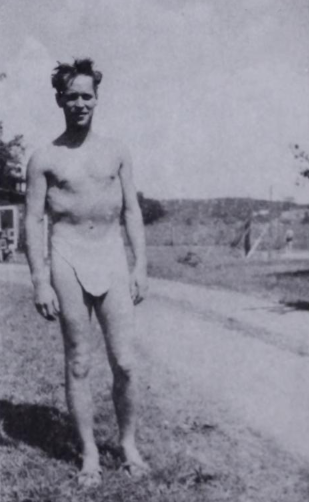
Both Harold Clurman, in his book The Fervent Years, and Robert Lewis, in his book Slings and Arrows, recounted Franchot defiantly celebrating the 4th of July alone while he was a member of the Group Theatre in the early 1930's. Both refer to this display as being attached to Franchot's frustration with the constant "plethora of intellectual talk and classic music", but that reason seems so in contrast with everything else I've learned about him. Franchot was a fond participator in deep discussion and I can't tell you how much I've read about his enthusiasm for classical music, especially Mozart.

But Franchot's time with the Group Theatre seemed to be a complicated mixture of joyful success and feelings of alienation and I have much more to share about that subject in a future post. Perhaps Franchot was just letting off steam or drunk. Perhaps even the most devoted Mozart fan can grow weary of endless playback.  Or, perhaps, Franchot was just very enthusiastic about Independence Day. Here's what Clurman said:
On the Fourth of July, Franchot alone had decided to celebrate by shooting off fireworks. He began rather early in the day. Perhaps this was his childhood custom, perhaps it released his tension, perhaps it was his protest against what seemed to be the indifference of the others to the proprieties of this holiday. Solitary, with darkened brow, he went from place to place over the grounds and set off his firecrackers. Carnovsky and others were fond of music and played recordings of Mozart at every opportunity (except one man who played Caruso records, and Puccini). Carnovsky, no longer able to tolerate Franchot's acoustic vandalism, came out on the porch and cried: "Franchot, for God's sake, I can't stand the noise." Franchot turned and yelled: "And I can't stand your  noise"—referring to Mozart and the rest. He stamped off yelling: "I am an American." 
I have written a little bit about the Group Theatre (click here), but have some more detailed stories of Franchot's time with the Group coming soon.

Happy Independence Day! Set off some fireworks for loin-clothed Franchot the American!
Photo Source: Slings and Arrows, 1996.

Sources: 

Clurman, Harold. The Fervent Years. Harcourt. 1945.
Lewis, Robert. Slings and Arrows: Theatre in My Life. 1996.

Tuesday, July 2, 2019

Franchot Talks to Picturegoers Magazine

In 1935, Franchot talked to Picturegoers Magazine while on the set of No More Ladies:

My opinion as to why the fifteenth screen test resulted in a film contract is that in the space of those four years in New York the manufacturers of motion picture negatives had improved their product to such an extent that almost anyone could be photographed satisfactorily. In pictures, the first thing they want to do is make a person a hero. You know, broad shoulders, wavy hair and that sort of thing. I have no illusions about myself. I’m not a hero, and I can’t see what I should be made what I’m not. The other day I read a story about myself that made me human. I like that kind of stuff, because it’s sincere.There’s nothing unusual about me—I’m just an ordinary, and, I hope, normal individual.
In the film colony there is little to do besides work. People in pictures don’t relax socially to any extent. Thy work like the devil to finish one picture so they can go into another. I would like actually to work about thirty-six weeks out of the year. The remainder of the time I would rest, study, and travel. Then I would have an opportunity to enjoy life. 
Picture making is not easy—it requires a terrific amount of concentration. It requires more from a person than does working on the stage. To be a success on the screen a person must have a lot of force and drive, like Joan Crawford…I definitely intend to return to the stage, not permanently, however, I would enjoy dividing my time between the stage and screen. 

Sunday, May 5, 2019

Straight is the Way (1934)

With a runtime of just one hour, Straight is the Way packs a lot of Franchot into a very short amount of time. I have always had a soft spot for this film, but most reviewers have not held the same opinion as me. I should admit that Franchot is in nearly every scene of this film, plus he is young and quite beautiful in it, and I know that those factors play a part in my positive assessment. Franchot didn't get to carry many films during this time period. He was typically cast as the love interest with a small story who supports the main actress (Joan Crawford, Jean Harlow, Bette Davis) with a big story during his early years in Hollywood. It's nice to watch a film whose plot revolves completely around Tone's character. The plot may be a bit flimsy, but I think it's a nice story with a solid cast, nevertheless.

Straight is the Way is a remake of the 1928 film Four Walls which starred John Gilbert and a young Joan Crawford—what a neat coincidence! Sadly, I believe that original film, which was based on a George Abbott play of the same name, is now lost.

First, let's look at the film itself, then we will get to the reviews.


Straight is the Way opens with Momma Horowitz (May Robson) anxiously awaiting the arrival of her son. She is so overwhelmed by her emotions that she can barely keep her eyes from tearing up and her hands from shaking. Bertha (Karen Morley) cannot contain her excitement either because her childhood friend Benny Horowitz (Franchot Tone) is coming home after a five-year stint in prison. Benny returns and shares that although he disliked being locked up, he survived by realizing "you stand anything if you have to...you get to feeling you wanna smash the walls down and then after awhile you begin to realize it's not the walls. It's something inside that holds you prisoner. It wasn't so bad. I got along fine. I was president of the welfare league."


Benny promises his mother that he has no plans to ever return to jail again, but she's devastated and terrified when Benny immediately goes out to the street to say hello to former friends who are on the wrong side of the law. Benny learns that while he was in prison his buddy Monk (Jack La Rue) took Benny's old girlfriend Shirley (Gladys George) and became the leader of a criminal organization he's named the East Side Political and Social Club.


When Shirley comes around ready to rekindle a love affair, Benny rejects her:
Well, you're all wrong, Shirley. You can go back to Monk. I don't want ya. You don't mean nothin' to me. Listen, I'm free now and I'm going to stay free—all of me, inside and out. Nothing's ever gonna get hold of me again, ya got it?

Throughout the film, there is much emphasis placed on the fact that Benny is a Jewish man and that this is a Jewish neighborhood. There is a great deal of celebration surrounding the Sabbath in its scenes. Franchot received criticism for playing a Jewish man. A Silver Screen reviewer remarked, 'If Franchot looks like a Horowitz, then I look like an Adonis." In a separate review within the pages of Silver Screen, readers read, "You'll die laughing when we tell you who plays the nice Jewish boy who calls his Mater "Momma"—that elegant gentleman Franchot Tone."

Benny struggles to re-enter the workforce and grows weary of being treated like a criminal in his hometown. Every one is trying to match him with Bertha, but he feels she is too good and pure for him. He's desperate to relocate to the west and start fresh, but he's offered a mechanic job in his old neighborhood. Thrilled to be clocking in and out and bringing home an honest living, Benny defends his employer and makes an enemy of the mob when he stands up to Monk and his gang, who have been intimidating and stealing from his employer.


Benny resists temptation when he turns down an offer to take over Monk's position, but continues to struggle where Shirley is concerned. Will he return to the life that landed him in jail in the first place? Or will he continue on the straight path to moral and physical freedom?


On-set Stories

Cal York noted that Jack LaRue was originally cast in the part of Monk in the stage production, but it was decided he looked too young and Paul Muni was cast instead.

Silver Screen included this on set story:

Reviews

Silver Screen said the film was simply not hot. It gave the film a cool rating of 35 degrees and wondered, "Why?...Why a studio ever saw fit to produce it in the first place is something that we can't understand..." Silver Screen felt that Franchot and Karen Morley were miscast and that the only actor who managed to "get by" was May Robson.

Photoplay was kinder in their assessment. The magazine called it a "powerfully constructed drama" and urged "All you doubters, come and see Franchot Tone give a performance, because he can and does!" Photoplay Magazine (December 1934) included this sweet photo of May Robson holding her great grandaughter.

Motion Picture Reviews only rated it fair, but praised Robson, writing that she "provides a very human and sympathetic appeal as the mother and does much toward making the action vivid though the tempo is often slow." Motion Picture Reviews summed up with a statement that the "value of the picture as entertainment depends on taste."

Based on that statement, I might have bad taste, but I enjoy this film. It's quick, it's simple, it's not going to win any awards—but I really, really like it.

Straight is the Way has not been released on DVD, but it does occasionally pop up on Turner Classic Movies and online video sites.

Sources:
"Cal York's Monthly Broadcast from Hollywood." Photoplay. 1934.
"Straight is the Way." Silver Screen. October 1934.
"Straight is the Way." Photoplay. October 1934.
"Straight is the Way." Motion Picture Reviews. 1934.