Sunday, September 8, 2019

An Ernest Hemingway Hero

I recently came across Time is Ripe: The 1940 Journals of Clifford Odets on my local library's shelves. Franchot is mentioned a handful of times in Odets' daily diary. Unlike the brief "Franchot Tone was also there at the Mocambo" diary entries I stumble across from others in the business at that time, Odets' delves into Franchot's complicated character and Odets' own mixture of interest and frustration with Franchot.

Franchot in Dark Waters, 1944.
Scan from my collection.

On Valentine's Day 1940, Franchot and the rest of the cast from The Fifth Column stopped by to see Odets' matinee showing. Three days later, Franchot joined everyone at a "certain bad restaurant" the actors dined in every night. Odets writes:
He was ill-at-ease, tense, and obviously very lonely or he wouldn't have joined us. All of us tried to put him at ease, but he is poor table company. He wanted to go out whoring and drinking at a speakeasy (liquor after 1:00 a.m.), but was unable to find a companion. Franchot, with all his fame, money, and position, is still afraid of rejection and repudiation. He is blustery and pushing, anxious and uneasy, just like Steve Takis*, but slightly more adult; in short, he is an Ernest Hemingway hero, and that is saying the whole thing.
*Steve Takis was the main character of Odets' play Night Music, which would begin official performances shortly after this diary entry.

On March 16, 1940, Odets writes that he had just finished Stefan Zweig's essay on Casanova the night before and that it "gave me several good ideas, particularly for a play about a modern sort of Casanova to be played by a fellow like Franchot Tone. It is not the great lover element which interests me at all; the element of adventurer, swindler, fake prince among American aristocracy, etc. is where the play lies."

June 8, 1940:
At ten we [Odets, Sid Benson, Geebee] rode uptown, we three, ate a light supper at Schrafft's, saw a newsreel and two films, or part of them. One with Heifetz fiddling...the other an old film, the first F. Tone made when he went to the coast in 1932*. Very instructive. We move so fast in this country that the film, the acting style, the lighting and settings, the clothes—all are already old-fashioned. Franchot was not bored then, not blasé, but fresh and impulsive.
*I assume Odets is referring to Franchot's first film The Wiser Sex which starred Claudette Colbert, Lilyan Tashman, and Melvyn Douglas. This is the only Franchot film I have never seen. It has been preserved by AFI's National Center for Film and Video Preservation at the Library of Congress Motion Picture Conservation Center and it was shown at a film festival several years back. Unfortunately, it's not on physical media or shown on television.

On July 7th, Odets dines at the Stork Club:
There I met Burgess Meredith, Franchot Tone, and John O'Hara, and a brother-in-law together at one table. Meredith was leaving for a Western ranch vacation the next day, so they were celebrating together by getting drunk and more morose each minute. They were in moods of careful (or cautious) self-abnegation, admitting carefully that their lives were useless, that, as Franchot put it while discussing Maxie Baer, the fighter, "the thing is to look good even while you're going down." Franchot, whom I like, still a very unusual talent in the theatre, always brings out in me a certain caginess and over consideration, a real and acute discomfort.
September 29, 1940:
Every time I see Franchot Tone around town, something stirs in me. He is one of that fraternity equally at home here or in the East, drinking, sleeping around, trying to suck the marrow out of a bony friend or two who has no marrow, making a movie, looking for a play—he is too good for this sort of life; that is what touches me about him.
That September entry is the last time that Odets mentions Franchot in his 1940 journal. Odets had known Franchot since the very early days of the Group Theatre and in a later interview would remark on Franchot's talent:
Toward the end of the summer, Franchot Tone, after being quite erratic in his relationship to the company—he was a spoiled boy in many ways—decided to leave the Group, and everyone was sick. He was very gifted. The two most talented young actors I have known in the American theater in my time have been Franchot Tone and Marlon Brando, and I think Franchot was the more talented. And when he lost what he did, I think a very valuable gift was lost to the American theater. He was our leading man. It was like a beehive had lost its queen. 
Source: 
Odets, Clifford. Time Is Ripe: the 1940 Journal of Clifford Odets. Grove, 1989.
Hethmon, Robert. Days with the Group Theatre: An Interview with Clifford Odets. Michigan Quarterly Review. Volume XLI, Issue 2, Spring 2002

Monday, July 29, 2019

Playhouse 90: The Thundering Wave

The Thundering Wave is a 1957 Playhouse 90 production starring Franchot, Joan Bennett, and James Mason. I wrote a little bit about its origin in my post on Sylvia Sidney (here). The Thundering Wave is only available for viewing in-house at The Paley Center for Media. Sadly, I've not been able to make the trip to see it and the many other Franchot television works that are housed at the Paley. Lucky for us, Kayla (a.k.a. Joan Bennett aficionado and awesome lady behind the Appreciating Joan Bennett website) did get to make the trip earlier this year and wrote a wonderful post (with some great pictures!) about the show that you can read by clicking here.

You can follow Kayla's JB accounts here:
Website: https://www.joanbennettfan.com/
Instagram: https://www.instagram.com/joanbennettfan/
Twitter: https://twitter.com/joanbennettfan


Wednesday, July 3, 2019

An Interesting Independence Day Display

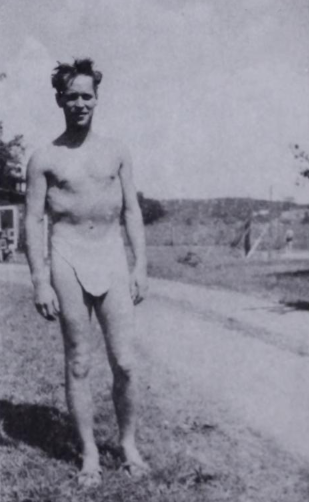
Both Harold Clurman, in his book The Fervent Years, and Robert Lewis, in his book Slings and Arrows, recounted Franchot defiantly celebrating the 4th of July alone while he was a member of the Group Theatre in the early 1930's. Both refer to this display as being attached to Franchot's frustration with the constant "plethora of intellectual talk and classic music", but that reason seems so in contrast with everything else I've learned about him. Franchot was a fond participator in deep discussion and I can't tell you how much I've read about his enthusiasm for classical music, especially Mozart.

But Franchot's time with the Group Theatre seemed to be a complicated mixture of joyful success and feelings of alienation and I have much more to share about that subject in a future post. Perhaps Franchot was just letting off steam or drunk. Perhaps even the most devoted Mozart fan can grow weary of endless playback.  Or, perhaps, Franchot was just very enthusiastic about Independence Day. Here's what Clurman said:
On the Fourth of July, Franchot alone had decided to celebrate by shooting off fireworks. He began rather early in the day. Perhaps this was his childhood custom, perhaps it released his tension, perhaps it was his protest against what seemed to be the indifference of the others to the proprieties of this holiday. Solitary, with darkened brow, he went from place to place over the grounds and set off his firecrackers. Carnovsky and others were fond of music and played recordings of Mozart at every opportunity (except one man who played Caruso records, and Puccini). Carnovsky, no longer able to tolerate Franchot's acoustic vandalism, came out on the porch and cried: "Franchot, for God's sake, I can't stand the noise." Franchot turned and yelled: "And I can't stand your  noise"—referring to Mozart and the rest. He stamped off yelling: "I am an American." 
I have written a little bit about the Group Theatre (click here), but have some more detailed stories of Franchot's time with the Group coming soon.

Happy Independence Day! Set off some fireworks for loin-clothed Franchot the American!
Photo Source: Slings and Arrows, 1996.

Sources: 

Clurman, Harold. The Fervent Years. Harcourt. 1945.
Lewis, Robert. Slings and Arrows: Theatre in My Life. 1996.

Tuesday, July 2, 2019

Franchot Talks to Picturegoers Magazine

In 1935, Franchot talked to Picturegoers Magazine while on the set of No More Ladies:

My opinion as to why the fifteenth screen test resulted in a film contract is that in the space of those four years in New York the manufacturers of motion picture negatives had improved their product to such an extent that almost anyone could be photographed satisfactorily. In pictures, the first thing they want to do is make a person a hero. You know, broad shoulders, wavy hair and that sort of thing. I have no illusions about myself. I’m not a hero, and I can’t see what I should be made what I’m not. The other day I read a story about myself that made me human. I like that kind of stuff, because it’s sincere.There’s nothing unusual about me—I’m just an ordinary, and, I hope, normal individual.
In the film colony there is little to do besides work. People in pictures don’t relax socially to any extent. Thy work like the devil to finish one picture so they can go into another. I would like actually to work about thirty-six weeks out of the year. The remainder of the time I would rest, study, and travel. Then I would have an opportunity to enjoy life. 
Picture making is not easy—it requires a terrific amount of concentration. It requires more from a person than does working on the stage. To be a success on the screen a person must have a lot of force and drive, like Joan Crawford…I definitely intend to return to the stage, not permanently, however, I would enjoy dividing my time between the stage and screen. 

Sunday, May 5, 2019

Straight is the Way (1934)

With a runtime of just one hour, Straight is the Way packs a lot of Franchot into a very short amount of time. I have always had a soft spot for this film, but most reviewers have not held the same opinion as me. I should admit that Franchot is in nearly every scene of this film, plus he is young and quite beautiful in it, and I know that those factors play a part in my positive assessment. Franchot didn't get to carry many films during this time period. He was typically cast as the love interest with a small story who supports the main actress (Joan Crawford, Jean Harlow, Bette Davis) with a big story during his early years in Hollywood. It's nice to watch a film whose plot revolves completely around Tone's character. The plot may be a bit flimsy, but I think it's a nice story with a solid cast, nevertheless.

Straight is the Way is a remake of the 1928 film Four Walls which starred John Gilbert and a young Joan Crawford—what a neat coincidence! Sadly, I believe that original film, which was based on a George Abbott play of the same name, is now lost.

First, let's look at the film itself, then we will get to the reviews.


Straight is the Way opens with Momma Horowitz (May Robson) anxiously awaiting the arrival of her son. She is so overwhelmed by her emotions that she can barely keep her eyes from tearing up and her hands from shaking. Bertha (Karen Morley) cannot contain her excitement either because her childhood friend Benny Horowitz (Franchot Tone) is coming home after a five-year stint in prison. Benny returns and shares that although he disliked being locked up, he survived by realizing "you stand anything if you have to...you get to feeling you wanna smash the walls down and then after awhile you begin to realize it's not the walls. It's something inside that holds you prisoner. It wasn't so bad. I got along fine. I was president of the welfare league."


Benny promises his mother that he has no plans to ever return to jail again, but she's devastated and terrified when Benny immediately goes out to the street to say hello to former friends who are on the wrong side of the law. Benny learns that while he was in prison his buddy Monk (Jack La Rue) took Benny's old girlfriend Shirley (Gladys George) and became the leader of a criminal organization he's named the East Side Political and Social Club.


When Shirley comes around ready to rekindle a love affair, Benny rejects her:
Well, you're all wrong, Shirley. You can go back to Monk. I don't want ya. You don't mean nothin' to me. Listen, I'm free now and I'm going to stay free—all of me, inside and out. Nothing's ever gonna get hold of me again, ya got it?

Throughout the film, there is much emphasis placed on the fact that Benny is a Jewish man and that this is a Jewish neighborhood. There is a great deal of celebration surrounding the Sabbath in its scenes. Franchot received criticism for playing a Jewish man. A Silver Screen reviewer remarked, 'If Franchot looks like a Horowitz, then I look like an Adonis." In a separate review within the pages of Silver Screen, readers read, "You'll die laughing when we tell you who plays the nice Jewish boy who calls his Mater "Momma"—that elegant gentleman Franchot Tone."

Benny struggles to re-enter the workforce and grows weary of being treated like a criminal in his hometown. Every one is trying to match him with Bertha, but he feels she is too good and pure for him. He's desperate to relocate to the west and start fresh, but he's offered a mechanic job in his old neighborhood. Thrilled to be clocking in and out and bringing home an honest living, Benny defends his employer and makes an enemy of the mob when he stands up to Monk and his gang, who have been intimidating and stealing from his employer.


Benny resists temptation when he turns down an offer to take over Monk's position, but continues to struggle where Shirley is concerned. Will he return to the life that landed him in jail in the first place? Or will he continue on the straight path to moral and physical freedom?


On-set Stories

Cal York noted that Jack LaRue was originally cast in the part of Monk in the stage production, but it was decided he looked too young and Paul Muni was cast instead.

Silver Screen included this on set story:

Reviews

Silver Screen said the film was simply not hot. It gave the film a cool rating of 35 degrees and wondered, "Why?...Why a studio ever saw fit to produce it in the first place is something that we can't understand..." Silver Screen felt that Franchot and Karen Morley were miscast and that the only actor who managed to "get by" was May Robson.

Photoplay was kinder in their assessment. The magazine called it a "powerfully constructed drama" and urged "All you doubters, come and see Franchot Tone give a performance, because he can and does!" Photoplay Magazine (December 1934) included this sweet photo of May Robson holding her great grandaughter.

Motion Picture Reviews only rated it fair, but praised Robson, writing that she "provides a very human and sympathetic appeal as the mother and does much toward making the action vivid though the tempo is often slow." Motion Picture Reviews summed up with a statement that the "value of the picture as entertainment depends on taste."

Based on that statement, I might have bad taste, but I enjoy this film. It's quick, it's simple, it's not going to win any awards—but I really, really like it.

Straight is the Way has not been released on DVD, but it does occasionally pop up on Turner Classic Movies and online video sites.

Sources:
"Cal York's Monthly Broadcast from Hollywood." Photoplay. 1934.
"Straight is the Way." Silver Screen. October 1934.
"Straight is the Way." Photoplay. October 1934.
"Straight is the Way." Motion Picture Reviews. 1934.


Friday, April 26, 2019

The Strasbergs Remember Franchot

A friend of Lee and Paula Strasberg, Franchot also created lasting friendships with their children, Susan and John. Both went on to relate the details of Franchot's influence in their books.

Susan Strasberg on Franchot Tone
In her memoir Bittersweet, Susan recalled that her very first memories were being a toddler crawling around famous feet under the dining table. Those guests included Luise Rainier, John Garfield, Tallulah Bankhead, and Franchot Tone (whom she lovingly referred to as "Uncle".) Uncle Franchot was a "tender, aesthetic, scholarly gentleman" who often held young Susan, and Susan found it hard to reconcile his naturally kind, quiet nature with the version he presented one night when he arrived "drunk and bloody from a battle over some woman."

A close friend of the family, Franchot often visited the house to consult with Lee Strasberg—who was at times very tender (embracing Franchot with a heartfelt hug) yet frequently standoffish (blaring music and not making eye contact with Franchot despite his patiently waiting.)

Franchot and Susan read reviews of "The Diary of Anne Frank."
Source: Bittersweet

Franchot was present for many celebrations. When Susan performed in "The Diary of Anne Frank", Franchot (along with Marilyn Monroe and Joshua Logan) was waiting to congratulate her in the dressing room. At a party at Sardi's following her performance, Franchot "raised his glass. 'Little Susan, you have been launched on a long and glittering career. I drink to you.' As they waited for the reviews, everyone ate and drank champagne. Franchot ordered pizza—for inquiring minds, Franchot once told a reporter that his favorite pizza topping was "plain mozzarella."

Franchot with Burton, Fonda, and Ustinov at Susan's surprise party.
Source: scan from my collection

Franchot was also on hand for Susan's surprise 20th birthday party. The party was inside a dark theater and also present were Henry Fonda, Peter Ustinov, Laurence Olivier, Lena Horne, Julie Harris, Tony Perkins, and Richard Burton (whom Susan was dating at the time.) In her book, Susan also recalls attending Franchot's own small parties hosted at Don the Beachcomber's, and counts him as a person she "cared about and respected" when she saw him at a 1960's New Year's Eve party.
Franchot and Susan in rehearsal for The Time of Your Life, 1958.
Source: scan from my collection
Franchot and Susan had the pleasure to act together on several projects. They both appeared in a 1956 television production of J.M. Barrie's play "Dear Brutus" on Omnibus, an educational television program that aired on CBS. In 1958, they traveled—and actually financed the entire trip on their own dime after funding fell through— to the Brussels World's Fair to perform "The Time of Your Life." You can read more about that production here. In 1959, they toured together for the play "Caesar and Cleopatra." Getty Images has a great photo of them in costume for that production, which you can view here.

Franchot and Susan in a publicity photo for Caesar and Cleopatra in 1959.
Source: scan from my collection.
When Franchot realized Susan was struggling with her role as Camille in Franco Zeffirelli's "The Lady of the Camellias" in 1963, he came to her aid. "He described his mother, who had died of tuberculosis, Camille's disease, detailing for me her flushes, her fevers, and high gaiety followed by her complete collapses..."

John Strasberg on Franchot Tone
Susan's brother John also devoted space to Franchot in his own memoir. He wrote:
I don't remember feeling any peace or harmony from the moment we moved back to New York in 1947 until I began spending summers in Canada with Franchot Tone when I was twelve. We hunted and fished, camping in Quebec's wilderness country.
Franchot's wealthy industrialist family owned three houses that sat on a ridge of land between two lakes that were part of the Gatineau Fish and Game Club, near Gracefield, Quebec. We portaged deep into land that he owned, smearing honey under the canoes of poachers so that the bears would destroy them. Franchot became one of my heroes, once I realized that heroes could be human...Normally quiet and reflective, he could be very temperamental. He was a movie star, but to me, above all, he was a Renaissance man. He thought about more than just the theater. He gave me books he loved, like the writings of the Comte de Rochechouart and Walt Whitman's Leaves of Grass, and a Marlin .22 lever action rifle, the gift of which startled my parents and endeared Franchot to me even more.
He exposed me to a world that I loved and felt at home in, and that my parents knew nothing about. He loved women, smoked two packs of unfiltered Camel cigarettes a day, and drank double vodkas. So did I, but some years later. He was definitely more of what I wanted to be than was my own father, and I often wonder what kind of father he was to his own children. Franchot's humanity touched me deeply. It was due in part to his influence that I learned to define success on my own terms. Above all, he taught me that work is part of one's natural respect and love of human life, but it is not a way to ignore or dominate it.

Sources: 
  • Roach, Janet. "Perfectionist Franchot Tone 'Sacrifices' Own Shirt for Play." The Day. New London, Connecticut. August 5, 1966. Page 12. 
  • Strasberg, John. Accidentally on Purpose: Reflections on Life, Acting, and the Nine Natural Laws of Creativity. New York: Applause, 1996. Print. 8-9.
  • Strasberg, Susan. Bittersweet. New York:, Putnam, 1980. Print.

Monday, April 8, 2019

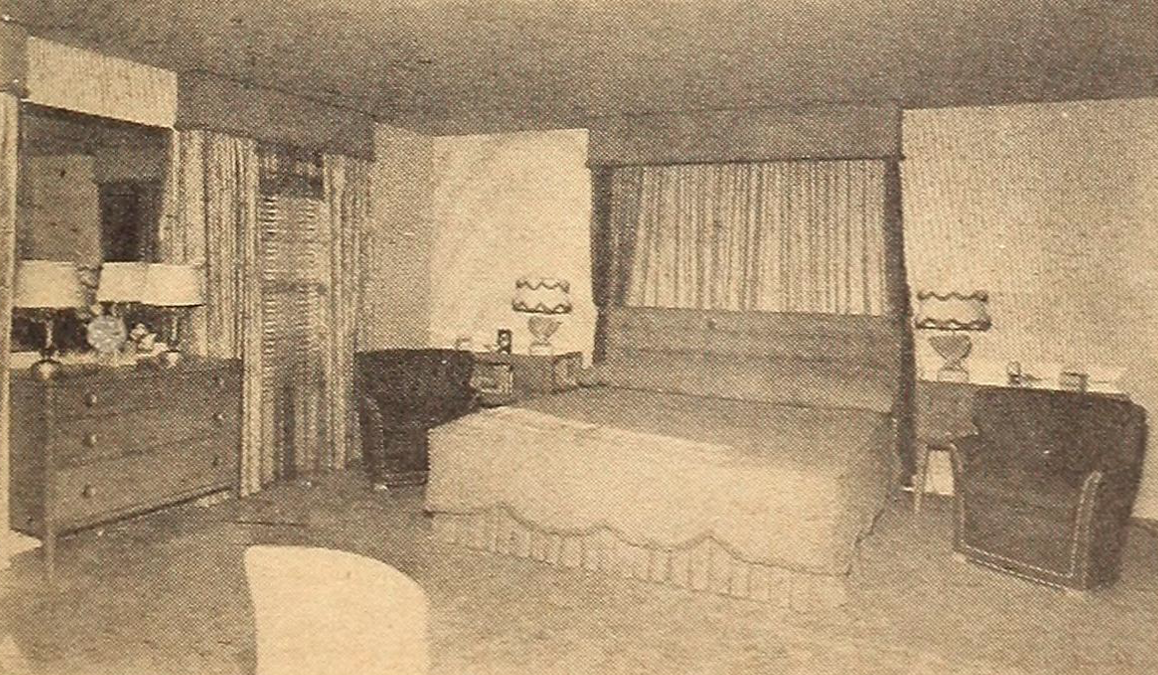
"Pandemonium" at 470 Layton Drive

When I was browsing fan magazine articles about Franchot and Carole Landis' relationship earlier this year, I stumbled upon this article about Franchot living at the Layton Drive address with photographs! This is the home listed on Franchot's World War II draft card (here) that I did a brief post on last year (here.) When Bubbles Schinasi and actor Wayne Morris called it quits leaving their home vacant and open to tenants, Franchot and his pal Burgess Meredith ("as gay a brace of bachelors as ever haunted the sleep of the countless impressionable co-eds throughout our wonderful democracy") moved in. Hollywood was surprised that two bachelors would take on a large, elegant property. Jimmy Durante even asked, "Those guys and that house—what have they got in common?"


How did they end up living in such style? Burgess settled into the extra room at Jimmy Stewart's Santa Monica house when he arrived in Hollywood for film work. Soon, photographer John Swope became Jimmy and Burgess' housemate as well. All men enjoying and being popular with the ladies, the house grew crowded fast. Buzz (as Burgess was known to friends) found a beach house in need of repairs to reside in, but Jimmy and John didn't want to break up the gang. It was decided that the beach house would just be for Buzz to sleep in, but the guys would all hang out at Jimmy's house during waking hours.

Then, Franchot arrived from New York and needed a place to stay. Franchot and Buzz were roommates in New York shortly after Franchot's divorce from Joan Crawford and remained lifelong friends. Both Franchot and Buzz were acting in plays at the time and found they shared equal passion for acting and being fixtures at the hottest nightspots. Buzz and Franchot decided to lease the Morrises' chateau, now nicknamed Pandemonium. Their neighbors included Nelson Eddy, Anna Sten, and Frank Capra. Franchot felt the place was perfect for his return to Hollywood as a bachelor.

Franchot and Buzz threw a cocktail party after getting settled in and locating domestic servants. In the article, the descriptions of the rooms are pretty exaggerated in comparison to the photographs. Yes, they are beautiful, large nice rooms, but Screenland refers to their living room as "Dali-esque." Their living room was described as a "surrealistic masterpiece...The walls were a pale blue set off by a gray carpet. Two disconsolate love seats done in yellow leather hugged the fireplace, over which a mural by Lee Blair (a South American cockfight framed in blue mirror) looked down..."
The living room.

Buzz's room was decorated in red and white walls ("calculated to woo sleep"), a sea green carpeted floor, and "flaming" draperies.
The bedroom of Burgess Meredith.

Franchot shared his room with a Great Dane named Bad Boy (pictured with Buzz and Franchot in the top photo), who used the former outdoor tennis court as his play area. Franchot's room would "stand up as the most sexy and glamorous bedroom in Hollywood...it houses the biggest bed in California—a little number measuring exactly ten feet long, ensconced on a pale grey rug and sporting a half-canopy of coral fish net...the walls are pale blue...the lights are soft and harem-like."
The bedroom of Franchot Tone.

Burgess would recall in his biography and he and Franchot "shared many a bottle and many a girl, both in New York and Hollywood, in our bachelor days. There were also some quiet times in Canada at his hunting lodge...But he enjoyed life to the end, loving and being loved by an army of fans and friends..."

Sources:
Franchey, John R. Hollywood's Gayest Bachelors! Screenland. May 1941. p. 28-29, 88. 
Meredith, Burgess. So Far, so Good: A Memoir. Boston: Little, Brown, 1994. 72-76.