Monday, February 27, 2017

Happy Birthday, Franchot!


Today is Franchot's birthday! I don't really have a huge post planned to celebrate today, but couldn't let his birthday pass without something here on the blog. I can talk about Franchot all day long (my poor husband can attest to this!), but on his birthday, I always feel more reflective, nostalgic, and frankly, at a loss for words on how to describe how much this actor means to me. I try to keep this blog heavily focused on sharing facts, the words of those who knew Franchot best, and the thoughts and statements of the man himself. But today, on his birthday, I feel a bit emotional and all I can think to share is that I am eternally grateful that this man was born and that he left behind a massive and diverse body of work.

Sunday, February 26, 2017

A Bounty of Byam

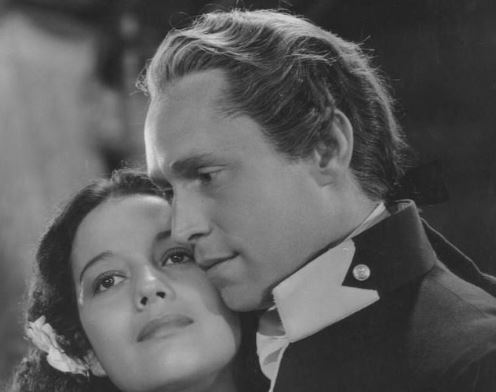
In honor of today's Academy Awards celebration, I want to showcase some behind-the-scenes and publicity photos of Franchot at work in Mutiny on the Bounty (1935). Franchot was nominated for a Best Actor Oscar for his work as Byam in Mutiny. Mutiny on the Bounty won the Academy Award for Best Picture at the 1936 ceremony. In addition to Franchot, Clark Gable and Charles Laughton were both nominated in the Best Actor category. Other nominations for Mutiny: Frank Lloyd for Best Director, Jules Furthman, Talbot Jennings, and Carey Wilson for Best Screenplay, Margaret Booth for Best Film Editing, and Nat W. Finston and Herbert Stothart for Best Music.

I'll post a film summary and screen captures soon, but for now, enjoy this selection of photos!

 
Source: Picture Play Magazine

This one's my favorite! Source: Picture Play Magazine

Source: eBay

Source: eBay

Source: Getty

Source: Flickr

Source: eBay

Source: eBay

Source: eBay

Source: redlist

Source: eBay

Source: eBay
Source: New York Daily News


Saturday, February 25, 2017

Franchot Tells On Himself: Vintage Magazine Articles

 
In the 1930's, writer and later press agent Jerry Asher wrote many articles on Franchot for fan magazines. I have mixed feelings about Jerry Asher, who became incredibly and exaggeratedly gossipy as time passed and later made some pretty damaging claims about the private lives of both his once confidante Joan and his one-time friend Franchot. (I am researching the validity of some of Asher's statements and will go more in detail about all of this later, but I'm always mistrustful of "friends" who make themselves readily available for any public opportunity to divulge very private details.) No matter my feelings of Asher's future behavior, back in the 1930's, he could be depended upon to publish quality magazine articles on Franchot. In Franchot Tells On Himself, Franchot divulged the many things he disliked about himself, personally and professionally:
I dislike my so-called ease of manner. I dislike it on the screen and I dislike it in real life. It stands in the way of my creating a character on the screen instead of just playing myself over and over again. If I'm portraying strong, true emotions, instead of giving subtle indications of what the emotion might be, it stands in the way of my ever doing any really fine work, such as in Shakespearean tales. Some day I hope to go beyond it. Of course, it's fine for those Park Avenue playboys I've done to death. I dislike that kind of part intensely. I've played so many, people actually think I'm that kind of smug chap. I agree with them, and if I weren't so lazy, I'd have done something about it long ago.
Speaking of laziness, this is another thing I dislike about myself. For instance, I put off writing letters for weeks at a time. I hate to delegate them to some one else, especially my fan mail. It takes about four or five hours a week to do it, but somehow I seldom get around to it. But when I do write or send photographs, I send them myself. I feel it is cheating to let some one fake my signature, so at least I do it right when it is done.
My family back in Niagara Falls likes to hear from me every week. A few hastily written lines to let them know I am well is all they expect. But I put off writing, and then have to go to the expense of a long-distance call, when a three-cent stamp would have done the work.
People may think I'm conceited, but that doesn't prevent me from disliking my looks in general. The first thing that hits my eye when I see myself on the screen is my big Adam's apple. Can you imagine a surprised-looking turtle with a huge lump in its throat? Well, that's exactly the way I look to myself.
I dislike my superficial knowledge of a great many things, and my lack of real knowledge of any particular one. I dislike it because it gives the impression of being well read and intellectual. The truth is, I went to college and happen to have a good memory for stray facts, which gives me a superficial knowledge of a great many things.
Generations of a legal family behind me have made me pedantic. I dislike this in myself. I argue about dates, exaggeration of facts, wrong descriptions, et cetera. Often they are not important and the inaccuracy usually makes better conversation. But so many of my ancestors were lawyers that it has made me a stickler for the exact statement about everything.
I think there's too much vanity in my general make-up. If I weren't so vain I'd make those playboy roles mean something as in 'Dancing Lady' and 'Reckless.' But vanity kept me from doing anything unusual with these roles. I thought it was more important to look well. If I hadn't been so vain, I could have played the parts drunk and disheveled and really kept myself in character. Vanity enters into it when I talk with people. Somehow I never can bring myself to admit my superficial knowledge, even if I only have a vague idea what we are discussing.
At heart I am timid. But I dislike myself for being that way. I am an actor, and people expect me to be colorful, self-assured and amusing. I feel they expect these things, and they should be carried off with a flourish and an air. When I feel some one looking at me I get terribly self-conscious.
I dislike myself for not living up to my screen personality. I haven't a right to do this to the people who go to see me. I really should have an act. It would be much more intriguing and interesting. It's easy to put on an act on the screen, but off the screen there just isn't any act. I know it's disappointing, but I can't help it.
One of my pet dislikes is that I am such a sane fellow. I don't want to be sane, but I'm so colorless I just never think of crazy things to do. I don't seem to have that magnificent abandon that makes a man suddenly make up his mind to jump in a plane and fly to Alaska, or go tramping off to some desert to dig for gold. If I contemplated giving way to an impulse, I'd first figure out how long it would take, and which would be the best way to do it.
Source:
Asher, Jerry. "Franchot Tells on Himself." Picture Play Magazine. 1935.

Friday, February 24, 2017

Franchot Thaws: Vintage Magazine Articles


When reporter Madeline Glass was assigned an interview with Franchot Tone for Picture Play Magazine in 1935, she was less than enthused. Glass had heard rumors that Franchot was haughty, disagreeable, and uncooperative. After her face-to-face meeting with a friendly Franchot on the set of Reckless, Glass shared her suspicion that "innate shyness has caused him to take refuge from argus-eyed reporters behind a barrier of aloofness. He strikes me as being a person whom one must know more than casually before his lurking friendliness can adequately manifest itself."

During their conversation, Franchot broached many subjects.

On his wealthy upbringing:
No, I've never been in want of material things. Sometimes I wish that life hadn't been so easy for me. A few hard knocks would have been beneficial, I think. At times I wonder how I would react if disaster did overtake me. I might crack up because of no previous experience in dealing with severe trials.


On rumors that he'd been difficult to work with on the set of Lives of a Bengal Lancer:
That was the only time I've asserted myself since coming to Hollywood, and my work in the production has proved to be the best I've done in pictures. Some of my dialogue was poor, so I changed it. I also insisted on doing some of my scenes the way that I felt would be most effective. I wouldn't work on Sunday as my contract stipulated that I need not.
On his love of the theater:
I like picture work, but I can do better acting on the stage. There's more opportunity to create characterizations in a medium where one studies and rehearses a role for weeks. Pictures are made too rapidly for one to get a genuine understanding of the part one plays. Too much is left to chance. On the stage a role is developed gradually. In the end one has a complete characterization.
Source:
Glass, Madeline. "Franchot Thaws." Picture Play Magazine. April 1935.

Thursday, February 23, 2017

The Winning Mr. Tone: Vintage Magazine Articles

I've transcribed one of my favorite articles on/interviews with Franchot that was conducted by Edmund Douglas for Silver Screen Magazine in May 1935. In it, Franchot discusses his struggles with his public image and film career.


The Winning Mr. Tone
by Edmund Douglas
Silver Screen-May 1935

The whole trouble with most stories about Franchot Tone is that they never give him a chance. He is not an easy person to interview—or to know—and most of the stories about him have unconsciously, I am sure, made him out as pretty dull. He isn't dull. He has a quiet rippling humor, as I discovered to my cost.

Not long ago I visited a set where he was working. In reporting the activities on the set, I wrote "I can never quite figure Franchot out. He always speaks civilly, sometimes even pleasantly—and that is all. You never know whether he likes you or whether he doesn't and the idea of just sitting down for a chat with Franchot would never occur to you. Or, at least, not to me."

A few weeks later, I encountered him at our tailor's. "Hello," he grinned. "Sit down and have a chat!"

I think I was the first writer to meet him on his arrival in Hollywood. A mutual friend took me to his beach home one day. He was a swell fellow then. Today, two and a half years later, he is still a swell fellow.

Conversation revealed that his real love was the theatre. "I've been in a number of plays in New York," he confessed, "but I've never been in a hit. I want to be in a successful stage play."

"Why did you come out here then?" I inquired.

"The money mostly. At any rate, I have a clause in my contract which gives me an option at the end of a year, too. The studio, of course, can let me go at the end of the year if they don't want me. But on the other hand, if I don't like pictures I can let them go. I can't go to work for another studio but I can go back to the stage. I figure in pictures I'll either be a quick flop or a sudden star. A year should be long enough to tell the story."

Today he is neither a quick flop nor a star. And he is still in pictures. "How come?" I asked.

Franchot grinned. "Oh shucks, Ed. When the year was up I didn't want to leave Hollywood. I had friends here."

"Do you feel you're any nearer stardom now?" I persisted.

He smiled ruefully. "Look, what's happened to me: when I first came out here I had about six stories in the motion picture magazines. You did one that I liked. That was done out of friendship. The other five were written because I was a newcomer—as one would write about a newly discovered freak.

Then I met Joan Crawford and immediately there was another cycle of stories—this time about 'Joan and Franchot.' I hated that. I feel flattered, of course, when I see my name linked with hers. Who wouldn't? But I don't think those stories were fair to her—or to me. Joan has worked like the devil to attain the position she has. I think it's a cheap way to gain publicity to try to do it on the strength of a friendship with someone who happens to have a big name. Her fans resent it. As far as I'm concerned, I feel a little ashamed every time I see an interview purporting to be about myself but which is, in reality, about my friendship with her, because I know down in my heart that if it hadn't been for that friendship the story would never have been written."
 
"Why did you give out those interviews?" I asked bluntly.
 
"I didn't. At least, when the appointments were arranged nothing was intimated about the writers wanting to talk to me about Joan. The first time or two they asked what I thought of her and I suppose I let my enthusiasm run away with my tongue. I didn't know they intended using that stuff. I hadn't had a great many interviews and up to that time all they had used was chiefly biographical data. but after a couple of those stories broke I got wise and refused to talk about her. If you've noticed, the subsequent stories had darned few quotes in them. They were mostly written about us and consisted chiefly of speculation on the part of the writers.
 
People have intimated that I'm riding the crest on the strength of my friendship with her and its attendant publicity. That hurts. I don't think Fox borrowed me for the lead in The World Moves On or Warner Brothers for Gentlemen Are Born or Twentieth Century for Moulin Rouge or Paramount for Lives of a Bengal Lancer because I happen to be friendly with her.
 
I don't want to succeed whether in pictures or in magazines as a freak (which the first cycle of stories made me out to be) or in someone else's reflected limelight (as the second cycle implied.)
 
This may sound conceited but I don't intend it that way. I'm discussing myself as though I were a barrel of apples I was trying to sell the public. I feel that I have something to offer the screen. If I can ever develop a personality in which I feel thoroughly at ease I believe the public will accept me in it and that I can make it fit almost any part in which they cast me.

So far, I haven't been able to find that personality and I don't believe it is to be found among the rich young men in dress shirts I have so far been required to play."
 
"Why not?" I demanded. "Don't interesting things ever happen to rich young men in dress shirts and pants? Anyhow, it's the kind of life with which you're most thoroughly acquainted and you're not guessing what you're doing."
 
"Wait a minute," Franchot protested. "Answering your last remark first, it isn't the only kind of life with which I'm acquainted. I can't remember the time, before I came out here, that I didn't spend the summer months in the woods, hobnobbing with wood-cutters, Indians, and Canadian guides, etc. I know as much about those phases of life as I do about drawing rooms. The biggest personal success I had in New York was as a cowboy in 'Green Grow the Lilacs.' Stage producers never felt that I was the ideal type for the man-about-town.
 
Now, coming to your first question, 'Don't interesting things happen to rich young men'I suppose they do. But I think in any situation involving a rich young man there is almost certain to be some other character involved in the same situation who is more interesting."
 
"Suppose the whole play involves only rich people?" I went on obstinately.
 
"There are only thirty-six dramatic situations," Franchot explained patiently. "It is quite possible that a rich young man might be interesting in one or several of those situations but if characters from some other walk of life were dumped into the same situations I think they would be infinitely more interesting.
 
Don't get me wrong. I'm not one of those fanatics who is always yelling for a chance to prove his versatility and yapping about being 'typed.' I lay no claims to being versatile. All I want is to find that personality I spoke about and I'll be perfectly contented to go on playing it to the end of the chapter."
 
"You said you haven't been able to find it so far," I observed. "Have you made any progress in your search for it?"
 
"I don't know," he admitted. "I've never liked myself in anything I've seen myself do on the screen. That goes without exception, up to the time of "Lives of a Bengal Lancer.' I saw the preview of the picture and, at least, I didn't have to cringe.
 
There has been a lot of talk and a lot written about my not wanting to do that part. It's true, I didn't. But I had good reasons. Originally it was written for a Ronald Colman type. Then it was changed to fit Henry Wilcoxin. When the studio decided not to have him do it, it was rewritten as a silly-ass Englishman. I'm not a silly-ass Englishman and I said I couldn't play the part that way. One of the executives at Paramount assured me it would be rewritten—but it never was. We changed it on the set as we went along, trying to revamp the dialogue so I could speak the lines as if I meant them.
 
And let me tell you here and now that I have never worked with a finer director than Henry Hathaway, who did that picture. The picture is finished and released, he is on one lot and I'm on another so it isn't a question of trying to curry favor. I think he is one of the few really fine directors the screen has and he should be among the top few.

But I'm getting pretty far afield. I was supposed to be talking about my publicity—the first cycle and the second cycle of stories. Lately the stories about Joan and me have died down. I hope the subject has been exhausted. I haven't had more than one or two stories in the past six months. I hope when, or rather if, the next cycle starts there will be some interest in me as an actor and a personality."

Franchot's hopes are going to bear fruit. In "Lives of a Bengal Lancer" you see what he can do with a good part when he gets one. And it's plenty. I do not know whether that is the personality he has been seeking—in fact, I doubt it—but it is one that is going to establish him on the screen as a definite entity about whom the public will want to know more, rather than as a newcomer or a satellite.


Monday, February 13, 2017

Announcing the Franchot Tone Blogathon!

I am so excited to announce that I'll be hosting the first ever Franchot Tone Blogathon! Since this blog began, I've enjoyed celebrating actors I admire through blogathons hosted by fantastic classic film blogs. Now, it's Franchot's turn! In honor of the second anniversary of the Finding Franchot blog, I will be hosting a Franchot Tone Blogathon from April 21 through April 23, 2017.

How to Join:

1. Choose a film, tv show, or radio show featuring Franchot Tone that you enjoy and write about it! My hope is that everyone will write about a piece of Franchot's work that you really love and that you feel is an important part of his legacy. For example, I'm writing about Three Loves Has Nancy because it's a film that shows off Franchot's comedic skills and the first film in which Franchot caught my eye. Without that fateful viewing of Three Loves Has Nancy years ago, this little Franchot Tone blog wouldn't exist. If you need to refresh your memory, here's a list of Franchot's filmography. If you don't want to limit it to just one performance, you are welcome to highlight your favorite moments found in multiple films or get creative with how you approach the topic. Duplicate topics are allowed.

2. To celebrate the second anniversary of Finding Franchot, I'm hosting the blogathon as a celebration on the weekend of April 21 through April 23. Just publish your post in that time frame and leave a link on the post I'll have up that weekend.

3. Comment here the Franchot work you are planning to cover and I'll add you to the roster.

3. Choose a banner below and display it on your blog with a link back to this post.


Also, thank you to Le over at Critica Retro for first encouraging me to host a Franchot blogathon with a comment left on this site!

Roster:

Finding Franchot - Three Loves Has Nancy (1938) and Playing Against Type

Old Hollywood Films - Five Graves to Cairo (1943)

Phyllis Loves Classic Movies - Coming around to Franchot Tone

Critica Retro - Dancing Lady (1933)
 
Back to Golden Days - Three Comrades (1938)
 
Mike's Take on the Movies - Twilight Zone, Hitchcock, and Suspense
 
Musings of a Classic Film Addict - Phantom Lady (1943)
 
Flapper Dame - Franchot Tone & Joan Crawford
 
Linda Lear - The Bride Wore Red (1937)


Classic Movie Treasures - Her Husband's Affairs (1947)


Saturday, February 11, 2017

Payton-Tone: Marriage, Muir, and Malfunction

Just two weeks after the violent altercation with Tom Neal, Franchot, still bruised and swollen, married Barbara Payton in her childhood home in Cloquet, Minnesota. Many of Barbara’s family, knowing just as well as the public that this marriage would not last, were absent from the ceremony. It seems that only Franchot and Barbara were hopeful about the union. The usually astute Franchot was so wrapped up in his obsession with Barbara that he failed to recognize that, to the press and his fans, he looked more than foolish. Town officials stated that they did not appreciate the negative publicity associated with Barbara and that Cloquet was unimpressed with her and this marriage.

Following the wedding, Franchot and Barbara were photographed together and then headed to The Flame Supper Club and Hotel Duluth. Two days later, the honeymooners traveled to Franchot’s Canadian lodge before returning to Hollywood.
Franchot and Barbara following the ceremony. Source: www.pinejournal.com
A week later, on October 5th, Barbara was subpoenaed again to testify in the continuing murder trial of her friend Stanley Adams. That same month, Barbara and Franchot promoted Barbara’s film Drums in the Deep South on a publicity tour of southern cities. Completely opposite from their triumphant publicity tour just nine months before, the couple encountered “boos” from some audience members, disinterest from city officials, and mocking newspaper coverage in several of the tour’s locations. As author John O’Dowd wrote, "As a couple, the Tones had become little more than a tacky, industry joke, and sadly, everyone seemed to know it but them."
So far, Barbara had been in the definite lead for the public's disapproval, with Franchot being looked upon more with pity than anger. But on October 29th, Franchot made headlines all by himself when he spit on a gossip columnist. Dining with Barbara and his mother Gertrude at Ciro's, Franchot approached Florabel Muir. Muir had repeatedly written scathingly about Franchot and Barbara. Franchot, after quite a bit of alcohol, walked up to Florabel and her husband. After some rude remarks were made about Florabel's marriage, Florabel asked Franchot if he was mad at her. Franchot responded, "Yes, I am. So mad, in fact, that I could just spit in your face. In fact, that's just what I'm going to do."

Then, he spit right in her eye! I must admit here and now that Franchot's verbal response always gives me a chuckle. It's such a dignified, cultured way to threaten someone, before very crudely and disgustingly spitting on them.  It's hard to believe that Franchot would think that spitting in a lady's eye was a good idea, but this was his year of very bad decisions. I am not placing any blame on Florabel for the specific incident, but I bet she was actually quite pleased it happened because it made excellent fodder for the next day's column. Florabel reported in her next column that Franchot had once been an "upstanding fellow displaying at all times a brilliant mind and charming manners. What has happened to him in the last few months is as big a mystery to me as it is to all his friends and acquaintances."

Florabel called the current Franchot a "guttersnipe" and charged him with being on narcotics and kicking her in the shin. Franchot was so angry at the false narcotics claim that he voluntarily submitted to drug testing and was cleared. In court on December 11, Franchot told the judge, "Your honor, I did not kick the complainant and I did not use any vile language. However, I do admit I may have lost my sense of proportion and my sense of good conduct."
Franchot arriving at court on December 11, 1951. Source: USC Digital Collection
Franchot was fined $400, but his 45-day jail sentence for battery was suspended by the judge. Before the Muir incident was even closed in court, Franchot had already begun divorce proceedings against Barbara. As most suspected, it didn't take long for the relationship to hit a sour note. Just 53 days to be exact. In late November, Franchot filed for divorce and not even a full month later, Barbara and Tom Neal were making headlines as they traveled together on a promotional tour for Bride of the Gorilla.

But the marriage proved to be exactly like the courtship. Barbara would break up with Tom and head back to Franchot and then back to Tom again. Franchot was embarrassed and hurt each time Barbara went back to Tom, but seemed to forgive her easily and welcome her back. On their tour, Barbara and Tom were typically drunk, rude, and caught in scandalous situations. Having dropped his divorce complaint in early December, Franchot reinstated it before the end of the year. In January 1952, Franchot and Barbara moved in together again and would remain together until March 15, when Franchot finally had enough and ended it.

The Franchot that Barbara encountered in the spring months of 1952 was not the beaten, pitiful man anymore. After two years, he was done with Barbara and ready for spiteful revenge. Unbeknownst to Barbara, Franchot had never actually dropped his earlier divorce action. Since Barbara wasn't aware it still existed, she failed to contest it in time. Barbara's attorney Milton Golden would claim that this was Franchot's duplicitous plan all along and that Franchot had tricked Barbara into moving back in with him as part of this ruse. Golden and his client Payton were surprised that, for once in the relationship, Franchot had the upper hand.

Franchot had finally shaken off the romantic spell he'd been under and fired back at Barbara even harder with his next move. Knowing that Tom Neal had moved back into the house with Barbara immediately after he vacated it, Franchot hired a private investigator. Photographs were taken of a compromising situation (there were also reports that there were other photos taken of Barbara with men who were not Tom.) Franchot would use these photos as evidence for his divorce, but he'd also use them as personal retaliation by anonymously distributing  the photos in sealed, blank envelopes across Hollywood. This malicious act was not typical of Franchot at all and researcher Lisa Burks would tell author John O'Dowd that Franchot had been pushed  to "his limits with her never-ending betrayals" and that this out-of-character revenge was motivated by "extreme emotional pain." Barbara's sister-in-law Jan agreed that "it was a very cruel thing to do...and not at all like Franchot."

Presented in court, the photos nullified Barbara's cross-complaint and on May 17, 1952, Franchot was granted a divorce.

Barbara would remain with Tom Neal for quite some time, but they never married. Due to the studio and public's response to their unpredictable and salacious behavior, Barbara and Tom's careers were soon destroyed. In 1953, the couple starred together in the film The Great Jesse James Raid and the play The Postman Always Rings Twice, but both attempts failed critically and commercially. They parted later that year.

Tom would later work as a landscaper. He married Patricia Fenton in 1956 and following their divorce, Tom married Gale Bennett in 1960. On April 2, 1965, Bennett was found dead of a gunshot wound to the head. Suspicion quickly turned to Tom, who surrendered himself the next day. Tom admitted that he and Gale were separated and arguing when he visited her on April 1. He claimed that Gale was killed when the gun accidentally fired during a physical struggle between the two. Found guilty of involuntary manslaughter, Tom served six years in prison. He died of heart failure at age 58 on August 7, 1972, just eight months after being released on parole.


Barbara covered in bruises at the police station, 1962. Source: UCLA Digital Collections
The I Am Not Ashamed cover

By the late 1950's, it was hard for the public to remember Barbara as the glamorous, young actress of Kiss Tomorrow Goodbye. She was, by this time, an alcoholic and drug addict with multiple arrests. One of those arrests was for prostitution, the career she turned to once her promising acting career ended. In the early 1960's, Barbara participated in the exploitative biography project I Am Not Ashamed in order to buy more alcohol. Sadly, the one-time beauty that wealthy big names fought over was now an overweight and drunk "lady of the night" who was regularly beaten by her clients. It's devastating, truly, that someone could fall so far in such a short time. It seems Barbara was intent on self-destruction. Friends who knew her tried to intervene multiple times, but Barbara was, just like the title, not ashamed. She rejected all chances for a better life and died at only 39 years old on May 8, 1967. I highly recommend John O'Dowd's biography Kiss Tomorrow Goodbye: The Barbara Payton Story. It's a well-researched work on an interesting life. I learned a great deal from the book and couldn't have written these posts without it.

Following the circus that was 1950-1952, Franchot would quickly pick up the pieces of his own life and return his focus to his career, his sons, dates with glamorous, but more stable women, and a private life lived in New York and at his lodge in Canada. Like Barbara, Franchot would drink more heavily with each passing year, but didn't let it interfere with his work ethic or public behavior (however, it did cause the end of his final marriage to actress Dolores Dorn.) He would never again let himself be smeared and ridiculed in the press. Franchot would outlive Barbara by just one year, dying from lung cancer at the age of 63 in 1968.

In the early 60's, Franchot was stopped by a reporter and asked for his response to Barbara's prostitution charges. Franchot, no longer bitter, said he felt bad that Barbara was having a tough time and that he wished her well.

If you missed the first two parts of my Payton-Tone series, please read about the beginning of the relationship and the altercation, too. Researching Franchot and Barbara's relationship and Barbara's life afterwards has been a little emotionally draining for me. It was just such a rough time for Franchot and a rough life for Barbara. Even though Barbara was responsible for a lot of Franchot's heartache and completely responsible for the sad path of her own life, I still feel badly that her life was so tragic. I'm looking forward to celebrating happier times in Franchot's life this month, including Franchot's Oscar-nominated performances.

Sources: