I'm still waiting to scan two things before I publish my post on Franchot and Sylvia Sidney (my scanner is currently down so I have to scan elsewhere) and it's been awhile since I posted a general "Where to Find Franchot on the Web" list, so here you go:
Finding Franchot Fansite
I've added many more photos from my collection and from old screen star magazines on the fansite. I still have more to scan and add, but you'll find there's much more than there was a few months ago. You can view those by clicking on:
Portraits/Photos
Candid Photos
Film Stills/Publicity
Newspaper/Magazine Photos
Selected Screenshots
Television Photos
Theater Photos
I've also started adding film summaries on the films page there and will continue to work on that. Eventually, I'd like to compose a full biographical sketch for the Life section on the fansite, but I haven't had the time yet. Hoping to make great strides in all areas of the site before winter.
Watching Franchot
Here are the movies/tv appearances available for online viewing that I've come across lately:
Alfred Hitchcock Hour: Final Performance (1964) on Daily Motion
Jigsaw (1949), Lost Honeymoon (1947), Trail of the Vigilantes (1940), This Woman is Mine (1941), I Love Trouble (1948) on Youtube
Suspense: All Hallow's Eve (1952), Shadow Over Elveron (1968), Award (1955), Bonanza: Denver McKee (1960) on Youtube
The Man on the Eiffel Tower (1949), Without Honor (1949), Phantom Lady (1944) on Internet Archive
Studio One: Twelve Angry Men (1954), Wagon Train: The Malachi Hobart Story (1962) on Internet Archive
She Knew All the Answers (1941), True to Life (1943), Moulin Rouge (1934), and The Wife Takes a Flyer (1942) on Rarefilmm.
Jigsaw (1949) and Dark Waters (1944) are free to watch if you have Amazon Prime.
Twilight Zone: The Silence (1961) is free to watch if you have Netflix.
The most recent DVD release has been the 2018 re-release of Dark Waters (originally on DVD in 2012). Unfortunately, I don't see anything slated to release in the coming months. UPDATE: I missed an important DVD release and want to thank the commenter who pointed out that The Girl Downstairs is being released on August 21st! I am so happy about this revelation as this is one of my absolute favorite romantic comedies. (I wrote about it here.) You can pre-order the DVD on WBShop and Amazon today!
Since Universal Vault Series released Nice Girl? (1941) about two years ago, I was hoping to see a follow-up release of Franchot and Deanna Durbin's second film and a personal favorite His Butler's Sister (1943). I have also been hoping for a DVD release of The Stranger's Return (1933) ever since it was first shown at a TCM Film Festival and on the TCM Network in 2014. I'm crossing my fingers that 2019 brings us more DVD releases as there are still many Franchot films not commercially available.
If you have the American cable channel TCM, look for Franchot in the upcoming showings of:
Man-Proof (1938) on August 2nd at 11:45 a.m. Eastern
The Lives of a Bengal Lancer (1935) on August 11th at 9:30 a.m. Eastern
The Stranger's Return (1933) on August 16th at 6:00 a.m. Eastern
Without Honor (1949) on August 27th at 11:00 a.m.
Sunday, July 29, 2018
Saturday, July 7, 2018
Franchot at 420 Layton Drive
Mystery solved! In May, I wrote about Franchot's World War II draft card (here)and pondered the address that was included as his residence: 420 Layton Drive, Los Angeles, California. At that time, I wrote:
The writer refers to the house as the "Pandemonium", ha! This confirms that Franchot did indeed live in the house and used it as a bachelor pad with his friend Burgess Meredith. If you'd like to virtually explore the house, please visit Paradise Leased (here) which has a full detailed post on it with photographs, but no mention of Franchot. Sadly, the house was demolished in 2000.
When I Google his address, all that gets returned is the alternate address of 470 Layton Way in Los Angeles, a plantation-style mansion designed by architect John Byers for wealthy Phillip Ilsley, who lived in it beginning in 1937. Actor Wayne Morris and his wife Leonora "Bubbles" Hornblow lived there after their marriage in 1939, but divorced soon after in 1940. I don't know how Franchot could've lived in this house at the time, logistically, but with its immaculate landscaping (it included a waterfall, tennis court, and pool) it certainly seems like the type of house Franchot might occupy, short or long term. It is probably that Google is leading me in the wrong direction since a lot of streets change over time. When he registered to vote the same year, Franchot listed his address as 10333 Wilshire Boulevard. 1940 was an interesting year for Franchot. He was fresh from his recent return to the stage and only made one film that year, the western comedy Trail of the Vigilantes. He was single and seen around town with many gorgeous and talented Hollywood ladies (including Carole Landis and Olivia deHavilland) during that time. My point is that he was playing the field in romance and his career at the time, so it is very likely that he was also not settled in one residence or another.Well, Google was not leading me in the wrong direction. Franchot did live at 420 Layton Drive (or Way) in 1940! I found an article about the romance between Paulette Goddard and Franchot's buddy Burgess Meredith and it mentions the house:
![]() |
| Source: "Paulette's in Love". Photoplay. Jan-Jun 1943. www.archive.org |
Wednesday, July 4, 2018
Run for Your Life: Tell It Like It Is (1967)
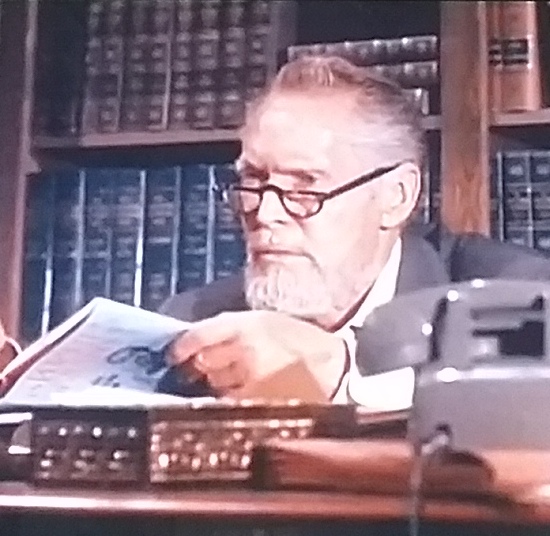
Franchot stars as Judge Taliaferro Wilson in season 3, episode 10 of the popular television drama Run for Your Life. Run for Your Life ran from 1965-68 on NBC. In each episode, an attorney with a terminal illness (Ben Gazzara) encounters different people and situations, often helping them out. This great show is sadly not on commercial DVD at the moment and is rarely shown on television. I hope that changes in the future. It was shown on COZI television network years ago and that's how I've taken these screenshots. COZI network is still around so maybe the episode will come on again at some point.
The episode is called Tell It Like It Is because that's what Terry Haines, a shock jock-type television host, says that he is doing on his syndicated show. As he humiliates his guests in person and via phone and even embarrasses his audience members over their looks and intelligence, Haines keeps saying that they have no right to be mad because he is just "telling it like it is." When Paul Bryan (Ben Gazzara) learns that his former colleague Judge Taliaferro Wilson (Franchot Tone) has agreed to appear on Haines' show, he knows that he must intervene.
At his home, Wilson is happy to see Bryan. The judge explains that the show will be harmless and that he needs the publicity to sell his recent memoir. Wilson says there is no dirt about him to uncover and that he appreciates Bryan's concern and asks him to attend the taping with him.
The taping goes exactly as Bryan fears. Host Haines starts off by praising the judge, telling him he loves the book, and going on about what a respected man the judge is. Quickly though, the interview turns nasty. Haines accuses Judge Wilson of sending innocent men to their deaths, drunkenness on the stand, and lying in his book. Wilson is stunned by the accusations. He refutes the claims and Bryan, having been at the trials and knowing Wilson personally, grabs a microphone in the audience and backs him up.
Haines then brings forth a traffic ticket saying it's for intoxication, but Wilson reads the ticket and it's a citation of unsafe lane changing. Bryan knows the judge never performed his duties intoxicated, but Wilson, a man defined by his dignity, is clearly shaken by the ugliness of Haines' and his audience's behavior. He is utterly humiliated.
Bryan later approaches the host and says that if he doesn't retract his statements on the following night's show that Bryan will represent the judge in a slander suit against Haines. If he doesn't, Paul tells him he will represent the judge himself in a slander suit against Haines. Bryan tells the host that he may have won briefly on his own turf, but that if he gets Haines in a courtroom for just a few minutes, Haines will know what true humiliation is.
Then the episode switches to real time. The episode, you see, began with Haines being shot in a parking garage and then quickly led to Bryan "telling it like it is" (truthfully) to the police as he recounted the day's events. The police and Bryan try to phone the judge to let him know of the shooting (Haines is hospitalized but not in critical condition), but he doesn't answer. Bryan is surprised when Wilson knocks on his door. Warning: Spoilers ahead and a video clip that makes me cry.
Wilson, defeated and still in shock, confesses to Bryan that he pulled the trigger. He says it felt like an out-of-body experience and never thought he could do it. Wilson asks if he can get some sleep before he makes a full confession at the police station. Bryan goes to the hospital and confronts a smug and eternally classless Haines. Bryan tell hims that he is going to represent Wilson in court and that Wilson will fully "tell it like it is." Bryan reminds him that the respected judge will not be the only one on trial. He says:
![]() |
| A candid of Franchot on the set of Run For Your Life, 1967. Source: my collection. |
The episode is called Tell It Like It Is because that's what Terry Haines, a shock jock-type television host, says that he is doing on his syndicated show. As he humiliates his guests in person and via phone and even embarrasses his audience members over their looks and intelligence, Haines keeps saying that they have no right to be mad because he is just "telling it like it is." When Paul Bryan (Ben Gazzara) learns that his former colleague Judge Taliaferro Wilson (Franchot Tone) has agreed to appear on Haines' show, he knows that he must intervene.
At his home, Wilson is happy to see Bryan. The judge explains that the show will be harmless and that he needs the publicity to sell his recent memoir. Wilson says there is no dirt about him to uncover and that he appreciates Bryan's concern and asks him to attend the taping with him.
The taping goes exactly as Bryan fears. Host Haines starts off by praising the judge, telling him he loves the book, and going on about what a respected man the judge is. Quickly though, the interview turns nasty. Haines accuses Judge Wilson of sending innocent men to their deaths, drunkenness on the stand, and lying in his book. Wilson is stunned by the accusations. He refutes the claims and Bryan, having been at the trials and knowing Wilson personally, grabs a microphone in the audience and backs him up.
Haines then brings forth a traffic ticket saying it's for intoxication, but Wilson reads the ticket and it's a citation of unsafe lane changing. Bryan knows the judge never performed his duties intoxicated, but Wilson, a man defined by his dignity, is clearly shaken by the ugliness of Haines' and his audience's behavior. He is utterly humiliated.
Here's a clip of that scene that Youtube user Windesong posted to Youtube:
Then the episode switches to real time. The episode, you see, began with Haines being shot in a parking garage and then quickly led to Bryan "telling it like it is" (truthfully) to the police as he recounted the day's events. The police and Bryan try to phone the judge to let him know of the shooting (Haines is hospitalized but not in critical condition), but he doesn't answer. Bryan is surprised when Wilson knocks on his door. Warning: Spoilers ahead and a video clip that makes me cry.
Wilson, defeated and still in shock, confesses to Bryan that he pulled the trigger. He says it felt like an out-of-body experience and never thought he could do it. Wilson asks if he can get some sleep before he makes a full confession at the police station. Bryan goes to the hospital and confronts a smug and eternally classless Haines. Bryan tell hims that he is going to represent Wilson in court and that Wilson will fully "tell it like it is." Bryan reminds him that the respected judge will not be the only one on trial. He says:
Judge Wilson's going to be on trial, but so will you. The real you. It will all be in the legal record now, the way you tell it like it is. The kind of liar you are—the worst kind—a public liar. And when it's over, I don't think anybody's going to buy a Jerry Haines at any price, so I think you'd better start looking for a rock to crawl under.Here's a tiny clip of Franchot's much longer confession that I shared on my Instagram account devoted to Franchot:
A post shared by Franchot Tone (@franchot_tone_fan) on
I cannot express how sincerely moving Franchot's performance is throughout the entirety of this episode. This is a first-rate example of what a talented actor Franchot was and how captivating he could be. It's a rare performance in color and also one of his final parts. I think it's beautiful in every possible way. He's raw and emotional and still very handsome. It honestly makes me cry every time I watch it. Judge Wilson is a perfect role for Franchot and Tell It Like It Is is an episode I wish was more readily available to view.
Sunday, June 10, 2018
Fansite updates
Hi, everyone! I'm going to be spending some time this week and possibly next week updating my Finding Franchot site at www.findingfranchot.com. It's past time I added some new scans and just did a general checkup over there.
Coming very soon to this blog are posts on Franchot's ties to actress Sylvia Sidney plus Franchot's work in Run For Your Life and the Virginian.
Thanks for reading!
Emily
Coming very soon to this blog are posts on Franchot's ties to actress Sylvia Sidney plus Franchot's work in Run For Your Life and the Virginian.
Thanks for reading!
Emily
Sunday, May 27, 2018
Franchot's World War II Draft Card
Today I discovered Franchot's World War II draft card on Fold3. Fold3 is an online database of historical military records that I've used often for my own family history research. Knowing Franchot didn't serve in the war, I hadn't even considered that his draft card would be there. Fold3's basic access is free but some items are limited to those with a paid subscription. Check with your local library to see if it has a subscription for patrons to use—I used my own public library to access Fold3 today! (This post is not an ad for or sponsored by Fold3. I just like to cite my sources.)
Ok, on to the record...
The card is labeled order # 1301 and serial # 272. It is dated October 16, 1940 and Franchot has added his distinctive signature at the bottom. Franchot is 35 years old and employed by Universal Pictures, Inc. at Universal City studios in Los Angeles, California. At the time, Franchot's address is 470 No (I think this stands for # here) Layton Drive in Los Angeles, California. His phone number is GL-3115—don't you wish you could just call him up and have a chat?
When I Google his address, all that gets returned is the alternate address of 470 Layton Way in Los Angeles, a plantation-style mansion designed by architect John Byers for wealthy Phillip Ilsley, who lived in it beginning in 1937. Actor Wayne Morris and his wife Leonora "Bubbles" Hornblow lived there after their marriage in 1939, but divorced soon after in 1940. I don't know how Franchot could've lived in this house at the time, logistically, but with its immaculate landscaping (it included a waterfall, tennis court, and pool) it certainly seems like the type of house Franchot might occupy, short or long term. It is probably that Google is leading me in the wrong direction since a lot of streets change over time. When he registered to vote the same year, Franchot listed his address as 10333 Wilshire Boulevard. 1940 was an interesting year for Franchot. He was fresh from his recent return to the stage and only made one film that year, the western comedy Trail of the Vigilantes. He was single and seen around town with many gorgeous and talented Hollywood ladies (including Carole Landis and Olivia deHavilland) during that time. My point is that he was playing the field in romance and his career at the time, so it is very likely that he was also not settled in one residence or another.
He lists his father as a further contact and places his father at the family home on Buffalo Avenue in Niagara Falls, New York.
On the Registrar's Report side, we get a physical description of Franchot. With mostly black and white photos available, you may have wondered about the color of his eyes...they are hazel, his hair brown, and his complexion light. He's just shy of 6 feet tall and weighs 160 pounds. A kidney scar is listed as another identifying body marker. Franchot seemed to have major kidney issues. I'm not sure if this was a medical issue independent of his drinking habit or due to it. In his book, Elia Kazan makes mention of Franchot having an issue with his kidneys (and with drinking binges) as early as the Group Theatre days of the early 1930's. I am not sure when Franchot acquired the scar, but he had additional medical issues from 1938 to 1941.
Just before his 33rd birthday, in 1938, doctors advised the ailing actor that "rest, strict diet and avoidance of all exercise" were "essential" to recovery of a non-disclosed, serious illness.
On July 24th, 1941, not even a full year after this draft card was completed, Franchot was stricken by extreme pain and had to undergo an immediate "major abdominal operation" at Good Samaritan Hospital. Following the operation, the Los Angeles Times reported that Franchot was "as good as can be expected." If the draft record had been completed in October 1941, the identifying body markings field would indicate an additional scar from that operation.
On September 9, 1941, the Los Angeles Times reported that Franchot had recently recovered and was no longer hospitalized. It said he was set to begin filming of Eadie was a Lady with Rita Hayworth and John Hubbard, a project that did not come to fruition. (Eadie was a Lady would be released in 1945 starring Ann Miller, Joe Besser, and William Wright.)
Ok, on to the record...
When I Google his address, all that gets returned is the alternate address of 470 Layton Way in Los Angeles, a plantation-style mansion designed by architect John Byers for wealthy Phillip Ilsley, who lived in it beginning in 1937. Actor Wayne Morris and his wife Leonora "Bubbles" Hornblow lived there after their marriage in 1939, but divorced soon after in 1940. I don't know how Franchot could've lived in this house at the time, logistically, but with its immaculate landscaping (it included a waterfall, tennis court, and pool) it certainly seems like the type of house Franchot might occupy, short or long term. It is probably that Google is leading me in the wrong direction since a lot of streets change over time. When he registered to vote the same year, Franchot listed his address as 10333 Wilshire Boulevard. 1940 was an interesting year for Franchot. He was fresh from his recent return to the stage and only made one film that year, the western comedy Trail of the Vigilantes. He was single and seen around town with many gorgeous and talented Hollywood ladies (including Carole Landis and Olivia deHavilland) during that time. My point is that he was playing the field in romance and his career at the time, so it is very likely that he was also not settled in one residence or another.
He lists his father as a further contact and places his father at the family home on Buffalo Avenue in Niagara Falls, New York.
On the Registrar's Report side, we get a physical description of Franchot. With mostly black and white photos available, you may have wondered about the color of his eyes...they are hazel, his hair brown, and his complexion light. He's just shy of 6 feet tall and weighs 160 pounds. A kidney scar is listed as another identifying body marker. Franchot seemed to have major kidney issues. I'm not sure if this was a medical issue independent of his drinking habit or due to it. In his book, Elia Kazan makes mention of Franchot having an issue with his kidneys (and with drinking binges) as early as the Group Theatre days of the early 1930's. I am not sure when Franchot acquired the scar, but he had additional medical issues from 1938 to 1941.Just before his 33rd birthday, in 1938, doctors advised the ailing actor that "rest, strict diet and avoidance of all exercise" were "essential" to recovery of a non-disclosed, serious illness.
On July 24th, 1941, not even a full year after this draft card was completed, Franchot was stricken by extreme pain and had to undergo an immediate "major abdominal operation" at Good Samaritan Hospital. Following the operation, the Los Angeles Times reported that Franchot was "as good as can be expected." If the draft record had been completed in October 1941, the identifying body markings field would indicate an additional scar from that operation.
On September 9, 1941, the Los Angeles Times reported that Franchot had recently recovered and was no longer hospitalized. It said he was set to begin filming of Eadie was a Lady with Rita Hayworth and John Hubbard, a project that did not come to fruition. (Eadie was a Lady would be released in 1945 starring Ann Miller, Joe Besser, and William Wright.)
Despite completing his draft card immediately after the Selective Training and Service Act of 1940, Franchot did not serve in World War II. The records do not indicate which draft classification he received, so I am not sure if he was deferred for any reason or why he did not serve.
Franchot—who would marry Jean Wallace in 1941 and start a family—was a prominent war bond seller across the country, served on charitable committees and entertained the troops. I will write about his contributions on the homefront in another post.
Sources:
- Clippings. The Los Angeles Times. July 5, 1937; February 11, 1938; July 26, 1941; September 9, 1941.
- Fold3: https://www.fold3.com/title/816/wwii-draft-registration-cards
- Kazan, Elia. Elia Kazan: A Life. New York: Knopf, 1988.
- Paradise Leased: https://paradiseleased.wordpress.com/2011/01/03/lost-hollywood-a-swimmingly-grand-estate-in-brentwood-heights/
- "Tone Undergoes Major Operation." Los Angeles Times. July 25, 1941.
Friday, May 25, 2018
Garry McGarry
![]() |
| Garry McGarry. Source: eBay. |
As a young man, McGarry was a celebrated leading man in pictures. IMDb lists the following films and film shorts from 1914 to 1921 in Garry's filmography:
The Plaything of Broadway
The False Faces
A Prince in a Pawnshop
The Car and His Majesty
The Scarlet Runner
Mr. Jack Inspects Paris
The Wrong Mr. Wright
By Love Redeemed
Saints and Sinners
Sis
On the Turn of a Card
Brown's Summer Boarders
One Performance Only
Hearts Ablaze
The Tigress
Life's Yesterdays
The Silent W
The Esterbrook Case
Cutey's Sister
The Love Whip
The Return of Maurice Donnelly
The Capitulation of the Major
Lillian's Sweetheart
The Radium Thieves
The Wrong Girl
A Daughter of Israel
A Question of Clothes
The Greater Love
The Athletic Family
The Methods of Margaret
The Peacemaker
At the time of McGarry's sudden death in 1927, Franchot was twenty-two years old and recently graduated from Cornell University. Franchot worked as a stage manager and actor for Garry's stock theater company, Garry McGarry's Players, the summer and early fall after his college graduation. In my last post, Variety had a little note about college senior Franchot being picked to test with a film studio in 1927. I wonder if that arrangement fell through or if Franchot, always a play actor first and a film actor second, chose the theater instead.
After completing his studies, Franchot returned to Buffalo, New York to work with McGarry. Franchot's cousin Pascal Franchot was a major funder of the McGarry Players and that family relation helped Franchot get his foot in the door. According to the Buffalo Historical Society, Pascal Franchot was recognized for his efforts in the first World War and his charitable endeavors at an annual meeting that took place in 1925. At that meeting, McGarry spoke publicly of his appreciation of Pascal Franchot's services. This close friendship between Pascal and Garry certainly paved the way for Franchot to get his first chance at the stage in 1927.
Franchot began to get noticed as a "promising new juvenile" immediately and quickly advanced from the McGarry's company to roles in more prominent theater groups, in plays like The Belt, Centuries, and The International at New Playwrights' Theatre, and The Age of Innocence at the Empire Theatre. It was during Franchot's run in The Belt during November 1927 that he would've learned of his mentor Garry McGarry's death.
As one of Franchot's earliest supporters, McGarry aided Franchot in his discovery of the New York stage and into an acting career that would last for his entire life. Other than cast lists, ads, and his obituary, I have been unable to uncover as much about Garry McGarry as I'd hoped. If I find more and I hope I do, I will come back and add to this post later.
![]() |
| Ad for "The Garden of Aloha". Source: Variety, September 1917. Media History Digital Library. |
- Block, Maxine. Current Biography Yearbook 1940. H.W. Wilson Company, 1940.
- "Address of the President and Report of the Director Submitted at the Annual Meeting." Buffalo Historical Society. The Society, 1925.
- Film magazines accessed via the Media History Digital Library at http://mediahistoryproject.org/
Friday, May 18, 2018
Pre-Hollywood Variety Mentions
Franchot first gained notice with filmgoers in 1933, but he was creating a buzz in Variety magazine as early as 1927. I've gathered a timeline of those Variety mentions.
May 4, 1927:
First National Pictures searched college campuses for future cinema talent and spotted ten talented actors at Cornell University. "The lucky ten at Cornell included Franchot Tone, president of the Cornell Dramatic Club.
January 18, 1928:
Starring as David Fitch in "The International", which Variety noted was "anything but not original in creation and presentation. So hectic and cacaphonous is its production that the play might well be styled a true exponent of a new school of vo-do-de-o drama."
October 23, 1929:
Franchot is busy rehearsing "Cross Roads" with Sylvia Sidney and others.
November 20, 1929:
Performing as Duke in "Cross Roads", Franchot is called "capable" in this "truthful, sympathetic picture of youth wrecked by the standards of modern society."
May 7, 1930:
"Franchot Tone, Niagara Falls boy, and protege of the late Garry McGarry, has signed with the New York Theatre Guild."
My note: I'm currently working on an individual post on Garry McGarry that I'll be posting within the next two days. I feel he deserves his own post, not a mere mention in this little Variety timeline.
September 1930:
Franchot is busy rehearsing Uncle Vanya, his first of several associations with this play.
October 6, 1931:
Performing as Will Connelly in The House of Connelly. "First nighters were impressed with this carefully prepared, serious drama"
December 5, 1931:
Performing as Adam in the play "1931". "A graphic picture of unemployment among the city's laboring class, strikingly scened but a depressing play."
March 15, 1932:
Performing as Federico in "Night Over Taos". "The Group Theatre which had the aid of the Theatre Guild but claimed now to be on its own offers a third production this season. 'Night Over Taos' is as good a production as 'House of Connelly' if not more skillful and certainly more striking. The mistake called '1931' has been forgotten."
May 3, 1932:
For his work in "A Thousand Summers", Variety writes, "Franchot Tone is especially good as the boy, presenting him sincerely and with great earnestness."
June 28, 1932:
Franchot leaves "A Thousand Summers" on June 25 and is replaced by actor Johnny Griggs.
October 4, 1932:
Performing as Raymond Merritt in "Success Story". "Franchot Tone, one of the Group's most promising players, does well but is third to the Adlers [Luther and Stella]."
October 25, 1932:
"Franchot Tone goes Metro on a six months' contract, plus a similar option, booked by Mike Connolly of the Jenie Jacobs office. He leaves 'Success Story', current New York play, and goes to the Coast next week. First assignment is 'Nora' opposite Jean Harlow."
November 8, 1932:
"Franchot Tone arrived Saturday (6) from New York, to start his Metro contract."
Source:
Variety Publishing Company. Accessed via Media History Digital Library.
May 4, 1927:
First National Pictures searched college campuses for future cinema talent and spotted ten talented actors at Cornell University. "The lucky ten at Cornell included Franchot Tone, president of the Cornell Dramatic Club.
January 18, 1928:
Starring as David Fitch in "The International", which Variety noted was "anything but not original in creation and presentation. So hectic and cacaphonous is its production that the play might well be styled a true exponent of a new school of vo-do-de-o drama."
October 23, 1929:
Franchot is busy rehearsing "Cross Roads" with Sylvia Sidney and others.
November 20, 1929:
Performing as Duke in "Cross Roads", Franchot is called "capable" in this "truthful, sympathetic picture of youth wrecked by the standards of modern society."
May 7, 1930:
"Franchot Tone, Niagara Falls boy, and protege of the late Garry McGarry, has signed with the New York Theatre Guild."
My note: I'm currently working on an individual post on Garry McGarry that I'll be posting within the next two days. I feel he deserves his own post, not a mere mention in this little Variety timeline.
Franchot is busy rehearsing Uncle Vanya, his first of several associations with this play.
October 6, 1931:
Performing as Will Connelly in The House of Connelly. "First nighters were impressed with this carefully prepared, serious drama"
December 5, 1931:
Performing as Adam in the play "1931". "A graphic picture of unemployment among the city's laboring class, strikingly scened but a depressing play."
March 15, 1932:
Performing as Federico in "Night Over Taos". "The Group Theatre which had the aid of the Theatre Guild but claimed now to be on its own offers a third production this season. 'Night Over Taos' is as good a production as 'House of Connelly' if not more skillful and certainly more striking. The mistake called '1931' has been forgotten."
May 3, 1932:
For his work in "A Thousand Summers", Variety writes, "Franchot Tone is especially good as the boy, presenting him sincerely and with great earnestness."
June 28, 1932:
Franchot leaves "A Thousand Summers" on June 25 and is replaced by actor Johnny Griggs.
October 4, 1932:
Performing as Raymond Merritt in "Success Story". "Franchot Tone, one of the Group's most promising players, does well but is third to the Adlers [Luther and Stella]."
October 25, 1932:
"Franchot Tone goes Metro on a six months' contract, plus a similar option, booked by Mike Connolly of the Jenie Jacobs office. He leaves 'Success Story', current New York play, and goes to the Coast next week. First assignment is 'Nora' opposite Jean Harlow."
November 8, 1932:
"Franchot Tone arrived Saturday (6) from New York, to start his Metro contract."
Source:
Variety Publishing Company. Accessed via Media History Digital Library.
Subscribe to:
Posts (Atom)